

Listen to the article
Strength training is often considered the foundation of physical fitness, earning its reputation for supporting muscle mass, bone density and functional movement. In fact, having strong legs contributes to longevity by enabling independence through mobility and social activity in our later years.
Recent scientific findings now provide even more compelling evidence to prioritize strength training as part of a holistic fitness plan. While its importance cannot be overstated, an effective exercise regimen should also incorporate flexibility, mobility and cardiovascular training to maximize overall health benefits.
A recent study in the journal Biology highlights the anti-aging potential of regular strength training. Researchers analyzed data from a nationally representative sample of 4,814 U.S. adults ages 20-69, collected via the National Health and Nutrition Examination Survey. The study focus was on the relationship between the frequency of strength training and telomere length, a biomarker often associated with cellular aging. Many studies support the benefits of strength training and longevity, but this study identified a unique biomarker beyond common sense and anecdotal evidence.
Read More: How to Gain Strength While Maintaining Cardio and Muscle Stamina
Key Findings: Strength Training Slows Biological Aging
Telomeres are repeating sequences of DNA commonly described as being located at the “ends” of chromosomes inside our cells to protect genetic data. Longer telomeres represent a younger biological age.
Adults who engaged in 90 minutes or more of strength training per week had telomeres that were, on average, 60.3 base pairs longer than those who did not engage in strength training. Imagine the DNA double helix as a ladder: A run in the ladder represents a base pair.
You can get to 90 minutes of strength training by doing 30 minutes three times a week.
This telomere lengthening is comparable to approximately 3.9 years of “reduced biological aging,” suggesting that regular resistance training may help slow the cellular aging process.
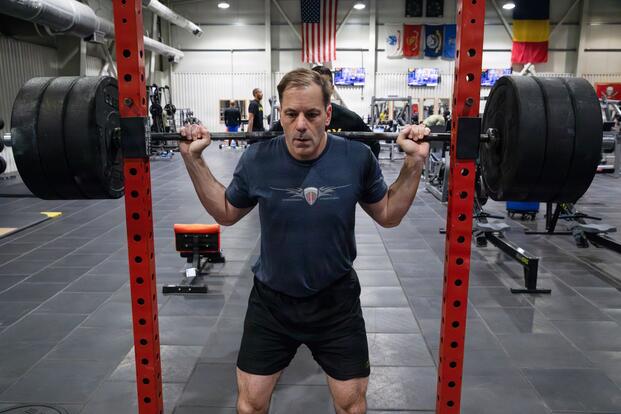
For the purposes of the study, strength training was defined as participation in resistance exercises such as weightlifting or bodyweight movements. These include barbells, dumbbells, kettlebells or weight machines. Calisthenics and suspension training are also classified as strength training, just using your body as the weight to get stronger.
It’s important to recognize that several factors, such as lifestyle, stress, acute or chronic health conditions (including inflammation) and nutrition, can influence telomere length measurements. While shorter telomeres are generally associated with increased aging and disease risk, researchers caution that the precise causal relationships remain poorly understood.
Read More: Training to Fatigue? Rethinking Limits for Muscle Growth and Strength
Make Strength Training a Priority
If you do not engage in regular resistance training, let these findings help you pull the trigger and get started. These findings support the argument for incorporating consistent strength training into your fitness regimen. While the benefits of resistance exercise extend beyond muscle and bone health, its association with potentially slower biological aging makes it a vital component of long-term wellness. When paired with flexibility, mobility and cardiovascular workouts, strength training can help you build a more resilient and youthful body, inside and out.
In a holistic training program, debate often occurs among friends over which fitness element is most important. Usually, the debate centers around what we like to do the most versus what supports all elements of fitness. Many will say endurance or mobility, but if you do not have the strength to move yourself, cardio is out of the question. While you can build strength through activities other than strength training (yard work, walking hills, manual labor), engaging in any type of training that supports the foundation of all fitness (strength) is a goal for us all.
While you can continue to challenge yourself with endurance training, it is essential to recognize that true fitness is multifaceted and requires a foundation of strength. Embracing a more balanced approach, like that of a tactical athlete, means adopting a never-quit training mindset and making space for strength, flexibility, mobility and cardiovascular training. By placing a value on each aspect of fitness throughout adulthood, you set yourself up for greater independence, reduced discomfort and lasting vitality well into retirement. For more ideas and practical strategies, check out the Military.com Fitness Section for a wealth of ideas on tactical, functional and holistic fitness routines designed for both peak performance and lifelong wellness.
Want to Learn More About Military Life?
Whether you’re thinking of joining the military, looking for fitness and basic training tips, or keeping up with military life and benefits, Military.com has you covered. Subscribe to Military.com to have military news, updates and resources delivered directly to your inbox.
Read the full article here
19 Comments
I’m curious about the types of strength training that were considered in the study, specifically whether calisthenics and suspension training were as effective as weightlifting or bodyweight movements in lengthening telomeres.
The study’s findings suggest that regular strength training may help slow the cellular aging process, which has significant implications for the prevention and treatment of age-related diseases.
It’s interesting to note that the study defined strength training as participation in resistance exercises such as weightlifting or bodyweight movements, but I wonder if other forms of exercise, like high-intensity interval training, could have similar effects on telomere length.
The fact that 30 minutes of strength training three times a week can lead to a significant reduction in biological aging is a compelling reason to incorporate resistance exercises into my fitness routine.
I’m interested in learning more about the potential effects of strength training on telomere length in different age groups, and whether the benefits of resistance exercises vary across the lifespan.
The study’s finding that adults who engaged in 90 minutes or more of strength training per week had telomeres that were, on average, 60.3 base pairs longer than those who did not engage in strength training is quite significant, suggesting a potential reduction in biological aging by approximately 3.9 years.
I’m skeptical about the causal relationships between strength training, telomere length, and biological aging, and I think more research is needed to fully understand the effects of resistance training on cellular aging.
I agree, while the study’s findings are promising, it’s essential to consider the potential influence of lifestyle, stress, and nutrition on telomere length measurements.
I’d like to learn more about the underlying mechanisms by which strength training affects telomere length and biological aging, and whether there are any potential limitations or risks to consider.
I’d like to know more about the potential interactions between strength training, telomere length, and other lifestyle factors, such as nutrition and stress, and how these interactions might impact biological aging.
The study’s sample size of 4,814 U.S. adults ages 20-69 provides a robust dataset for analyzing the relationship between strength training and telomere length, and the findings have significant implications for public health.
The study’s focus on the relationship between the frequency of strength training and telomere length provides valuable insights into the anti-aging potential of regular strength training, and I’d like to learn more about the underlying mechanisms.
The potential reduction in biological aging by approximately 3.9 years is a compelling reason to prioritize strength training, and I’m considering increasing the frequency and duration of my resistance exercises.
The comparison of telomere length to a ladder, with a run in the ladder representing a base pair, helps to illustrate the concept of biological aging and the potential impact of strength training on telomere length.
I’m excited to incorporate more strength training into my fitness routine, given the potential benefits for longevity and reducing biological aging, and I’m considering investing in a set of dumbbells or kettlebells.
The study’s findings have significant implications for the development of exercise programs aimed at promoting healthy aging and reducing the risk of age-related diseases.
The fact that shorter telomeres are generally associated with increased aging and disease risk highlights the importance of prioritizing strength training as part of a holistic fitness plan.
I’m concerned that the study’s definition of strength training might be too narrow, and I wonder if other forms of exercise, like yoga or Pilates, could have similar effects on telomere length and biological aging.
That’s a valid point, and it would be interesting to see further research on the effects of different types of exercise on telomere length and biological aging.