

Listen to the article
The Tennessee Wildlife Resources Agency (TWRA) recently announced that the culprits of “extensive wildlife poaching activity” have pleaded guilty. The agency says that game wardens were initially alerted to the illegal behavior in Wilson and Rutherford counties by a concerned citizen in the fall of 2024.
During the ensuing investigation, TWRA game wardens identified Robert E. Comer and Carson Smith for illegally hunting whitetail deer—and perhaps even more shockingly, of illegally selling and bartering whitetail deer meat. At the time, Comer had already been banned from possessing a hunting license for three years following a conviction for previous wildlife infractions.
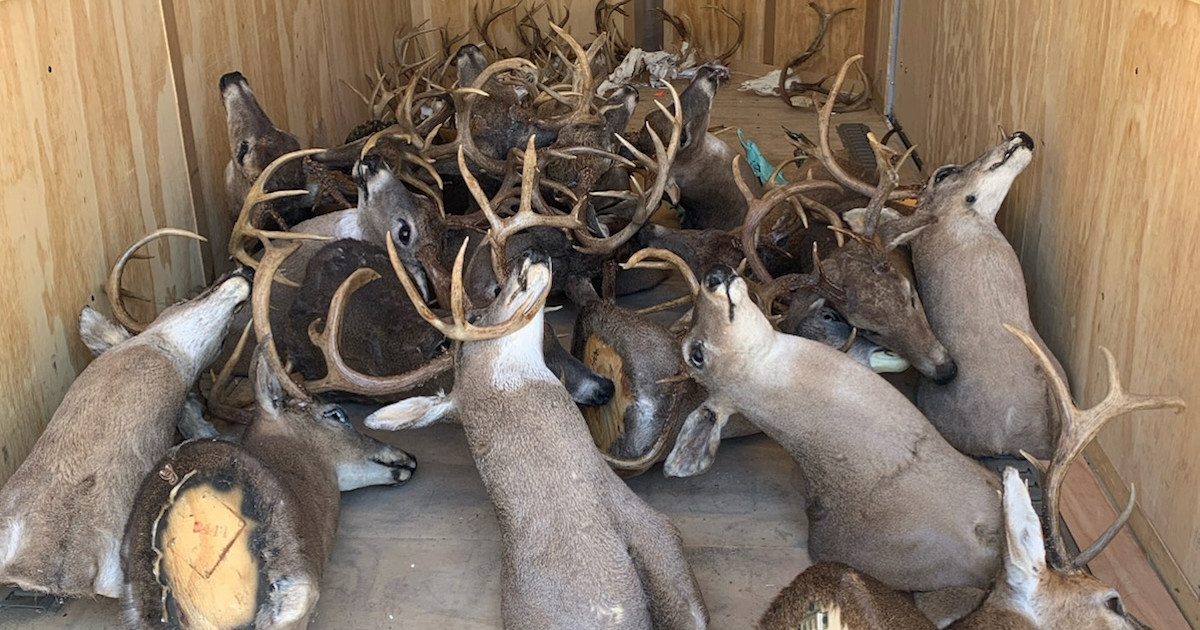
The game wardens soon executed a series of search warrants—and confiscated a truly astounding collection of evidence. In total, they seized a whopping 50 whitetail buck racks, as well as one wild turkey head and a fox squirrel. They also took possession of the weapons used in the poaching incidents, including a rifle, a muzzleloader, and a crossbow.
Ultimately, the poachers pleaded guilty to multiple infractions. Comer pleaded guilty to two felony counts of the possession/traffic of protected wildlife, one count of the illegal take, possession, or destruction of wildlife, and two counts of hunting on revocation. He received a rare lifetime hunting, fishing, and trapping ban, and was also banned from setting foot on any TWRA-controlled or managed lands for the rest of his life. He must pay $15,000 in restitution and serve a 60-day prison sentence.
Meanwhile, Smith pleaded guilty to three counts of the illegal take, possession, or destruction of wildlife, as well as bag limit and tagging violations. His hunting privileges were revoked for three years.
Following the shocking poaching case, TWRA is encouraging folks to report suspicious behavior or hunting violations. As MeatEater previously reported, a high percentage of poaching cases go undetected.
“When you see people grossly violating wildlife laws, like shooting way over the limit, typically the best policy is to turn them in because what they are doing is taking from the rest of us by doing that,” Mike Butler, CEO of the Tennessee Wildlife Federation, told NewsChannel5 Nashville.
Read the full article here
26 Comments
The emphasis on the role of the public in reporting violations and the severity of the punishments for poaching suggests a shift towards a more community-involved and strict approach to wildlife conservation.
The combination of a prison sentence, restitution, and the loss of hunting privileges for both Comer and Smith should serve as a deterrent to others considering similar illegal activities.
The case against Comer and Smith serves as a reminder of the importance of respecting wildlife laws and the consequences of violating them, not just for the individuals involved but for the community at large.
Given the severity of the punishments, it’s clear that the authorities are taking a strong stance against wildlife poaching, which is essential for maintaining healthy and sustainable wildlife populations.
The fact that Robert E. Comer had already been banned from possessing a hunting license for three years prior to this incident and still managed to accumulate 50 deer racks is astonishing, highlighting the need for stricter enforcement of wildlife laws.
It’s not just about stricter laws, but also about educating the public on the importance of reporting suspicious behavior, as Mike Butler from the Tennessee Wildlife Federation emphasized.
The article highlights the importance of collaboration between concerned citizens and law enforcement in combating wildlife poaching, as seen in the initial reporting and subsequent investigation of Comer and Smith.
The involvement of a concerned citizen in reporting the initial suspicious activity highlights the crucial role the public can play in helping to prevent wildlife poaching and protect natural resources.
The seizure of a rifle, a muzzleloader, and a crossbow as part of the evidence suggests that these poachers were well-equipped and likely planned their illegal activities carefully.
The variety of weapons used also indicates a level of sophistication and a disregard for the law that is quite alarming.
The fact that Comer received a lifetime ban from setting foot on any TWRA-controlled or managed lands adds a layer of severity to his punishment, acknowledging the breadth of his offenses.
The quote from Mike Butler about turning in individuals who grossly violate wildlife laws because their actions take from the rest of us resonates, as it emphasizes the collective responsibility in conservation efforts.
The confiscation of 50 whitetail buck racks, along with other wildlife products, underscores the scale of the poaching operation and the significant impact it could have on local wildlife populations.
The TWRA’s encouragement for people to report suspicious behavior or hunting violations is a positive step, but it would be beneficial to know more about the process and protections in place for whistleblowers.
Carson Smith pleading guilty to three counts of the illegal take, possession, or destruction of wildlife, in addition to other violations, indicates a pattern of disregard for wildlife regulations that warrants serious consequences.
The mention of a wild turkey head and a fox squirrel among the confiscated items suggests that the poachers’ activities were not limited to deer and may have had a broader impact on local wildlife.
The article mentions that a concerned citizen reported the suspicious activity in the fall of 2024, which led to the investigation; this timeline suggests a relatively quick turnaround in identifying and prosecuting the offenders.
The punishment for Comer, including a lifetime ban from hunting, fishing, and trapping, as well as a $15,000 restitution and a 60-day prison sentence, seems appropriate given the severity of his crimes.
It would be interesting to learn more about the environmental and ecological impacts of such extensive poaching activities on the areas affected, such as Wilson and Rutherford counties.
I’m skeptical about the effectiveness of the current system in preventing poaching, given that Comer was able to continue his illegal activities despite previous convictions and a ban on possessing a hunting license.
The mention of Comer and Smith illegally selling and bartering whitetail deer meat raises questions about the demand for such products and whether there are adequate laws in place to regulate these activities.
It’s concerning that a high percentage of poaching cases, as mentioned, go undetected, which underscores the importance of public vigilance and reporting suspicious activities to the authorities.
The fact that Comer and Smith were able to engage in such extensive poaching activities raises questions about the current monitoring and enforcement capabilities of the TWRA and whether additional resources are needed to prevent future incidents.
I’m curious to know more about the investigation process and how the game wardens were able to identify Comer and Smith as the culprits behind the extensive wildlife poaching activity.
The fact that Carson Smith’s hunting privileges were revoked for three years for his role in the poaching activity is a step in the right direction, but one wonders if this is enough to deter future offenses.
It’s worth considering the economic impact of such poaching activities, not just on the local ecosystem but also on the legal hunting and tourism industries that rely on healthy wildlife populations.