

Listen to the article
Book sales are up, and Barnes & Noble is expanding again, with nearly 70 new stores opened in 2025 and roughly 60 more planned for 2026. At the same time, independent bookstores are multiplying, vinyl remains the dominant physical music format in the U.S., and even CDs and DVDs are reappearing as collectible staples for younger buyers.
Consumers aren’t giving up their favorite streaming services or e-books. But buying habits increasingly point toward ownership, browsing, and collecting—small pleasures that feel newly valuable in a culture that has spent the last decade renting everything. The shift has accelerated over the past two years, as post-pandemic buying habits, rising subscription costs, and retail reinvestment have converged at the same time.
Barnes & Noble Is Expanding Again—and That’s the Big Signal
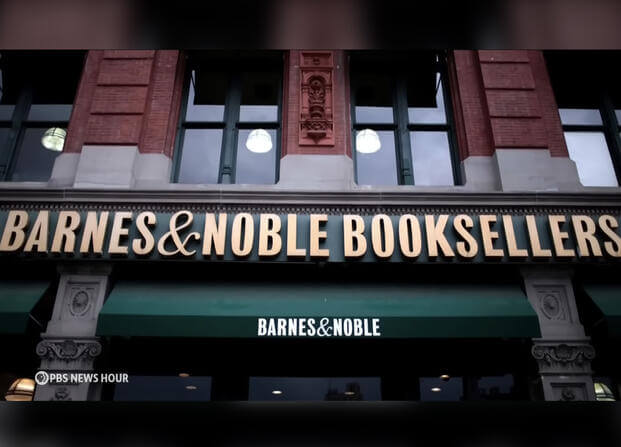
It wasn’t long ago that many buyers saw Barnes & Noble as an Amazon-era casualty of online selling. It seemed too big, too cookie-cutter, and too late to adapt. But now, Barnes & Noble appears to be a true comeback story, opening new stores at a scale that’s hard to dismiss.
Business Insider reports that Barnes & Noble opened nearly 70 locations in 2025 and plans to open roughly 60 more in 2026. The company’s strategy has leaned into smaller footprints and greater local control, giving store managers greater say in what gets stocked and displayed. The shift toward giving local managers greater control over their stores has created a sense that each store has a unique character, and, in practice, that means more regional flavor, more discovery, and more reasons for buyers to linger.
Independent Bookstores Are Opening Fast, Too
Barnes & Noble isn’t expanding into a vacuum.
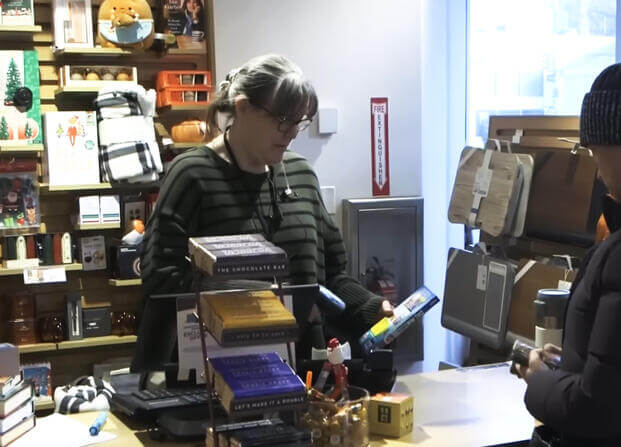
The American Booksellers Association reported 323 new brick-and-mortar, pop-up, and mobile indie stores opened in 2024. And the pace hasn’t slowed, with additional reporting suggesting it has continued into 2025.
What’s driving it isn’t just “shop local” sentiment, though that’s undoubtedly part of the mix; independent stores have increasingly positioned themselves as community spaces. They also offer a kind of human curation that many readers say they’re craving after years of algorithmic recommendation loops.
The result is a rare retail moment in which the chain and the indie aren’t purely cannibalizing each other, but rather drawing on the same renewed appetite for in-store browsing and the idea that cultural shopping can be a shared experience.
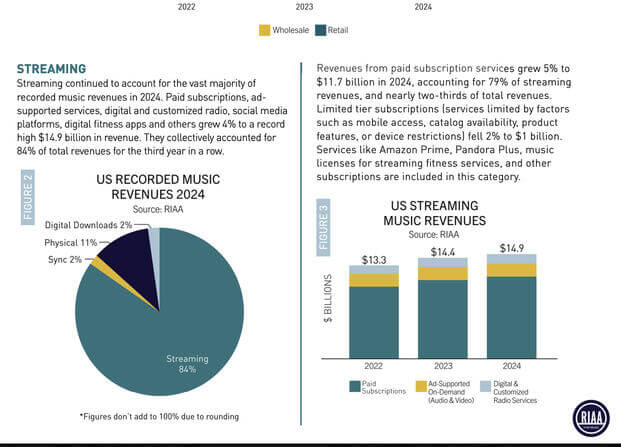
Photo Credit: Chart source: Recording Industry Association of America (RIAA).
Vinyl Dominates Physical Music Sales in the U.S.
The physical-media rebound doesn’t stop at paper.
RIAA data shows vinyl accounted for nearly three-quarters of U.S. physical music revenue in 2024, reaching about $1.4 billion. For the third straight year, vinyl albums also outsold CDs in units (44 million vinyl records shipped versus 33 million CDs).
The growth appears to go beyond novelty, as vinyl is now an established business lane, supported by new releases, reissues, special editions, and a collector economy that rewards scarcity and packaging. Retailers have responded the obvious way: more shelf space, more endcaps, more “limited pressing” signage.
And the reasons feel familiar to anyone watching bookstores rebound. Vinyl offers more than utility. It’s sound, sure, but it’s also ritual, display, and identity.
Gen Z Is Making DVDs and CDs Cool Again
If you want a sign that this isn’t driven only by older collectors, look at who’s buying discs.
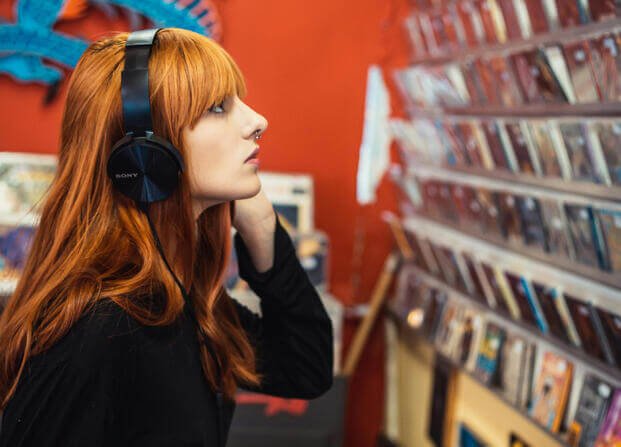
The Washington Post has reported that Gen Z is helping make DVDs and CDs “cool” again, not as a substitute for streaming but as a counterweight to it. Part of the appeal is that, as streaming service prices continue to rise, physical media is a cheaper alternative, and the second-hand supply is enormous.
Streaming libraries are fluid: titles rotate in and out, versions change, and licensing disputes quietly reshape what’s available. Owning a CD, DVD, or record is a way of opting out of that churn. Physical media is permanent in a way that subscriptions aren’t.
Not to mention, licensing disputes quietly reshape what’s available or continuously shuffle where you can find a piece of media.
There’s also a social element to collecting physical media, as collecting is legible and a shelf says something about you in a way a playlist thumbnail doesn’t.

What’s Driving the Physical Media Rebound?
- Ownership: no licensing removal
- Collectibility: packaging, variants, scarcity
- Discovery: browsing beats algorithms
- Gifting: physical objects travel well
- Offline reliability: no bandwidth required (great lead-in to your service-member section)
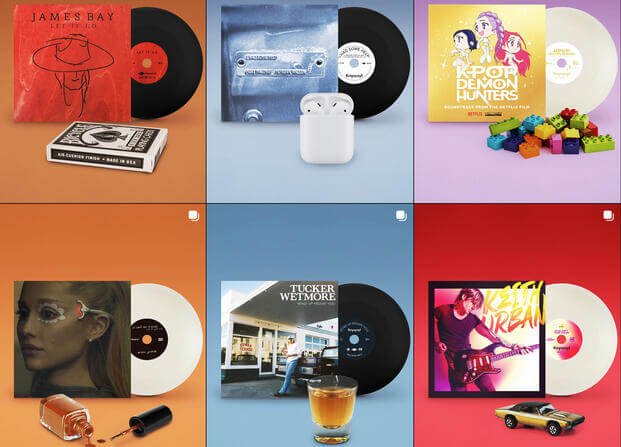
Target’s Tiny Vinyl Shows How Retailers Are Selling “Collectible Media”
Big-box retailers don’t chase vibes unless the money follows. And lately, they’ve been doubling down on physical media.
In 2025, Target introduced “Tiny Vinyl,” a deliberately miniature, highly collectible format pitched as “fully functional” and “crazy cute,” curated toward superfans. It’s not competing on convenience; instead, it provides something streamers can’t offer: an object with charm and giftability.
That’s the through-line across the broader comeback. Physical media works best now when framed as an experience.
Why Physical Media Still Matters for Service Members
For service members, the appeal of physical media has never entirely disappeared as streaming assumes reliable bandwidth and consistent access. But military life rarely guarantees any of those. With deployments, field exercises, shipboard duty, rural postings, and temporary housing, the fragility of subscription-based entertainment becomes wildly apparent.
The reliability of physical media has practical and emotional value. Books and records offer a sense of continuity in a profession defined by transition. Bookstores, in particular, serve as low-pressure third places near many bases and duty stations, providing quiet, accessible spaces. For military families, they also serve as shared spaces where children, spouses, and service members can all engage at their own pace.
A Comeback, Not a Rewind
None of this means streaming is fading. It’s still the default, and for most people, it will remain the primary way entertainment shows up in daily life.
But the last couple of years have made it clear that the digital future hasn’t erased the desire to collect or the experience of discovering something with a friend or a stranger, which a streaming service can’t compete with.
Media consumers aren’t abandoning convenience entirely, but they’re supplementing it with objects that feel stable in an unstable media environment.
The bookstore boom, paired with vinyl’s continued dominance inside physical music, doesn’t look like a rewind but instead a recalibration by consumers looking to make a connection and have a physical place to do it.
Story Continues
Read the full article here
45 Comments
I’m curious to see how the resurgence of physical media will affect the way we consume and interact with music, films, and books – will we see a shift towards more niche and specialized stores?
The shift towards giving local managers greater control over their stores has created a sense of uniqueness in each location, which is a smart move by Barnes & Noble to compete with the personalized experience offered by independent bookstores.
And it’s not just about the books, the store design and layout are also being tailored to the local community, making each store feel more curated and inviting.
I’m curious to know more about the strategy behind giving local managers greater control over their stores, and how this unique character for each store contributes to the overall browsing experience for customers.
It seems like this approach allows for more regional flavor and discovery, making each store a unique destination.
I’ve noticed that independent bookstores are becoming more like community spaces, offering events and workshops, which is a great way to build a loyal customer base and foster a sense of belonging among readers.
The shift towards physical media is also driven by the desire for ownership and control over one’s media consumption, which is something that streaming services often can’t provide.
I’m skeptical about the long-term success of this strategy, given the rise of e-books and streaming services – can Barnes & Noble really compete with the convenience of digital media?
But that’s the thing, people are starting to value the tactile experience of physical books and the ability to browse in a store, it’s not just about convenience anymore.
The mention of physical formats like vinyl maintaining a meaningful foothold in the music industry is a reminder that the appeal of physical media extends beyond books and into other areas of entertainment and culture, and it will be interesting to see how this trend develops in the music industry.
The fact that physical book sales have stabilized and grown as readers favor ownership over digital access is a clear sign that people are looking for a more tangible experience, and the rise of independent bookstores with 323 new stores in 2024 supports this trend.
The fact that physical book sales have stabilized and grown in recent years is a testament to the enduring power of print media, and I think this trend will continue as people increasingly value the tactile experience of reading.
The American Booksellers Association reported 323 new brick-and-mortar, pop-up, and mobile indie stores opened in 2024, which is a significant increase and a testament to the power of community-driven bookstores.
The growth of independent bookstores and the resurgence of physical media are intertwined trends that speak to a deeper desire for community, human connection, and tangible experiences, and it’s heartening to see these values being prioritized in the retail and media industries.
It’s noteworthy that the shift towards physical media and in-store experiences is partly driven by the desire for human curation and community spaces, which independent bookstores have successfully positioned themselves as, and this aspect seems to be a significant factor in their rapid expansion.
This human element is something that algorithmic recommendations can’t replace, and it’s heartening to see it valued again.
The rise of independent bookstores and the expansion of Barnes & Noble are not mutually exclusive, but rather complementary, as they both cater to the growing demand for physical media and in-store browsing experiences.
The expansion of Barnes & Noble and the growth of independent bookstores are both driven by a desire for community and human connection, which is something that digital media often can’t replicate.
And it’s not just about the books themselves, but about the people and the conversations that happen in and around bookstores.
The fact that Barnes & Noble is opening new stores at a scale that’s hard to dismiss is a testament to the enduring appeal of physical bookstores and the importance of browsing and discovery in the shopping experience, and it will be interesting to see how the company continues to adapt and evolve in response to changing consumer preferences.
The role of ‘shop local’ sentiment in the expansion of independent bookstores cannot be overstated, as it highlights the community’s desire to support unique, local businesses that offer more than just a transactional experience, and this sentiment seems to be a key factor in the resurgence of physical media.
The shift towards physical media and in-store experiences is a complex phenomenon that reflects a range of factors, including consumer preferences, technological advancements, and economic trends, and it will be fascinating to see how this trend continues to evolve in the coming years.
The idea that cultural shopping can be a shared experience is an important one, and the fact that both chain stores like Barnes & Noble and independent bookstores are benefiting from this trend suggests that there’s a broad appetite for in-store browsing and discovery that transcends the type of store.
It’s impressive to see how independent bookstores have managed to position themselves as community spaces, offering a kind of human curation that many readers are seeking after years of algorithmic recommendations, and this approach seems to be a major factor in their success.
The mention of vinyl maintaining a meaningful foothold in the music industry, despite streaming dominating revenue, highlights the appeal of physical formats beyond just books, and I wonder if this trend will extend to other types of media as well.
I’m excited to see how this trend towards physical media and in-store experiences will influence the publishing industry, as it could lead to more diverse and regionally relevant content being produced, which would be a welcome change from the homogenization often seen in digital platforms.
The strategy of opening smaller footprint stores and giving more control to local managers seems to be paying off for Barnes & Noble, as it allows for a more personalized and regionally relevant shopping experience, which is something that digital platforms often struggle to replicate.
The fact that even CDs and DVDs are reappearing as collectible items for younger buyers suggests that the appeal of physical media goes beyond nostalgia and speaks to a deeper desire for ownership and tangible experiences, which is an important insight for retailers and media companies alike.
I’ve personally experienced the joy of browsing in a physical bookstore and discovering new authors and titles, and I think this is an experience that many people are craving in a world dominated by digital media.
The contrast between the previous perception of Barnes & Noble as an Amazon-era casualty and its current status as a comeback story underscores the dynamic nature of consumer preferences and the retail landscape, and it will be interesting to see how this story unfolds in the future.
The expansion of Barnes & Noble with nearly 70 new stores in 2025 and roughly 60 more planned for 2026 is a significant indicator of the shift towards physical media, and it’s interesting to see how this affects local bookstores and the community.
The combination of post-pandemic buying habits, rising subscription costs, and retail reinvestment has created a perfect storm that favors the resurgence of physical media, and it’s fascinating to consider how these factors will continue to influence consumer behavior in 2026 and beyond.
It’s concerning to think about the potential environmental impact of the resurgence of physical media, especially with the increase in production and distribution of physical goods, and it’s something that retailers and consumers should be considering as they make purchasing decisions.
This is a critical issue that needs to be addressed in order to ensure that the benefits of physical media are not outweighed by its environmental costs.
The resurgence of physical media and the expansion of bookstores, both chain and independent, are clear indicators of a shift in consumer behavior that values tangible experiences and human interaction, and this shift has significant implications for retailers, media companies, and consumers alike.
The fact that Barnes & Noble opened nearly 70 new stores in 2025 and plans to open roughly 60 more in 2026 is a clear indication that physical media is making a comeback, and I’m excited to see how this trend will continue to shape the retail landscape.
The idea that cultural shopping can be a shared experience is an important one, and I think bookstores are well-positioned to capitalize on this trend by hosting events and creating a sense of community among readers.
And it’s not just about books, other types of physical media like vinyl and DVDs are also being sold in these stores, creating a unique and eclectic shopping experience.
The resurgence of physical media is not just about nostalgia, but about the value that people place on tangible objects and the experiences that come with them, like browsing and collecting.
The comparison between the expansion of chain stores like Barnes & Noble and the growth of independent bookstores suggests that both can coexist and even benefit from the same renewed interest in physical media and in-store browsing.
The fact that vinyl remains the dominant physical music format in the U.S. is a clear indication that people are craving a more tangible and collectible music experience, and I think this trend will continue to grow.
I’m excited to see how the resurgence of physical media will shape the way we think about and interact with cultural artifacts, and how it will influence the development of new technologies and business models.
The fact that consumers are increasingly favoring ownership over digital access is a significant shift in buying habits, and one that I think will have a lasting impact on the retail industry.
I’m skeptical about the long-term viability of this trend, given the convenience and accessibility of digital media, but the current data does suggest a significant shift in consumer behavior that could have lasting impacts on the retail and media industries.
Only time will tell if this is a lasting change or a temporary backlash against digital dominance.