

Listen to the article
U.S. forces, led by the Coast Guard, are now chasing a third oil tanker near Venezuela, sharply escalating a high-stakes crackdown aimed at the country’s sanctioned crude trade.
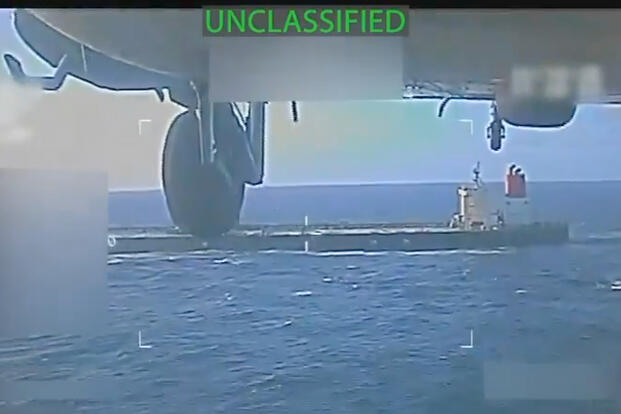
The Coast Guard is working with federal partners to track another oil tanker in international waters near Venezuela suspected of moving crude in violation of U.S. sanctions, official said. The pursuit comes days after two other tankers were seized, marking a broader escalation by the Trump administration to cut off oil revenue tied to Venezuelan President Nicolás Maduro and to warn foreign buyers that sanctioned shipments now face direct interdiction.
The latest pursuit per officials is unfolding in the Caribbean—an area that has become a focal point of stepped-up U.S. sanctions enforcement. The Coast Guard has not confirmed whether the vessel has been boarded, diverted or escorted, citing the active nature of the operation and ongoing coordination among federal agencies involved in maritime security and sanctions enforcement.
A Navy spokesperson declined to say whether naval assets were involved. The White House did not respond to a request for comment from Military.com.
From Warnings to Action
The third pursuit marks a shift from warnings to direct enforcement efforts, as U.S. officials have moved to physically disrupt oil shipments they claim are violating sanctions.
Officials say sanctioned shippers have relied on deceptive practices to evade detection, including frequent flag changes, opaque ownership structures, and ship-to-ship transfers in open waters. Earlier this month U.S. forces stopped a sanctioned merchant vessel off Venezuela in international waters after the ship voluntarily halted and allowed a boarding.
Days later, U.S. forces stopped another oil tanker off Venezuela for the second time in less than two weeks.
U.S. sanctions on Venezuela target the country’s state-owned energy company PDVSA along with individuals tied to the Maduro government, barring most U.S. transactions involving Venezuelan oil. The sanctions also threaten penalties against foreign companies and intermediaries that facilitate illicit oil sales, shipping or financing. The measures are intended to restrict revenue flows that Washington said props up the government in Caracas.

President Donald Trump publicly confirmed a tanker seizure earlier this month and framed the move as part of a broader effort to choke off sanctioned oil shipments. Trump later ordered a blockade of sanctioned oil tankers headed to and from Venezuela, raising renewed pressure on shippers.
Treasury officials declined to comment on whether the vessel now being tracked is tied to a specific Office of Foreign Assets Control designation.
China Condemnation and Oil Shipping
The maritime enforcement campaign has turned into a larger international dispute and has triggered sharp diplomatic backlash, especially from China which criticized the recent tanker seizures as violations of international law. Simultaneously, Venezuelan officials accused Washington of piracy and economic warfare.
The stakes are particularly high because China remains Venezuela’s largest crude buyer and a key destination for its oil exports, raising the risk that continued interdictions could inflame tensions with major U.S. trading partners. The State Department declined to say whether regional governments were notified ahead of the latest pursuit.
Energy analysts said the enforcement push is already disrupting global shipping patterns, as tanker operators move to avoid the risk of U.S. interdiction. Some vessels have reversed course while oil loading activity at Venezuelan ports has slowed, with some ship owners reassessing legal and financial exposure tied to sanctioned crude.
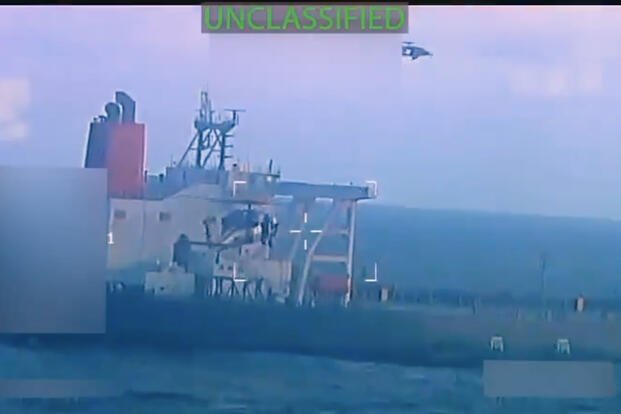
The pressure has coincided with an unusually large U.S. military presence operating near Venezuela, adding visibility and deterrence to the enforcement campaign as maritime operations expand across the region.
U.S. government data shows Venezuela’s oil sector has faced years of declining production and export capacity, leaving the country particularly vulnerable to maritime enforcement actions that further restrict access to global markets.
U.S. officials have not said whether the third tanker will be seized, escorted or released, or how long the stepped-up maritime posture will persist.
Story Continues
Read the full article here
22 Comments
I’m curious to know more about the role of the Navy in this operation, but the spokesperson’s refusal to comment suggests that there may be more to the story than we’re being told.
Yes, the lack of transparency from the Navy and the White House is unsettling and raises questions about the true extent of U.S. involvement.
The U.S. sanctions on Venezuela and the pursuit of oil tankers suspected of violating those sanctions are part of a broader effort to exert pressure on the Maduro government and bring about regime change.
President Donald Trump’s public confirmation of a tanker seizure earlier this month and his framing of the move as part of a broader effort to choke off sanctioned oil shipments suggests that this is a high-priority issue for his administration.
The fact that U.S. forces stopped another oil tanker off Venezuela for the second time in less than two weeks suggests that there is a high level of activity in the region and a significant commitment to enforcing sanctions.
The active nature of the operation and the ongoing coordination among federal agencies involved in maritime security and sanctions enforcement make it difficult to get a clear picture of what’s happening on the ground.
The lack of transparency and the potential for misinformation or propaganda make it challenging to understand the motivations and actions of the parties involved.
The Caribbean has become a focal point of stepped-up U.S. sanctions enforcement, and the pursuit of the third oil tanker is just the latest example of this increased activity in the region.
The image from video posted on Attorney General Pam Bondi’s X account, showing an oil tanker being seized by U.S. forces off the coast of Venezuela, is a powerful symbol of the U.S. commitment to enforcing sanctions.
The fact that the vessel was seized in international waters raises questions about the legality of the operation and the potential for diplomatic fallout.
The seizure of oil tankers suspected of violating U.S. sanctions is a significant escalation of the situation and raises questions about the potential for diplomatic fallout and the impact on global oil markets.
The Trump administration’s efforts to cut off oil revenue tied to Venezuelan President Nicolás Maduro are part of a broader strategy to undermine his government and bring about a transition to democracy.
The potential for this strategy to backfire and strengthen Maduro’s position is a concern, and it’s unclear what the endgame is for the U.S.
The U.S. sanctions on Venezuela, which target the country’s state-owned energy company PDVSA and individuals tied to the Maduro government, are intended to restrict revenue flows that Washington said props up the government in Caracas, but will they be effective?
The fact that U.S. forces stopped a sanctioned merchant vessel off Venezuela in international waters after the ship voluntarily halted and allowed a boarding suggests that there may be some level of cooperation between the U.S. and the vessel’s owners or operators.
The use of deceptive practices by sanctioned shippers, including frequent flag changes, opaque ownership structures, and ship-to-ship transfers in open waters, is a major concern for U.S. officials trying to enforce sanctions.
The use of ship-to-ship transfers in open waters is a tactic used by sanctioned shippers to evade detection, but it’s unclear how effective this will be in the face of increased U.S. enforcement efforts.
The fact that the Coast Guard is working with federal partners to track another oil tanker in international waters near Venezuela suspected of moving crude in violation of U.S. sanctions is a significant escalation of the situation.
I agree, it’s a bold move by the Trump administration to cut off oil revenue tied to Venezuelan President Nicolás Maduro.
The measures taken by the U.S. to restrict revenue flows to the Maduro government, including the blockade of sanctioned oil tankers, are likely to have significant humanitarian implications for the people of Venezuela.
The potential for shortages of food, medicine, and other essential goods is a major concern, and it’s unclear how the U.S. plans to mitigate these effects.
The shift from warnings to direct enforcement efforts by U.S. officials marks a significant change in strategy, and it will be interesting to see how this plays out in the coming weeks and months.