

Listen to the article
The Army has cleared three companies to bid on the service’s plan to outsource initial helicopter pilot training, despite some lawmakers’ reservations about the idea.
Bell, Lockheed Martin, and M1 Support Services have all publicly confirmed this week that they are moving to the third phase of the competition for Flight School Next: a contract to take over the Army’s Initial Entry Rotary Wing training program at Fort Rucker, Alabama. The three companies must submit a Commercial Solutions Proposal for their offering, according to a Dec. 9 call for solutions outlining the process on SAM.gov.
“This next phase is a critical point in the competition and Bell along with our teammates are ready to demonstrate what we believe is the most cost-effective and low-risk solution for the Army’s next-generation flight training program,” said John Novalis, Bell’s strategic director of flight school next, in a press release.
Service officials and contractors believe the new model, which is intended to produce 800 to 1,500 Army aviators annually for 26 years, will lower costs by taking the aircraft, maintenance, and training out of the service’s hands. Congress isn’t convinced. In December, lawmakers said they wouldn’t make funds available for the initiative until they receive a report detailing the results of a trial program and a briefing from Army Secretary Dan Driscoll on the benefits of the new model.
Lawmakers want details on the cost-effectiveness and “the rationale for any proposed changes to training systems or platforms,” according to a provision in the National Defense Authorization Act passed into law on Dec. 20. It’s unclear if the Congressional inquiry into the program will delay the contract’s anticipated September award date.
Representatives for Bell, Lockheed, and M1 all deferred to the Army when asked about the competition’s progress amid those Congressional concerns.
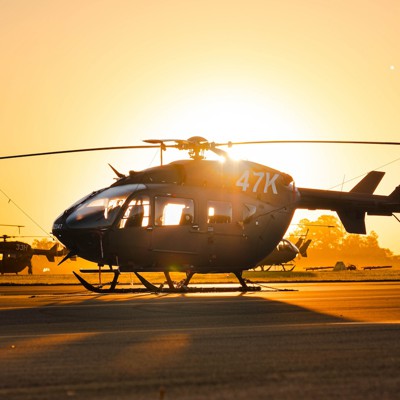
As part of Flight School Next, the Army wants a new initial-training helicopter to replace the twin-engine UH-72 Lakota, which has been criticized by Army leaders as being too expensive and restrictive for training. Its manufacturer, Airbus, has pushed back on those claims.
Lockheed Martin announced Wednesday that its pitch would include Robinson Helicopter Company’s R66 NxG helicopter.
“Our selection of Robinson brings a safe, proven and innovative platform to the table. We are fully committed to getting this right for the Army—investing the time, expertise and technology needed to accelerate IERW training and ensure aviators are prepared for their next mission,” said Todd Morar, Lockheed’s vice president of Air and Commercial Solutions, in a press release.
M1 is also working with Robinson, along with General Dynamics Information Technology, Quantum Helicopters, and the University of North Dakota Aerospace Foundation.
“We are ready now to conduct an exceptionally low risk transition while introducing a wide range of impactful innovations to transform Army flight training and deliver more proficient aviators at significantly reduced cost,” James Cassella, M1’s chief growth officer, said in a news release.
Read the full article here
11 Comments
I’m skeptical about the wisdom of replacing the UH-72 Lakota with a new initial-training helicopter, especially given the concerns raised by lawmakers about the cost-effectiveness of the new model.
Bell’s statement that they believe their solution is the most cost-effective and low-risk solution for the Army’s next-generation flight training program is ambitious – I’d like to see more details on how they plan to achieve this.
Lockheed Martin’s decision to include Robinson Helicopter Company’s R66 NxG helicopter in their pitch is interesting, as it’s described as a safe, proven, and innovative platform – I’d like to know more about how it will accelerate IERW training.
The anticipated September award date for the contract seems aggressive given the Congressional inquiry into the program – I wonder if this timeline is realistic.
The Army’s plan to outsource initial helicopter pilot training to companies like Bell, Lockheed Martin, and M1 Support Services could potentially lower costs by taking the aircraft, maintenance, and training out of the service’s hands, but I’m curious to know how they plan to ensure the quality of training.
According to the article, the new model is intended to produce 800 to 1,500 Army aviators annually for 26 years, which is a significant undertaking and will require careful planning to ensure success.
The fact that Airbus, the manufacturer of the UH-72 Lakota, has pushed back on the claims that the helicopter is too expensive and restrictive for training suggests that there may be more to the story than initially meets the eye.
The partnership between M1 Support Services and companies like General Dynamics Information Technology, Quantum Helicopters, and the University of North Dakota Aerospace Foundation could bring a wide range of impactful innovations to transform Army flight training, which is exciting to consider.
The article mentions that the Army wants a new initial-training helicopter to replace the UH-72 Lakota, which has been criticized as being too expensive and restrictive for training – I’m curious to know more about the specific requirements for the new helicopter and how it will address these concerns.
The fact that Congress has expressed reservations about the idea of outsourcing initial helicopter pilot training and has requested a report detailing the results of a trial program and a briefing from Army Secretary Dan Driscoll suggests that there may be significant hurdles to overcome before the contract is awarded.
The University of North Dakota Aerospace Foundation’s involvement in the partnership with M1 Support Services is intriguing – I’d like to know more about their role in the project and how they will contribute to the transformation of Army flight training.