

Listen to the article
One year after reclaiming the Oval Office, President Donald Trump and his administration is declaring victory on military strength, veterans benefits, and American power abroad—all as his critics warn of the perils of his decisions.
President Donald Trump marked the anniversary of his return to office with a sweeping administration-wide directive called “365 wins in 365 days,” portraying his second term’s opening year as the most productive in modern presidential history.
At a press conference on Jan. 20, Trump amplified the message with a mix of claims and on national borders, NATO and the economy. Supporters see a president moving with unmatched speed. Critics argue many of the claims are overstated or politically divisive. Even Trump’s opponents acknowledge the first year has altered the policy landscape.
Trump’s Warfighting Pivot
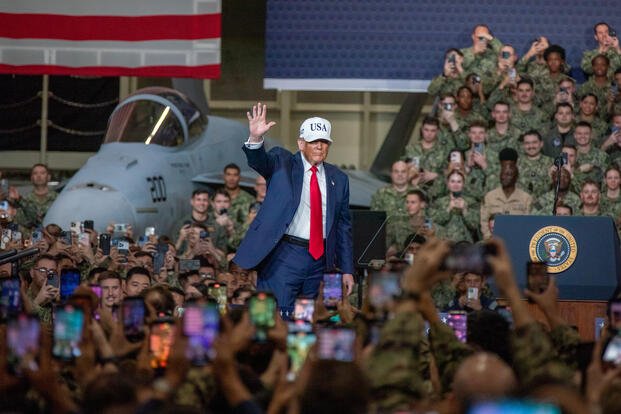
Trump moved quickly to reshape the Pentagon around what his team calls a return to warfighting fundamentals.
After four years of weakness under Joe Biden, President Trump has restored a focus on readiness, lethality and warfighters. From reducing the backlog of VA [Department of Veterans Affairs] claims, to removing emphases on woke DEI policies, the president will always prioritize those who serve and have served. – White House spokesperson Anna Kelly to Military.com.
The administration framed its military agenda around readiness, lethality and recruitment, arguing that combat power must replace what it describes as ideological distractions. Senior defense officials said rebuilding depleted stockpiles, accelerating weapons development, and restoring a warfighting culture have become top priorities.
Recruiting and retention have been a defining pressure point in recent years, with previous Military.com reporting showing that services spent billions on recruiting and retention incentives as confidence and eligibility challenges compounded. Trump ordered changes to grooming standards, physical fitness requirements and personnel policies.
The White House highlighted multiple policies and initiatives they describe as victories, including the unveiling of the F-47 sixth-generation fighter; expanded space security initiatives; increased cyber defense funding; and a renewed push to strengthen the defense industrial base and reduce reliance on foreign suppliers.
Trump also moved to remove what he called ideological capture from military education, including changes affecting service academy oversight and other advisory structures.
Veterans See Real Payoffs
Trump placed veterans policy at the core of his domestic agenda, making benefits delivery and medical access a political and operational priority.
The administration said it expanded pension eligibility, accelerated disability claims processing, and increased funding for toxic exposure care tied to burn pits and environmental hazards.
A key pressure valve for many veterans remains the PACT Act pipeline: what it covers and what veterans should expect when filing. The VA has also continued expanding access points for care and counseling, including new Vet Centers in recent years.
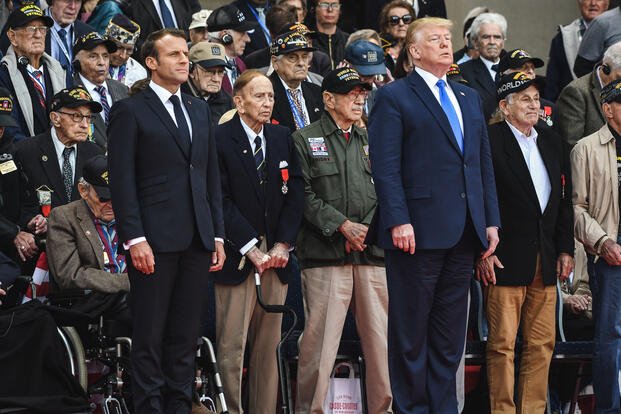
A White House spokesperson told Military.com the president believes veterans “deserve action, not applause,” arguing policy decisions were designed to deliver measurable financial and medical outcomes rather than symbolic recognition.
Military.com contacted the VA for comment.
Trump Rewrites the Global Playbook
Trump’s foreign policy approach blended leverage, pressure and transactional bargaining.
The White House said the administration brokered ceasefires, expanded the Abraham Accords, pressured NATO allies to raise defense spending, and imposed sweeping sanctions on adversaries including Iran and Venezuela.
Officials also cited what they perceive as other wins, such as Arctic security cooperation, energy diplomacy in Asia, and a U.S.-backed framework aimed at ending the Russia-Ukraine war.
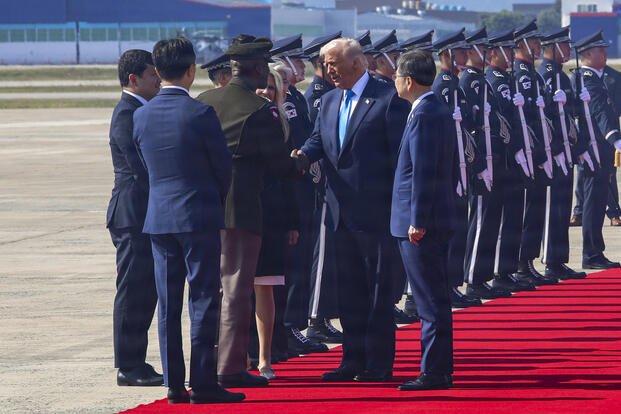
At Tuesday’s press conference, Trump again argued his approach forced allies to move, saying, “Nobody’s done more for NATO than I have,” while casting higher defense budgets as a direct result of U.S. pressure. NATO has not publicly endorsed the administration’s claim that all members committed to a 5% defense spending benchmark, though several allies have acknowledged increases in defense budgets over recent years.
Administration officials have repeatedly argued that deterrence depends on convincing adversaries that consequences will follow aggressive actions. The White House also points to counterterror operations, detainee releases, and a tougher line in multilateral institutions—including sanctions on the International Criminal Court, U.S. withdrawal from the World Health Organization, and a ban on funding to the United Nations Relief and Works Agency (UNRWA).
Momentum or Miscalculation
Supporters see a presidency that moved quickly and unapologetically.
They point to border enforcement claims, crime rhetoric, economic messaging, military investment and veterans-benefits expansion as proof Trump delivered on core promises. Trump leaned heavily on public-safety framing on Tuesday, repeatedly tying immigration enforcement to crime and community security.
Opponents see the pace as destabilizing, warning that confrontational diplomacy risks straining alliances. That, in turn, they argue could produce long-term consequences that outlast short-term wins.
But administration officials reject that critique, arguing that clarity—not compromise—restores credibility at home and abroad. The White House said the first year was a foundation for what it calls a generational shift in American might and global posture.
The Next Phase
The second year will determine whether speed can mature into durability.
Military modernization faces the harder test of translating investment into readiness, training depth and sustained recruiting strength—a challenge Military.com reporting has shown as a long climb even when budgets and incentives rise.
Veterans reforms must hold under staffing pressure and rising demand. Foreign policy initiatives must survive elections abroad, shifting alliances and adversaries eager to probe American resolve.
Administration officials said the first year was about motion. The second, they argue, will be about permanence.
Read the full article here
21 Comments
The article mentions the president’s visit to the USS George Washington, which highlights the importance of military alliances and cooperation, but I’d like to know more about the discussions and agreements reached during this visit.
I’m concerned about the potential consequences of the administration’s policies on the military’s reputation and its ability to attract and retain top talent, as the changes to personnel policies and education might be seen as regressive.
The changes to grooming standards, physical fitness requirements, and personnel policies might be seen as a way to increase recruitment and retention, but will these changes also address the underlying issues of confidence and eligibility challenges within the military?
The administration’s focus on readiness, lethality, and recruitment is understandable, but it’s crucial to balance these priorities with the need for diplomacy and international cooperation to address global security challenges.
The unveiling of the F-47 sixth-generation fighter is a significant development, but what are the plans for its deployment and how will it enhance the country’s defense capabilities?
The administration’s focus on warfighting fundamentals, as mentioned by White House spokesperson Anna Kelly, seems to be a significant shift in policy, but I’m curious to know how this will impact the overall budget and resource allocation within the Pentagon.
It’s likely that the increased focus on warfighting will lead to a reallocation of funds from other areas, such as education and training programs, to prioritize readiness and lethality.
The claim of ‘365 wins in 365 days’ by President Trump’s administration sounds impressive, but I’d like to see a more detailed breakdown of these accomplishments to understand their actual impact on the country’s military strength and veterans’ benefits.
The emphasis on American power abroad and the push for military might might be seen as a return to a more assertive foreign policy, but it’s essential to consider the potential risks and consequences of this approach, including the potential for increased conflict and destabilization.
The article mentions the administration’s goal to reduce reliance on foreign suppliers, which is a crucial step towards strengthening the defense industrial base, but what are the timelines and strategies in place to achieve this objective?
The press conference on Jan. 20, where President Trump amplified his message, seemed to be more focused on claims and national borders rather than providing a clear vision for the future of the military and its role in global politics.
The removal of emphases on ‘woke DEI policies’ might be seen as a step back in terms of promoting diversity and inclusion within the military, and I’d like to know more about the reasoning behind this decision.
I’m excited about the potential of the F-47 sixth-generation fighter, but I’d like to know more about its capabilities and how it will be integrated into the existing military infrastructure.
I appreciate the administration’s efforts to prioritize veterans’ benefits and medical access, as it’s essential to support those who have served the country, but I’d like to see more concrete results and metrics to measure the success of these initiatives.
President Trump’s emphasis on veterans’ benefits and medical access is commendable, but I’d like to know more about the specific initiatives and policies implemented to address the backlog of VA claims and improve services for veterans.
The expanded space security initiatives and increased cyber defense funding are crucial in today’s digital age, but how will these investments be allocated and what are the expected outcomes in terms of enhanced national security?
I’m concerned about the potential consequences of accelerating weapons development and rebuilding depleted stockpiles, as this could lead to an arms race and increased tensions with other nations.
The focus on military might and readiness could be seen as a provocative move, potentially destabilizing international relations and leading to a new era of military competition.
The article highlights the administration’s achievements in the first year, but it’s essential to consider the long-term implications of these policies and their potential impact on the country’s military and international relations.
I’m skeptical about the removal of ‘ideological capture’ from military education, as mentioned in the article, and how it will affect the diversity and inclusivity within the military institutions.
The changes to service academy oversight and advisory structures might be seen as a step back in terms of promoting diversity and inclusion within the military.