

Listen to the article
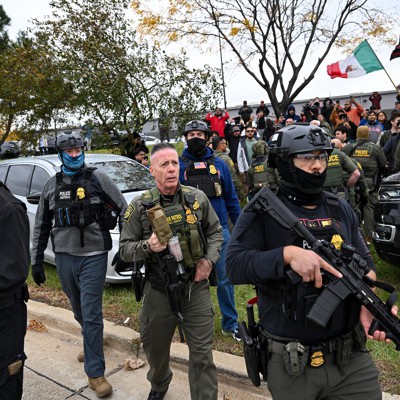
President Donald Trump announced Wednesday that he will back off his plans to use National Guard troops in the Democratic-led cities of Chicago, Los Angeles and Portland, Oregon.
The move follows the Supreme Court’s decision last week that found Trump could not deploy guard members to Chicago, ruling that the president did not meet the requirements to send guard members to the Windy City for the purpose of assisting with federal immigration enforcement.
Several federal judges have either blocked the deployments or found them unlawful. The Posse Comitatus Act of 1878, generally prevents the military from participating in civilian law enforcement.
“We will come back, perhaps in a much different and stronger form, when crime begins to soar again – Only a question of time!” Trump wrote on his social media site, TruthSocial.
The president first deployed National Guard troops earlier this summer to Los Angeles, following massive protests against immigration raids.
He has continued to send service members to cities with Democratic leaders, a decision that has tested the legal bounds of presidential authority on military law all the way up to the Supreme Court.
An appeals court in early December ruled that the Trump administration must remove troops from Los Angeles, which upheld a lower court ruling that found it illegal to keep an extended military presence long after protests quelled.
In November, a federal judge permanently blocked the Trump administration from deploying hundreds of National Guard troops to Portland, Oregon.
The judge, Karin Immergut, found the move to use service members for the purpose of protecting a federal immigration facility exceeded presidential authority. Trump nominated Immergut in his first term.
Guard members are still deployed in the District of Columbia; Memphis, Tennessee; and New Orleans, Louisiana.
This story was originally published by Stateline.
Read the full article here
12 Comments
It’s notable that Trump nominated Judge Karin Immergut, who permanently blocked the deployment of National Guard troops to Portland, Oregon – this highlights the complexities of presidential appointments and their potential impact on judicial decisions.
The appeals court ruling in early December to remove troops from Los Angeles is a victory for the city, but I’m concerned about the prolonged presence of Guard members in the District of Columbia, Memphis, and New Orleans – what’s the plan for their withdrawal?
I’m surprised that the article doesn’t mention the potential impact of these deployments on local communities – have there been any studies or assessments on the effects of prolonged military presence in cities like Los Angeles or Portland?
The fact that several federal judges have blocked or found the deployments unlawful suggests that Trump’s actions are not aligned with the legal framework – what are the implications for his authority on military law?
Trump’s statement that he will come back with a stronger form of deployment when crime begins to soar again is concerning – doesn’t this imply a potential escalation of military involvement in civilian law enforcement?
The Supreme Court’s decision last week has significant implications for the limits of presidential power – it’s a reminder that even the president is not above the law and must adhere to the requirements for deploying National Guard troops.
I’m skeptical about Trump’s claim that crime will soar again and he’ll come back with a stronger form of deployment – doesn’t the Posse Comitatus Act of 1878 prevent the military from participating in civilian law enforcement?
Yes, the Posse Comitatus Act does limit the military’s role in law enforcement, but Trump has consistently pushed the boundaries of presidential authority on military law.
I’m curious about the role of the National Guard in assisting with federal immigration enforcement – isn’t that typically the responsibility of other agencies like ICE or CBP?
The initial deployment of National Guard troops to Los Angeles following massive protests against immigration raids raises questions about the timing and motivations behind Trump’s decisions – was it a genuine attempt to assist with law enforcement or a political move?
I think it’s a mix of both – Trump has consistently used immigration as a wedge issue, but the protests in Los Angeles did pose a significant challenge to law enforcement.
The fact that the Supreme Court ruled Trump could not deploy guard members to Chicago due to not meeting the requirements is a significant blow to his plans, and it’s interesting to see how this will impact his future decisions on National Guard deployments.