

Listen to the article
More than 30 countries recently announced security guarantees that would take effect following a cease-fire between Ukraine and Russia, vowing to continue providing “critical long-term military assistance” to Ukraine’s armed forces, which they declared to be Europe’s “first line of defense and deterrence.” The role of the United States in that effort will soon be decided by Congress, which is debating its contributions as emergency assistance shifts to sustained support.
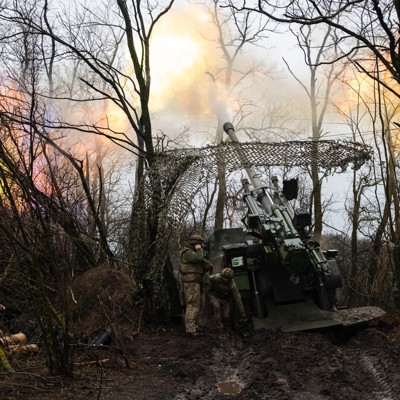
The 2026 National Defense Authorization Act, signed into law last month, authorizes $400 million for the Ukraine Security Assistance Initiative, the primary vehicle for U.S. security assistance since Russia first invaded Ukraine in 2014. USAI is not a cash transfer program; it pays for U.S. training and equipment like artillery, air defense, anti-tank systems, and drones.
But the NDAA is only an authorization bill. Funding will not materialize until Congress passes a full-year defense appropriations bill. USAI has received annual appropriations for more than a decade, under Democratic and Republican administrations. The House appropriations bill, however, provides no funding for fiscal 2026. No funding was requested by the Trump administration and an effort in committee to add funding failed. The Senate bill, by contrast, includes $800 million.
The actual amount for USAI will be driven by politics and the defense topline. House appropriators have approved $832 billion to the Defense Department for fiscal 2026, meeting the administration’s request, while Senate appropriators have added $22 billion. If the final topline comes in close to the House level, USAI is likely to land near $300 million. If the topline comes in close to the Senate level, $400 million or even higher becomes possible. According to Politico, House Appropriations Committee Chairman Tom Cole told reporters that the defense topline would slightly exceed the NDAA topline, which was $8 billion above the request.
At $300 million to $400 million, Congress is not trying to underwrite the war effort alone. That would cost billions. It is trying to keep Ukraine’s forces viable, reinforce European burden sharing, and maintain Western leverage in negotiations as Russia continues to attack Ukraine’s cities and infrastructure.
While Ukraine assistance has been controversial in Congress, several factors make it easier for members to vote for it this year: the Europeans’ agreement to a framework of security guarantees that the United States under the Trump administration has endorsed; and the passage of the NDAA—for members who might otherwise have difficulty supporting appropriations will have already voted for the underlying authorization. The departure of Rep. Marjorie Taylor Greene, one of the most vocal opponents of U.S. support for Ukraine, also helps.
Does this funding matter? Yes, both symbolically and substantively.
While these levels are a fraction of the tens of billions the United States was providing to Ukraine not that long ago, continued U.S. security assistance is highly symbolic at a time when peace talks are being considered and Ukraine is looking to see if those commitments will be backed up by real dollars. Moreover, if a peace deal is not reached, these funds will serve as a bridge until European funding and production increase.
Ukraine assistance in the upcoming defense appropriations bill would signal to Ukraine and the Europeans that Washington intends to stay engaged in supporting Ukraine’s security. That signal can bolster the administration’s diplomatic efforts to end the war, and influence how much Europe is willing to invest and how confidently Ukraine can pursue a peace settlement.
For Congress, the question is not whether Europe should carry more of the burden. The question is whether the United States will provide a modest but reliable amount that keeps Ukraine in the fight, keeps Europe at the table, and keeps the U.S. strategy credible. Without that credibility, Russia has little reason to strike a peace deal.
David Bortnick is a Vice President at SMI, a government affairs firm. He previously served as a Professional Staff Member on the House Appropriations Committee, where his portfolio included security assistance for Ukraine, and as a Legislative Analyst at the White House Office of Management and Budget.
Read the full article here
20 Comments
I’m skeptical about the effectiveness of the $300-400 million funding range in keeping Ukraine’s forces viable, given that the article mentions it’s a fraction of the tens of billions the U.S. was providing earlier.
The article’s mention of the Trump administration not requesting funding for USAI in the past is notable, especially considering the current administration’s stance on Ukraine’s security.
The article highlights the importance of the U.S. commitment to Ukraine’s security, not just financially but also symbolically, in reinforcing European burden sharing and maintaining Western leverage in negotiations.
It’s interesting that the article mentions the Europeans’ agreement to a framework of security guarantees, which the U.S. under the Trump administration has endorsed, as a factor that could make it easier for Congress members to vote for Ukraine assistance.
The article notes that the actual amount for USAI will be driven by politics and the defense topline, which could result in funding near $300 million if the final topline is close to the House level.
I’m curious to know how the $832 billion approved by House appropriators for the Defense Department will impact the final funding amount for USAI, considering the Senate bill includes $800 million.
Considering the 2026 National Defense Authorization Act authorizes $400 million for USAI, it’s surprising that the House appropriations bill doesn’t include any funding for fiscal 2026, highlighting the need for a full-year defense appropriations bill.
It’s reassuring to see that the U.S. is not trying to underwrite the war effort alone, but rather aiming to keep Ukraine’s forces viable and maintain Western leverage in negotiations.
I’m concerned that the funding uncertainty might impact the ability of Ukraine’s forces to defend against ongoing Russian attacks, and it’s crucial that Congress reaches a decision soon.
The actually funding matter is critical as Russia continues to attack Ukraine’s cities and infrastructure, and the U.S. needs to maintain Western leverage in negotiations.
The difference between the House and Senate bills, with the House providing no funding and the Senate including $800 million, highlights the ongoing debate about the level of U.S. involvement in Ukraine’s defense.
This discrepancy also underscores the political nature of the decision, with the final amount likely being driven by the defense topline and political negotiations.
The House Appropriations Committee Chairman Tom Cole’s statement that the defense topline would slightly exceed the NDAA topline could have significant implications for the final funding amount for USAI.
The actually funding matter is not just about the amount, but also symbolically, as it shows the U.S. commitment to Ukraine’s security and European burden sharing.
The $400 million authorized for the Ukraine Security Assistance Initiative in the 2026 National Defense Authorization Act is a significant commitment, but it’s concerning that the House appropriations bill provides no funding for fiscal 2026.
The fact that USAI pays for U.S. training and equipment, such as artillery and air defense systems, rather than being a cash transfer program, is an important distinction in understanding the nature of U.S. support for Ukraine.
The passage of the NDAA and the Europeans’ agreement to a framework of security guarantees make it easier for Congress members to vote for Ukraine assistance this year, despite some controversy surrounding the issue.
The $22 billion difference between the House and Senate appropriations bills for the Defense Department could significantly impact the final funding amount for USAI, depending on which level is ultimately approved.
The fact that USAI has received annual appropriations for over a decade under both Democratic and Republican administrations suggests that there’s bipartisan support for Ukraine’s security, but the current funding uncertainty is troubling.
Yes, and the departure of Rep. Marjorie Taylor Greene, a vocal opponent of U.S. support for Ukraine, might help sway some votes in favor of funding.