

Listen to the article
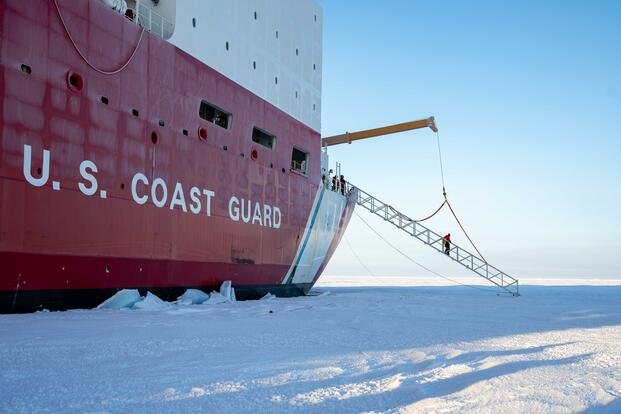
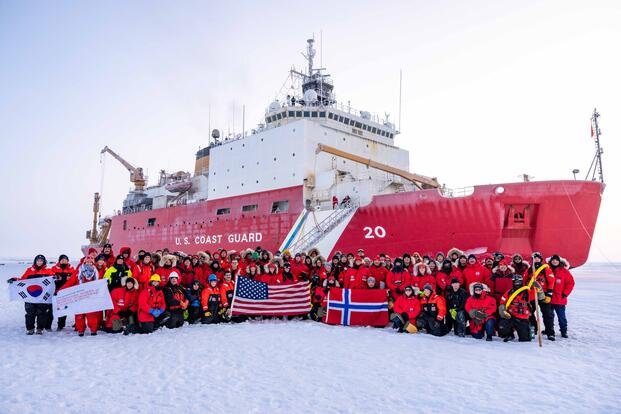
The U.S. Coast Guard is updating its fleet, adding up to six Arctic Security Cutter (ASC) icebreaker ships as part of joint security efforts between the United States and Finland.
USCG made the announcement Monday evening that the contracts for the ships, designed to break through and navigate ice-covered waters, were awarded Dec. 26 to Rauma Marine Constructions (RMC) of Rauma, Finland, and Bollinger Shipyards Lockport, L.L.C. of Lockport, Louisiana. U.S. officials said the cutters will defend U.S. sovereignty, secure critical shipping lanes, protect energy and mineral resources, and counter adversaries’ presence in the Arctic region.
Their presence will also allow the Coast Guard to control, secure and defend the U.S. Alaskan borders, facilitate maritime commerce vital to economic prosperity and strategic mobility, and respond to any regional crises. ASCs are necessary due to their capabilities in less than desirable Arctic conditions, offering extended independent operations without resupply in addition to long-range deployment to safeguard regional U.S. interests.
“America has been an Arctic nation for over 150 years, and we’re finally acting like it under President [Donald] Trump,” Department of Homeland Security Secretary Kristi Noem said in a statement. “Our adversaries continue to look to grow their presence in the Arctic, equipping the Coast Guard with Arctic Security Cutters will help reassert American maritime dominance there.
“Revitalizing the U.S. Coast Guard’s icebreaking capabilities is crucial for our security and prosperity, and today’s announcement is an important step in that direction.”
Adm. Kevin E. Lunday, acting commandant of the Coast Guard, said in a statement that the icebreakers “represent decisive action to guarantee American security in the Arctic.”
“These cutters will ensure the Coast Guard’s ability to control, secure, and defend our northern border and maritime approaches—without question,” Lunday said.
Military.com reached out to USCG for additional comments and information.
‘Fast’ Build Schedule
The contractual awards are currently scheduled to develop and deliver ASCs as soon as 2028.
The contract with RMC includes up to two ASCs to be built in Finland, with delivery of the first vessel expected in 2028. RMC leaders said in a statement that construction of the vessels will begin immediately and will be built at the Rauma shipyard, with a completion date sometime in 2028. Satakunta University of Applied Sciences is working as a training partner in the construction efforts.
“These ships will operate in some of the harshest conditions on Earth.”
“The awarded contract marks a historic milestone. It is a major vote of confidence in RMC and in the Finnish maritime industry network. We secured this significant deal thanks to our expertise and capability to build the ships within the required timeframe. Our fast delivery times make us the most affordable option on the market. Now it is time for us and our network to prove ourselves and demonstrate that we are worthy of trust,” Mika Nieminen, CEO of RMC, said in a statement.
Bollinger is slated to deliver the first domestically built cutter by 2029. They are working on their four ASCs at their shipyard in Houma, Louisiana, with support from workers at multiple facilities across America’s Gulf Coast.
The company is working in tandem with Seaspan Shipyards of Vancouver, Canada, who are creating the design while Aker Arctic Technology Inc of Helsinki, Finland, will develop the models. Communication between Bollinger and RMC will continue as the project plays out.
“The Arctic Security Cutter is one of the most consequential and time-sensitive shipbuilding programs in U.S. Coast Guard history. … By centering ASC construction in Houma, Louisiana, while drawing on our broader footprint, we gain the flexibility and capacity to move fast without compromising safety or quality,” said Bollinger President and CEO Ben Bordelon in a statement. “These ships will operate in some of the harshest conditions on Earth.”
This will be Bollinger’s fifth class of cutters built for the USCG, previously delivering over 187 cutters for the service dating over 40 years.
ICE Pact Gets Stronger
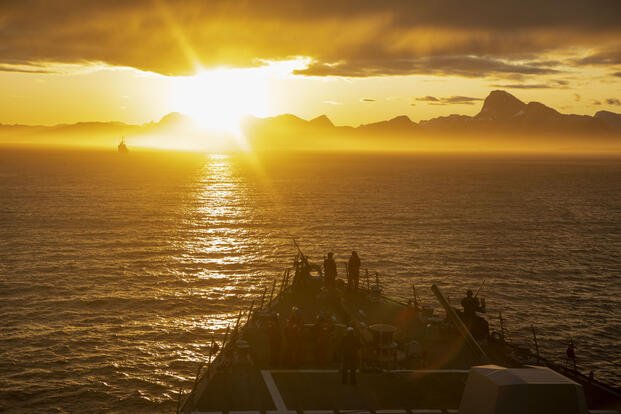
Both RMC and Bollinger said the ASCs will exemplify continuing support for the Icebreaker Collaboration Effort (ICE) Pact—a trilateral agreement between the U.S., Canada and Finland agreed upon in July 2024 that combines knowledge, resources and expertise to produce icebreakers. National representatives of the ICE Pact all signed a memorandum of understanding in November 2024 to build upon the years-long framework.
Finnish Minister of Economic Affairs Sakari Puisto said in a statement that the contract makes sense considering that “Finnish shipyards build the world’s best icebreakers and the largest cruise ships.”
He called it “excellent news” for not just his nation’s global competitiveness and value exports but the entire maritime industry.
“The entity formed by the shipyard and an extensive network of subcontractors and partners is unique internationally,” Puisto added. “This will enable us to deliver even the most modern icebreakers quickly and with high quality.”
Story Continues
Read the full article here
16 Comments
I wonder how the ASCs will be equipped to respond to regional crises, such as search and rescue operations or environmental disasters, in the harsh and remote Arctic environment.
The Coast Guard has likely considered these scenarios and will equip the ASCs with the necessary technology and personnel to respond effectively.
The collaboration between the U.S. and Finland on this project is noteworthy, and it will be interesting to see how this joint effort enhances the U.S. Coast Guard’s icebreaking capabilities, especially in defending the U.S. Alaskan borders.
The announcement of up to six Arctic Security Cutter icebreaker ships is a significant development, especially with the contracts awarded to Rauma Marine Constructions and Bollinger Shipyards Lockport, and I’m curious to know more about the specific capabilities of these vessels in breaking through and navigating ice-covered waters.
The ASCs are designed to operate in harsh Arctic conditions, which is crucial for defending U.S. sovereignty and securing critical shipping lanes.
The ability of the ASCs to operate independently for extended periods without resupply is a critical feature, allowing them to safeguard regional U.S. interests in the Arctic more effectively.
It’s interesting to note that the contract with RMC includes up to two ASCs to be built in Finland, which could have implications for the local economy and job market in the Rauma region.
The fact that the U.S. has been an Arctic nation for over 150 years and is now acting to reassert American maritime dominance in the region is a significant geopolitical move, and I wonder how other nations will respond to this development.
The collaboration between the U.S., Finland, and potentially other nations in the ICE Pact is a positive development, as it promotes cooperation and shared interests in the Arctic region.
I’m skeptical about the ‘fast’ build schedule, with the first vessel expected to be delivered in 2028, considering the complexity of building icebreaker ships and the need for rigorous testing and training.
The role of Satakunta University of Applied Sciences as a training partner in the construction efforts is a positive aspect, as it will likely contribute to the development of skilled workers in the shipbuilding industry.
The U.S. Coast Guard’s decision to update its fleet with these icebreaker ships is a necessary step, given the changing geopolitical landscape and the increasing importance of the Arctic region for global trade and security.
I’m concerned about the potential environmental impact of these icebreaker ships, especially given the sensitive ecosystems in the Arctic region, and I hope that environmental assessments have been thoroughly conducted.
Adm. Kevin E. Lunday’s statement that the icebreakers ‘represent decisive action to guarantee American security in the Arctic’ underscores the importance of these vessels in ensuring national security and defending U.S. interests.
Secretary of Homeland Security Kristi Noem’s statement that ‘our adversaries continue to look to grow their presence in the Arctic’ highlights the strategic importance of the region and the need for the U.S. to bolster its presence there.
This is particularly relevant given the current global landscape and the potential for increased competition in the Arctic region.