

Listen to the article
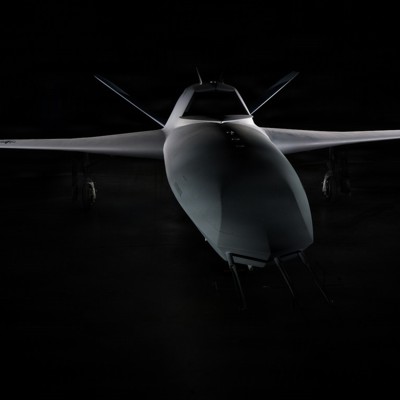
Left in the cold after the Air Force picked Anduril and General Atomics to develop prototype robot wingmen, Northrop Grumman responded with a secret, self-financed effort to get back in the game. On Monday, the Virginia-based defense giant reached its goal: service officials announced that its planned collaborative combat aircraft—unveiled just weeks ago as Project Talon—could compete for initial production contracts.
The Air Force also announced on Monday that nine unnamed companies would receive money to develop a second iteration of CCAs, intended to broaden their uses beyond protecting manned jets from attack.
The new contracts “represent a broad spectrum, ranging from more affordable, attritable concepts to higher-end, more exquisite designs,” an Air Force official told Defense One in an emailed statement on Monday, adding that the companies’ names “remain protected by enhanced security measures at this time.”
Meanwhile, the official said, “Northrop Grumman remains in a vendor pool that can compete for future efforts, including the Increment 1 production contract and subsequent increments.”
Northrop’s Project Talon CCA, whose first flight is planned for next year, also received an Air Force designator: YFQ-48A. The official said that marks the offering as a “strong contender” against Anduril’s YFQ-44A Fury and General Atomics’ YFQ-42A.
“We are encouraged by Northrop Grumman’s continued investment in developing advanced semi-autonomous capabilities,” Brig. Gen. Jason Voorheis, program executive officer for Fighters and Advanced Aircraft, said in a news release. “Their approach aligns with our strategy to foster competition, drive industry innovation, and deliver cutting-edge technology at speed and scale.”
The Air Force has said that it intends to buy “more than 100” Increment 1 CCAs and have an operational CCA capability by 2030.
Anduril, General Atomics, and Northrop did not return a request for comment on Monday.
Defense business experts and analysts said Northrop’s designation is yet another example of how fast the Air Force is moving on the CCA contracts.
“It’s unusual to get that designation in the stage of Increment Two that we understand, which is just this concept-refinement phase,” said Jon Hemler, an analyst with Forecast International, a sister brand of Defense One. “What I take away from it is that the Air Force is moving fast on this type of acquisition program.”
While the first iteration of the CCA program was focused on air-to-air combat, Northrop’s prototype was designed to handle a variety of missions. The aircraft took roughly 15 months to build; the number of parts and build time were kept low to reduce costs, Defense One has reported.
The Air Force is nearly doubling the number of companies it’s looking at for the next round of the CCA competition. For Increment 1, five companies vied for development contracts, with Anduril and General Atomics initially outlasting Boeing, Northrop, and Lockheed Martin. Then-Air Force Secretary Frank Kendall said last year he’d like to have at least two or three competitors, adding that carrying three companies into development could be possible if industry would agree to certain cost-sharing initiatives.
“I think we could do three, and that would be our preference,” Kendall said in February.
Several companies have revealed CCA prototypes this year, including a multi-purpose drone from Lockheed Martin’s Skunk Works. Boeing also unveiled an Army-focused tiltrotar drone concept and has hit major milestones with its MQ-28 Ghost Bat CCA in use with the Australian Air Force in recent weeks.
“It initially was kind of debuted, that the first increment would be a low-cost, attritable, just get something, procured, built, and in the air. And Increment Two would be a refinement phase, Hemler said. “But what it’s looking like now, is that Increment Two might be—certainly, more refined, but where I expect Increment Two to kind of see significant changes is international participation.”
The Air Force official said the second increment will be “structured similarly” to the first increment where more than one company may be selected to build a prototype.
“For CCA Increment 2, following concept refinement, the Air Force will proceed with prototyping, with plans for a future competitive award leading to production awards,” the official said. “The specific timeline for these milestones will depend on the results from Concept Refinement and the vendor’s performance during testing.”
Read the full article here
22 Comments
I’m curious about the potential applications of the CCA technology beyond air-to-air combat, and how the Air Force plans to utilize these capabilities in various mission scenarios.
It’s notable that the Air Force is considering a range of concepts, including more affordable and attritable options, which could be crucial for the program’s success and adoption.
The Air Force’s goal to buy more than 100 Increment 1 CCAs suggests a significant investment in the technology, and it will be interesting to see how this procurement process unfolds and what the eventual operational capabilities will be.
I’m curious about the ‘enhanced security measures’ protecting the names of the nine companies receiving money to develop a second iteration of CCAs, and how this secrecy will impact the development process.
The involvement of nine companies in the next phase of the CCA competition, including Northrop Grumman, Anduril, and General Atomics, will likely lead to a more diverse and innovative set of solutions.
The fact that Northrop Grumman’s Project Talon CCA received an Air Force designator, YFQ-48A, indicates a strong contender against Anduril’s YFQ-44A Fury and General Atomics’ YFQ-42A, which could significantly impact the robot-wingman competition.
This designation is indeed a notable development, as it suggests the Air Force is seriously considering Northrop Grumman’s offering for the Increment 1 production contract.
Northrop Grumman’s ability to get back into the competition with Project Talon, despite initial setbacks, demonstrates the company’s resilience and commitment to advancing the technology.
The mention of ‘cutting-edge technology at speed and scale’ by Brig. Gen. Jason Voorheis highlights the importance of innovation and rapid development in the CCA program, and the need for the Air Force to balance these goals with operational requirements.
Brig. Gen. Jason Voorheis’ statement about Northrop Grumman’s approach aligning with the Air Force’s strategy to foster competition and deliver cutting-edge technology at speed and scale is reassuring, but how will this be measured and achieved?
The Air Force’s strategy to foster competition is crucial, as it can drive innovation and reduce costs, but it’s also important to ensure that the competition remains fair and transparent.
It’s interesting that Northrop Grumman’s prototype was designed to handle a variety of missions, unlike the first iteration of the CCA program which focused on air-to-air combat, and was built in just 15 months with reduced costs in mind.
I’m skeptical about the ability to have an operational CCA capability by 2030, given the complexity of the technology and the development timeline, but the Air Force’s enthusiasm is noteworthy.
The fact that the Air Force is nearly doubling the number of companies it’s looking at for the next round of the CCA competition, from five to nine, suggests a broader interest in exploring different concepts and technologies.
The contrast between the first iteration of the CCA program, which focused on air-to-air combat, and Northrop’s prototype, which can handle various missions, highlights the evolving nature of the program and its potential applications.
The fact that Northrop Grumman was able to build their prototype in just 15 months with a reduced number of parts and build time to lower costs is impressive, and could be a significant factor in the competition.
The secrecy surrounding the names of the nine companies receiving contracts for the next phase of the CCA competition raises questions about the role of transparency in the development process and the potential risks of such secrecy.
The Air Force’s plan to buy more than 100 Increment 1 CCAs and have an operational CCA capability by 2030 seems ambitious, especially considering the current stage of concept refinement.
The Air Force’s willingness to consider a range of concepts and technologies for the CCA program is a positive sign, as it suggests a flexible and adaptive approach to meeting the program’s goals.
Jon Hemler’s comment that it’s unusual to get a designation like YFQ-48A at this stage of the program suggests that the Air Force is indeed moving quickly on the CCA contracts, which could be both beneficial and risky.
Northrop Grumman’s self-financed effort to develop Project Talon, despite being initially left out of the competition, demonstrates the company’s commitment to the project and its belief in the technology’s potential.
The Air Force’s announcement that the new contracts represent a broad spectrum of concepts, from affordable to high-end designs, is encouraging, as it suggests a willingness to explore different approaches and find the most effective solutions.