

Listen to the article
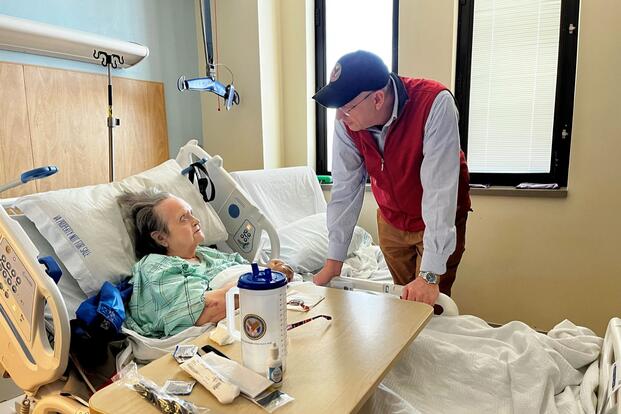
Veterans visiting some Department of Veterans Affairs medical centers may notice something different at their next appointment: Their doctor is looking at them instead of typing furiously into a computer.
The change comes from a new artificial intelligence tool the VA launched in October that listens to appointments and automatically generates clinical notes. The technology, called ambient AI scribe, frees providers from one of health care’s biggest frustrations while giving veterans something they say has been missing for years, genuine eye contact and conversation.
“Veterans said they felt more connected to their provider because they were having a real conversation, not talking to someone typing on a computer,” said Donna Hill, director of operations for AI and emerging technologies at the VA’s Digital Health Office, according to VA News.
Read More: Congress Wants VA to Expand AI for Flagging Suicide Risk
The scribe tool works by recording the appointment audio with the veteran’s permission then using AI to transcribe the conversation and pull out relevant medical information for the patient’s chart. What used to take providers 15 to 30 minutes of typing after each visit now happens automatically in the background.
Why This Matters Now
Provider burnout has reached crisis levels across health care. Clinicians spend nearly half their workday on documentation and administrative tasks rather than patient care, often working evenings and weekends catching up on notes.
After using the new system: “My provider would look me in the eye and have an actual conversation,” one veteran told the VA.
The VA piloted ambient AI scribe with more than 800,000 veterans over six months. Feedback was overwhelmingly positive from both patients and providers.
The technology addresses both problems: Providers get hours of their day back. Veterans get face-to-face interaction that builds trust and improves care.
How It Works
When a veteran arrives for an appointment, the provider asks permission to use the ambient scribe. If the veteran agrees, the system quietly records the conversation through a device in the exam room.
The AI processes the audio in real time, identifying medical information such as symptoms, diagnoses, medications and treatment plans. It generates a draft note that the provider reviews and signs off on before it goes into the veteran’s record. The technology doesn’t make medical decisions; it simply handles the clerical work of documenting what happened.
Veterans keep full control. They can decline to have the appointment recorded, and they can ask for the recording to stop at any time during the visit.
What Veterans and Providers Say
The VA surveyed 75 veterans about the technology and found 71% had no concerns about using it. The minority who expressed reservations worried primarily about privacy, though the VA emphasized that all recordings are handled under the same strict medical privacy rules that protect other health information.
Veterans who have experienced appointments with the ambient scribe are recommending it to others, while one provider using the system said the accurate documentation makes appointments safer. “Having an accurate record [factors] into making this the safest experience possible,” the provider told the VA.
The ambient scribe handles the bulk of routine note-taking while providers still review and approve everything before it becomes part of the official record. That human oversight is intentional. The VA designed the system to augment clinical work, not replace the judgment and expertise of trained medical professionals.
Privacy and What Comes Next
The ambient AI scribe operates under the same privacy protections as all VA medical records. Recordings are encrypted and stored securely within VA systems, not shared with third parties or used to train commercial AI models.
The VA plans to expand ambient AI scribe to all VA medical centers across the country throughout 2026. Veterans won’t need to do anything to access the tool; providers will offer it as an option during appointments once it’s available at their facility.
The technology is part of a broader VA push to use artificial intelligence in situations in which the AI can improve care and reduce administrative burden. Other initiatives include AI systems that help identify veterans at high risk of suicide and tools that streamline benefits claims processing.
“Veterans benefit from improved face-to-face time with providers as well as improved accuracy of documentation in their health records,” Hill said in the VA announcement.
For veterans curious about whether their VA facility offers ambient AI scribe, ask your provider at your next appointment. If it’s not available yet, it likely will be sometime in 2026.
The Veterans Crisis Line is available 24/7 for any veteran in crisis. Call 988 and press 1, text 838255, or chat online at VeteransCrisisLine.net.
Stay on Top of Your Veteran Benefits
Military benefits are always changing. Keep up with everything from pay to health care by subscribing to Military.com, and get access to up-to-date pay charts and more with all latest benefits delivered straight to your inbox.
Story Continues
Read the full article here
16 Comments
I’m concerned about the potential for technical issues or equipment malfunctions with the ambient AI scribe, how will the VA ensure that the technology is reliable and functions as intended in all situations?
The article doesn’t mention specific contingency plans for technical issues, but it’s likely that the VA has protocols in place to address such problems
The VA’s decision to pilot the ambient AI scribe with over 800,000 veterans over six months demonstrates their commitment to improving patient care and reducing provider burnout, I’m excited to see the long-term impact of this technology
The fact that veterans can decline to have the appointment recorded or ask for the recording to stop at any time during the visit is a crucial aspect of maintaining patient control and autonomy
The ambient AI scribe has the potential to free up a significant amount of time for providers, with the article stating that what used to take 15 to 30 minutes of typing after each visit now happens automatically in the background
The fact that providers spend nearly half their workday on documentation and administrative tasks rather than patient care is staggering, and it’s no wonder burnout has reached crisis levels across healthcare, the new AI tool could be a game changer
The statistic that 71% of veterans had no concerns about using the ambient AI scribe is promising, but I’d like to know more about the demographics of the surveyed veterans, were they predominantly from urban or rural areas, and how might this impact the technology’s effectiveness
The potential for the ambient AI scribe to improve patient care and reduce provider burnout is significant, I’m hopeful that this technology will be implemented more widely across the healthcare system
I’m curious to know more about the 71% of veterans who had no concerns about using the ambient AI scribe, what were the primary reasons for the remaining 29% who did have concerns, was it mainly due to privacy issues?
According to the article, the minority who expressed reservations worried primarily about privacy, which is understandable given the sensitive nature of medical information
It’s interesting that the article mentions the technology doesn’t make medical decisions, it simply handles the clerical work of documenting what happened, this clarifies the limitations and potential benefits of the ambient AI scribe
I’m skeptical about the accuracy of the AI-generated clinical notes, how does the system ensure that the notes are accurate and comprehensive, and what happens if there are errors or discrepancies?
The article mentions that the provider reviews and signs off on the draft note before it goes into the veteran’s record, which should help catch any errors or discrepancies
The quote from Donna Hill, director of operations for AI and emerging technologies at the VA’s Digital Health Office, highlights the importance of genuine eye contact and conversation in patient care, this is a crucial aspect of building trust between providers and patients
I appreciate that the VA is using the same strict medical privacy rules to protect the recordings, this should help alleviate some of the concerns around patient data security
It’s heartening to hear that veterans who used the new system reported feeling more connected to their provider, with one veteran stating ‘My provider would look me in the eye and have an actual conversation’, this is a significant improvement in patient care