

Listen to the article
Ousted Venezuelan President Nicolás Maduro was defiant during his appearance in a Manhattan courtroom on Monday, saying that he still considers himself the leader of the nation and that the United States “kidnapped” him and his wife.
Maduro and his wife, Cilia Flores, were seized from their home in Caracas over the weekend and are among six defendants named in a four-count U.S. Department of Justice indictment. They are accused of trafficking drugs, including “transporting thousands of tons of cocaine to the United States,” as well as conspiring with drug traffickers to benefit his and his family’s coffers.
Both Maduro and Flores were donned in navy blue V-neck shirts with orange tees underneath, tan pants, and headsets that provides Spanish translations of the proceedings.
Military.com’s Darius Radzius was in the room, reporting that Flores had a bandage on her face and noticeable bruising purportedly resulting from their capture two days earlier. Both requested medical assistance.
When Maduro walked in, he looked from one side of the room to the other and wished all gathered media members in the gallery and jury box “happy new year.”
When the charges of the indictment were read by Manhattan Federal Court Judge Alvin Hellerstein, who is presiding over the case, Maduro confirmed his identity and indicated that he is still “president” of Venezuela—adding that he was “kidnapped” from his home by foreign authorities. Hellerstein cut Maduro off, telling him there will be time at a later date to challenge the accusations.
“I’m the president of Venezuela. I am innocent. In the name of God I will be free.”
Both Maduro and Flores pleaded not guilty to the charges, with the latter saying she’s “not guilty, completely innocent.”
At the end of the proceedings, a voice from an unidentified audience member shouted, “You will pay for what you have done.” Maduro audibly replied, saying, “I’m the president of Venezuela. I am innocent. In the name of God I will be free.” The exchange was conducted in Spanish and given a loose translation.
Attorneys did not speak to the press post-arraignment and left the scene.
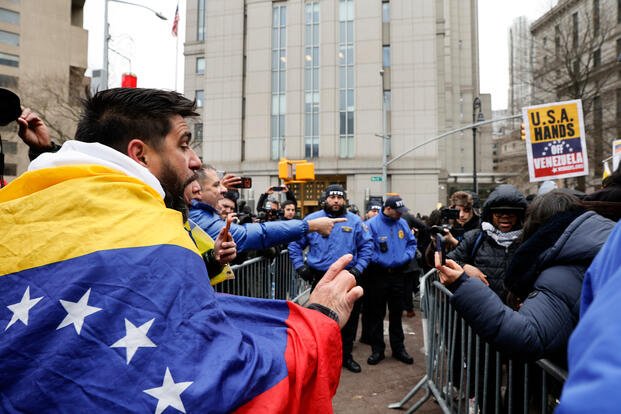
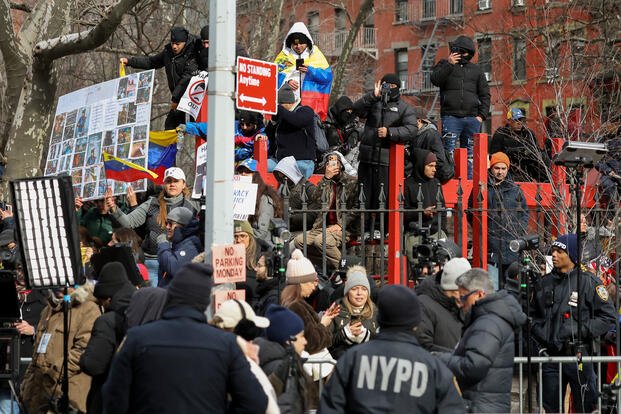
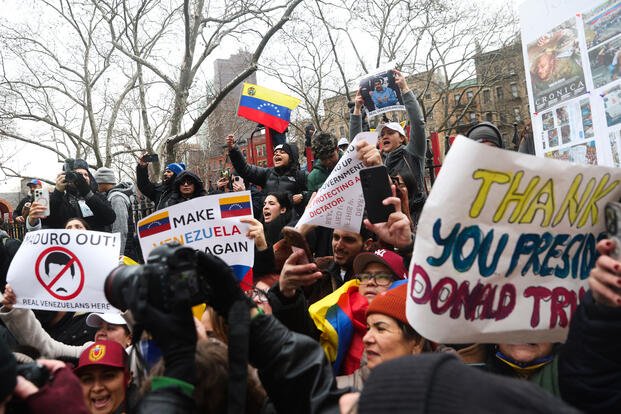
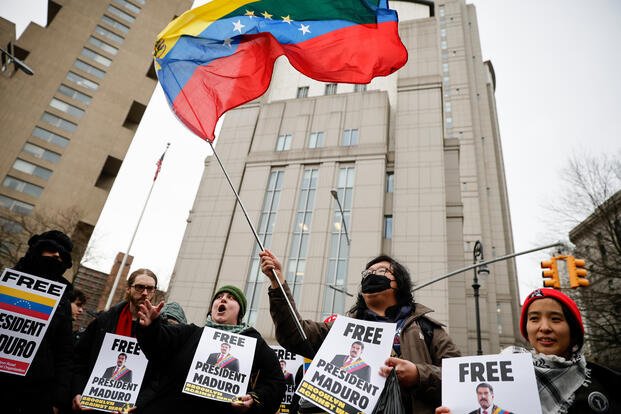
Countless media outlets and protesters both for and against Maduro were present outside the courtroom in the hours leading up to the proceedings. The number of people outside the locked doors grew as the day went on.
Police on scene were adequately separating individuals from opposing sides, preventing any large scuffles from breaking out.
The 25-page indictment of Maduro and Flores alleges that the couple “partnered with narcotics traffickers and narco-terrorist groups, who dispatched processed cocaine from Venezuela to the United States via transshipment points in the Caribbean and Central America, such as Honduras, Guatemala, and Mexico.”
The next court hearing is scheduled for March 17.
Story Continues
Read the full article here
25 Comments
The fact that police were able to separate protesters and prevent large scuffles from breaking out outside the courtroom is a testament to their preparedness and training.
I’m skeptical about the timing of Maduro’s capture, given the current geopolitical climate, and wonder if there are larger strategic interests at play.
Maduro’s statement ‘I am innocent’ is a common defense, but the evidence presented in the indictment will be crucial in determining his guilt or innocence.
The fact that Flores had a bandage on her face and noticeable bruising during the arraignment, purportedly resulting from their capture, raises concerns about the treatment of detainees.
It’s interesting to note that Maduro still considers himself the leader of Venezuela, despite being ousted, and his statement ‘I’m the president of Venezuela. I am innocent. In the name of God I will be free’ suggests a strong sense of determination.
The case against Maduro has the potential to set significant precedents for international cooperation on drug trafficking and corruption cases.
The arraignment of Nicolás Maduro is a major news event, and the media coverage will be important in shaping public opinion and understanding of the case.
The fact that attorneys for Maduro and Flores did not speak to the press post-arraignment suggests a strategic decision to focus on the legal proceedings rather than engaging in public debate.
The complexity of this case, involving international relations, drug trafficking, and corruption, will require careful consideration and analysis to untangle the various threads and interests involved.
The indictment’s claim that Maduro and his family conspired with drug traffickers to benefit their coffers is a serious allegation that will require rigorous evidence to support.
The arraignment of Nicolás Maduro marks a significant development in the case against him, and it will be important to follow the proceedings to see how the evidence is presented and the case unfolds.
The fact that Maduro and his wife, Cilia Flores, pleaded not guilty to the charges of drug trafficking and conspiracy is not surprising, given the severity of the allegations.
The image of Maduro and Flores wearing navy blue V-neck shirts with orange tees underneath, along with headsets for Spanish translations, highlights the complexities of international legal proceedings.
It’s notable that Maduro wished the media members and jury ‘happy new year’ as he entered the courtroom, which could be seen as an attempt to appear conciliatory or even charm the audience.
The presence of protesters both for and against Maduro outside the courtroom underscores the deep divisions and strong emotions surrounding his case.
I’m interested in learning more about the role of the U.S. Department of Justice in this case and how they plan to proceed with the prosecution.
I’m curious to know more about the evidence presented in the indictment, specifically the claim that Maduro and his family benefited from trafficking ‘thousands of tons of cocaine’ to the United States.
Maduro’s response to the unidentified audience member who shouted ‘You will pay for what you have done’ shows a sense of defiance and confidence in his innocence.
I’m concerned about the potential implications of this case for Venezuela and the region, given the already complex and volatile political landscape.
The role of Judge Alvin Hellerstein in presiding over the case and cutting off Maduro’s attempts to challenge the accusations will be crucial in ensuring a fair trial.
I’m wondering what kind of medical assistance Maduro and Flores requested, given their reported injuries during capture, and whether this will impact their ability to participate in the trial.
The image of the armored vehicle carrying Maduro and Flores to the courthouse highlights the security concerns and precautions being taken to ensure their safety.
Nicolás Maduro’s claim that he was ‘kidnapped’ by foreign authorities raises questions about the legality of his capture and the implications for international relations.
The presence of Spanish translations for Maduro and Flores during the proceedings is a necessary accommodation, given the language barrier, and highlights the importance of ensuring due process.
The fact that Maduro still maintains he is the president of Venezuela, despite being ousted, raises questions about the legitimacy of his claim and the recognition of his status by other countries.