

Listen to the article
The United States will mark its 250th anniversary in 2026. The milestone has renewed attention on figures whose actions shaped the country.
Some led armies. Others challenged presidents, escaped slavery, fought for voting rights, or broke color barriers. One is known for betrayal. American history was shaped by battles, elections, official documents, and by scouts, fugitives, writers, athletes, reformers, and Native leaders. As we celebrate the nation’s semi-quincentennial, now is a great time to highlight 12 Americans who changed U.S. history.
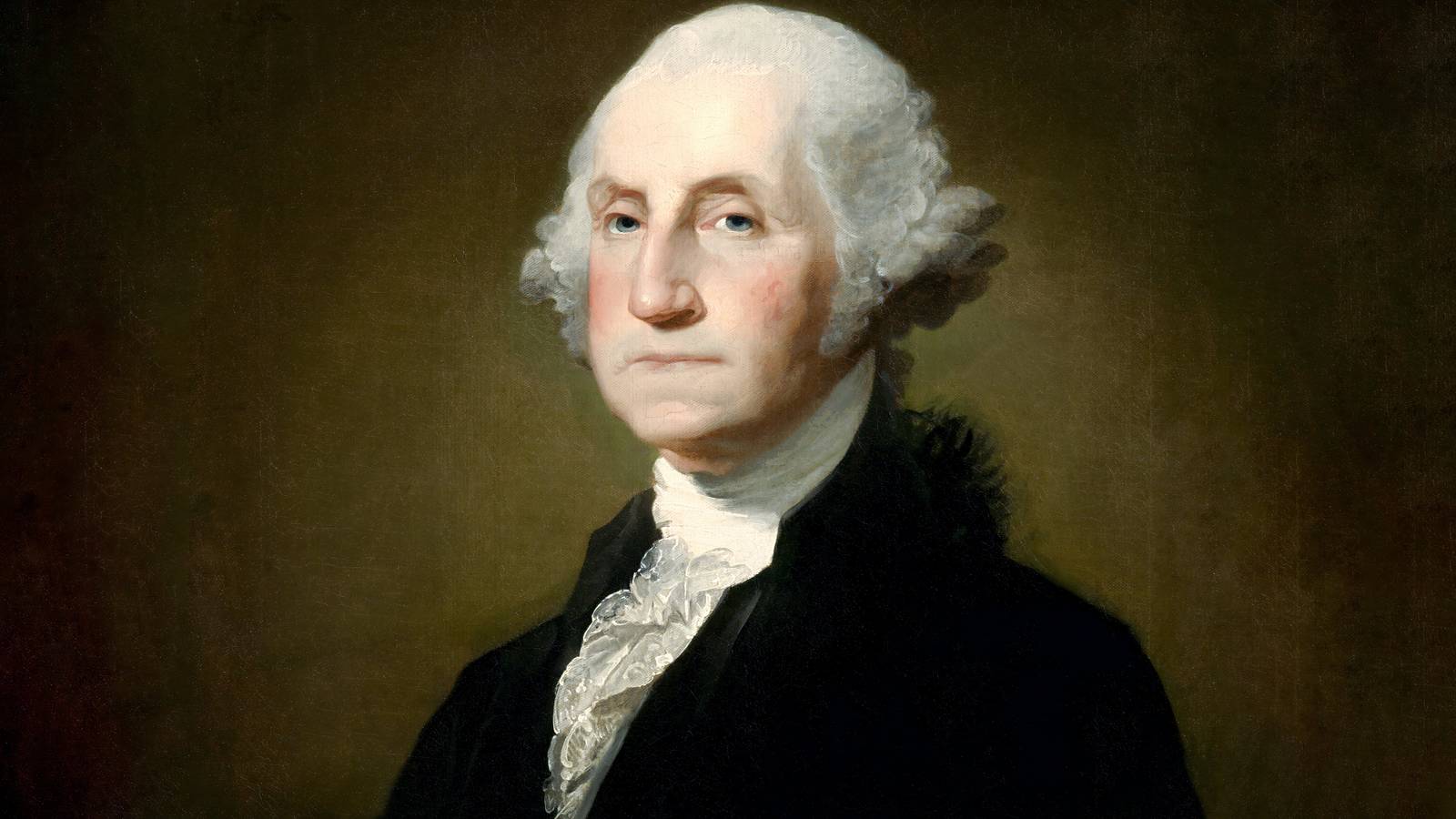
George Washington
Before George Washington became the first president, he was the commander who held the Continental Army together through hunger, defeat and years of uncertainty.
Washington did not win the Revolutionary War just by being a great commander. His biggest achievement was endurance. He kept the army together until the British effort collapsed, helped gain French support, and gave the new nation a leader who did not take power for himself after the war.
In a world in which military leaders often became rulers, Washington resigned his commission at the end of the war and later stepped away from the presidency after two terms. Those decisions helped establish civilian control of the military and a peaceful transfer of power as central expectations of the American system.
His legacy also carries the contradiction at the heart of the founding era: Washington fought for liberty while enslaving people. That tension remains part of any honest accounting of his place in American history.
Sacagawea

Sacagawea was still a teenager when she joined the Lewis and Clark Expedition, but her role became one of the most remembered parts of the journey across the continent.
A Lemhi Shoshone woman, Sacagawea traveled with the Corps of Discovery from 1805 to 1806, carrying her infant son as the expedition moved through territory unfamiliar to the Americans. She helped with translation, identified edible plants and served as a visible sign to some Native communities that the expedition was not a war party.
The Lewis and Clark Expedition opened the way for federal claims, settlement, and conflict across Indigenous lands. Sacagawea contributed to the expedition’s survival. Native knowledge made American expansion possible, even as expansion later threatened Native communities.
Benedict Arnold

Benedict Arnold’s name survives as a warning label.
Before his betrayal, Arnold had been one of the Continental Army’s most aggressive and capable officers. He helped lead the American attack on Quebec, played a key role in the fighting around Saratoga and suffered serious wounds in the Patriot cause.
Then he tried to hand over West Point to the British.
Arnold’s failed plot in 1780 turned him into the most infamous traitor in American memory. His decision shocked the young nation because it came from inside the revolutionary ranks, from a man who had already risked his life for independence. Arnold’s actions showed that the American cause could be threatened from within as well as by British forces.
Abraham Lincoln

Abraham Lincoln entered office as the country was tearing itself apart. By the time he was assassinated, he had preserved the Union and helped end slavery in the United States.
The Civil War defined Lincoln’s presidency, but his place in history rests on more than wartime leadership. The Emancipation Proclamation changed the purpose of the war, making the destruction of slavery a central Union aim. His support for the 13th Amendment helped make emancipation permanent in the Constitution.
Lincoln was also commander in chief during the bloodiest conflict in American history. His decisions cost lives, reshaped federal power and tested whether a republic could survive a rebellion from within.
Lincoln did not end racial conflict in the United States, but he helped end the legal foundation of slavery.
Frederick Douglass

Frederick Douglass escaped slavery and became one of the most powerful voices in American public life.
Through speeches, books and newspaper work, Douglass forced the country to hear from someone who had survived the system it defended. His 1845 autobiography made the brutality of slavery impossible to hide behind abstraction. He later pressed Lincoln and other leaders to allow Black men to serve in the Union Army and to make emancipation a war aim.
Douglass understood military service as both sacrifice and citizenship. Black soldiers, he argued, could help save the Union while also staking a claim to freedom and rights. After the Civil War, he continued fighting for voting rights, civil rights and women’s suffrage. His life stretched from slavery to Reconstruction and into the age of Jim Crow. Across that long arc, Douglass gave the country no easy escape from its own promises.
Harriet Tubman

Harriet Tubman turned her own escape from slavery into a campaign to free others. After fleeing Maryland, Tubman returned repeatedly to guide enslaved people to freedom through the Underground Railroad. Those trips required secrecy, nerve and the constant risk of capture. During the Civil War, she also worked for the Union as a scout, nurse and spy.
In 1863, Tubman helped guide the Combahee River Raid in South Carolina, an operation that freed more than 700 enslaved people. That mission places her not only in the history of abolition, but also in the history of U.S. military operations.
Tubman’s life has often been shaped into legend, but the real story is sharper. She was a strategist in a war against slavery before the Civil War began, then continued that fight alongside Union forces once the shooting started.
Ulysses S. Grant

Ulysses S. Grant became the Union general who finally brought sustained pressure against Confederate armies.
Grant’s rise was not graceful. He had left the Army before the war and struggled in civilian life. But during the Civil War, he proved relentless. Victories at Fort Donelson, Vicksburg and Chattanooga helped split the Confederacy and open the way for his command of all Union armies.
As general in chief, Grant worked with Lincoln to grind down Confederate forces on multiple fronts. His campaign against Robert E. Lee was costly, but it ended at Appomattox.
Grant’s presidency continues to be debated, but his role in Reconstruction deserves attention. He used federal power against the Ku Klux Klan and supported the rights of formerly enslaved people during a violent backlash to emancipation. His life shows how military victory and political aftermath are not separate chapters. Winning the war was one thing. Defending its results became another fight.
Sitting Bull

Sitting Bull helped lead Native resistance during one of the most violent periods of U.S. expansion.
A Hunkpapa Lakota leader and holy man, Sitting Bull opposed federal efforts to force Lakota people onto reservations and take control of their lands. He is most often remembered for his connection to the 1876 Battle of the Little Bighorn, where Lakota, Northern Cheyenne and Arapaho warriors defeated Lt. Col. George Armstrong Custer’s command.
For the U.S. Army, the Battle of the Little Bighorn was a disaster. For Native nations resisting invasion, it was a major victory, though not a permanent one. Federal pressure intensified, and Sitting Bull eventually surrendered in 1881 after years of exile in Canada. His story forces a wider view of American military history. The building of the United States was not only a story of independence from empire. It was also a story of campaigns against Native nations fighting to keep their land, sovereignty and way of life.
Ida B. Wells

Ida B. Wells used journalism as a weapon against lynching and racial terror. Born enslaved in Mississippi during the Civil War, Wells became a teacher, editor and investigative reporter. After a white mob lynched three Black men in Memphis in 1892, including a friend of hers, she began documenting lynching cases and exposing the lies used to justify them.
Her reporting challenged the claim that lynching was a response to crime. Wells showed it was a method of control, usually linked to Black economic success, political power or social independence. Her work made her a target. Her newspaper office was destroyed, and she was forced to leave Memphis. She kept writing anyway.
Wells established a model of investigative journalism based on evidence and public accountability. Her work shaped subsequent civil rights organizing.
Franklin D. Roosevelt

Franklin D. Roosevelt led the United States through the Great Depression and most of World War II.
His New Deal programs expanded the federal government’s role in American life, reshaping expectations about jobs, relief, infrastructure and economic security. Social Security remains one of the most visible results of that era.
As commander in chief, Roosevelt guided the country from isolationist debate into global war after the attack on Pearl Harbor. He worked with Allied leaders to defeat Nazi Germany and Imperial Japan, even as he died before the war ended. Roosevelt’s record includes the incarceration of Japanese Americans during World War II. He led the country through global conflict while authorizing the removal of rights from citizens at home.
Gen. Dwight D. Eisenhower

Dwight D. Eisenhower helped plan and lead the Allied campaign that broke Nazi control of Western Europe. As the supreme commander of Allied Expeditionary Force, Eisenhower oversaw the D-Day invasion of Normandy on June 6, 1944. The operation required coordination among land, sea and air forces from multiple nations. Its success opened a western front and helped push Germany toward defeat.
Eisenhower’s military leadership rested as much on coalition management as on battlefield strategy. He had to balance strong personalities, national interests and enormous organizational demands.
He later became the 34th president, where his military background shaped his view of Cold War power. In his farewell address, he warned of the increasing influence of the military-industrial complex, a phrase that still resonates in defense debates.
Eisenhower’s career spanned World War II, the Cold War, and the development of modern American military policy.
Jackie Robinson

Jackie Robinson changed American sports, but his contribution did not stop at baseball. When Robinson joined the Brooklyn Dodgers in 1947, he broke Major League Baseball’s color barrier. He did it under conditions designed to test him: racist abuse from fans, opponents and sometimes teammates, all while carrying the burden of being first.
Robinson had also served in the Army during World War II. In 1944, he refused to move to the back of a military bus and was later court-martialled. He was acquitted, but the episode showed the same refusal to accept segregation that came to define his public life.
On the field, Robinson became a star. Off the field, he became a civil rights figure who pushed for political and social change.
Jackie Robinson became the first Black player in the modern major leagues in 1947 after the Brooklyn Dodgers recruited him as part of a carefully planned effort to integrate baseball. While this did not end segregation across all sports, Robinson’s achievements brought significant national attention to the possibility of integration in athletics.
These 12 figures represent conflict, courage, failure, ambition, and change in American history. The 250th anniversary highlights the need for accurate accounts of their roles.
Read the full article here
6 Comments
This is very helpful information. Appreciate the detailed analysis.
Interesting update on 12 Americans Who Changed US History: America250 Anniversary. Looking forward to seeing how this develops.
I’ve been following this closely. Good to see the latest updates.
Good point. Watching closely.
Solid analysis. Will be watching this space.
Great insights on Defense. Thanks for sharing!