


Listen to the article
This is going to be a sort of ridiculous apples-to-oranges analogy, but hear me out: You probably wouldn’t put out a thick-necked, ears-pinned, posturing buck decoy in the beginning of September. Sure, you might lure in a moody fighter to scrap, but mostly you wouldn’t because the timing wouldn’t be right.
We inherently understand that about deer, but we don’t really think about it as much with turkeys. And why should we? You could stack up enough gobblers with a single hen decoy and the right calling to support an argument for not overthinking your spread.
You’d also not kill as many toms with that move as you would with a more strategic, seasonally based strategy. This is because there are phases to turkey season. Your spread should reflect what the turkeys expect to see from their fellow birds. This matters, and it’s all about setting an appropriate scene given the timing of the season.
Early Season
Calendar-wise, there is obviously a difference between the early season in Alabama and the early season in Michigan. Essentially, we can call the early season the first week or two after an opener. While that might be early March in some states and mid-April in others, the general theme of turkeys at that time is to be more concentrated.
This is when the winter flocks start to fracture, the birds generally have more company on food sources, and in roost trees. This is also the time you can hunt them when they still might be figuring out their dominance hierarchy.
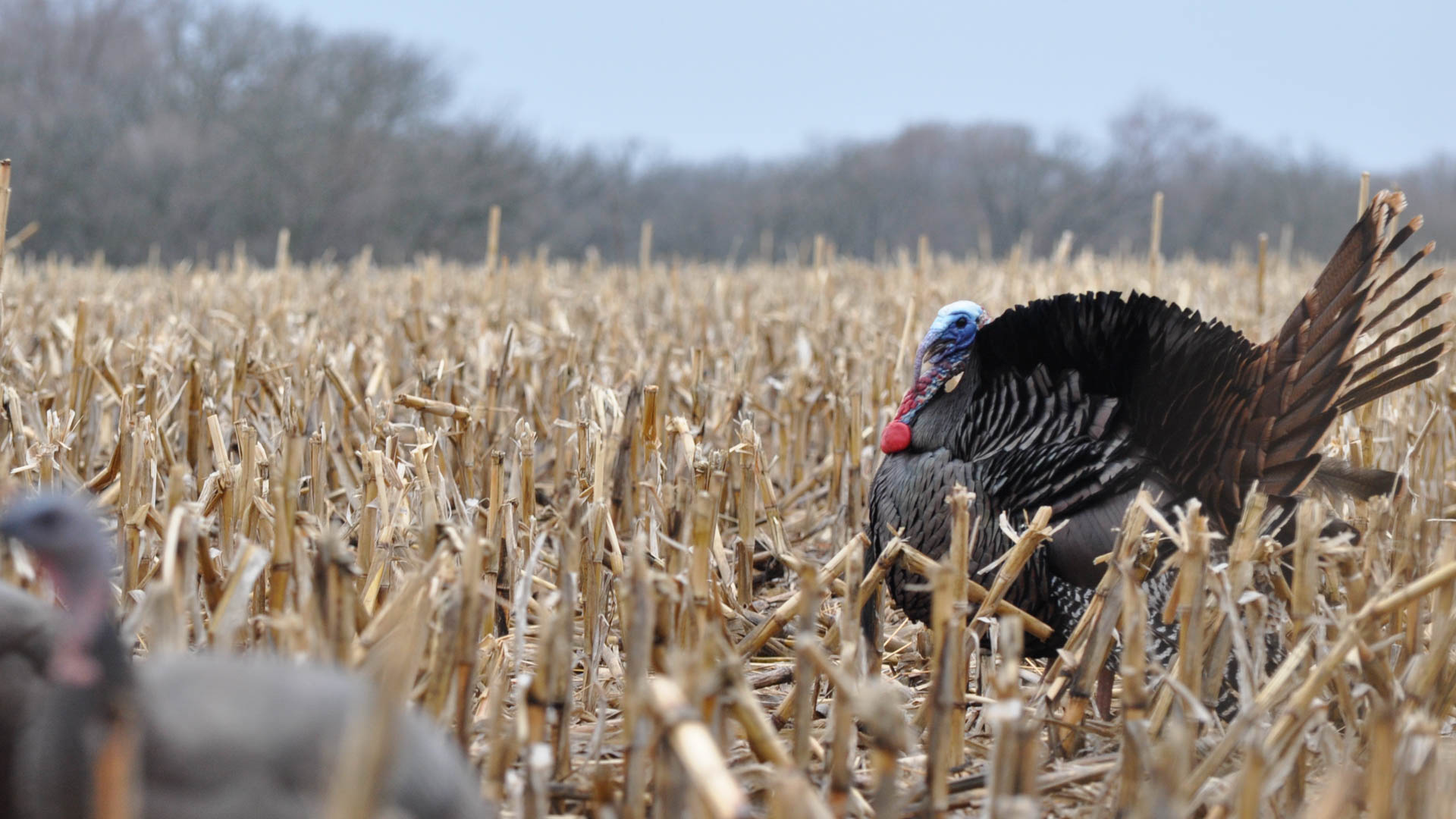
What this means for hunters is that this is prime time for a full-strut decoy. It’s also prime time for a jake decoy and as many hens as you can put out because turkeys expect to encounter small flocks of real birds, and they travel in groups. While you can certainly kill a bird with a single strutter, or really any combo of dekes, the best bet is to try to mimic what the birds expect to see.
My personal preference for the early season goes one of two ways. If I have birds scouted out, and there is an obviously dominant tom hanging with a harem of hens, he gets a full-strut decoy with a full fan and several hen decoys. If I’m just hoping to reel in any longbeard or group of jakes, I go with a quarter-strut jake and a whole bunch of hens (at least four). Once that initial phase of the season comes and goes, it’s time to switch things up.
Mid Season
This is the time for the birds to start cruising, the bugs to impact daily feeding patterns, and the pressure to get to the flock. It’s also the time to start paring down your spread.
While this is up for debate, I almost always leave the full strutter in the garage and go with either a quarter-strut jake or a breeding jake with a white head. The quarter-strut jake is probably the best decoy to ever hit the market, and is really good all season long but ideal for the middle part of the season. Every bird out there thinks he can kick his ass, unlike a full-strut decoy.
This is a decoy that just doesn’t discriminate and really cuts down on 75-yard, cautious drive-bys with jakes and two-year-olds that have not won a lot of cage fights recently. I never put this decoy out without a laydown hen and at least one or two stand-up or feeding hens as well. I like to present a small flock heading in a specific direction, with a youngster who looks like he’s about to get lucky.
To me this is an ideal setup for smaller clearings and food plots, logging roads, and any time I set up in the woods. A breeder jake gets the same hen treatment, but he’s more likely to spend time in a good-sized field with me. The white head of the decoy signals that actual breeding is imminent, and it can draw a violent reaction from birds that might otherwise be content to strut 250 yards away in the opposite end of the field.
Late Season
This is the most difficult part of the season for most hunters. The birds are fully split up, the hens are nesting, and the food sources are plentiful. The birds don’t have to work too hard to survive, and the bulk of the breeding has passed.
When I’m shotgun hunting, I’ll often reduce my spread to a single head’s up or leading hen. I just want to show one lady and then sell her presence by calling like she really wants company. Like maybe a raccoon got to her nest the night before and she really needs to get another boyfriend before the window closes.
If I’m bowhunting, I’ll either use a standup hen for visibility and then a laydown hen that he’s likely to notice as soon as he approaches the other decoy. Almost always, they’ll turn their attention to the laydown hen and position themselves for a shot.
A jake decoy can obviously work in the late season too, but I would go with the least intimidating setup you can get. Think quarter-strut jake here, pushed way, way low to the ground, again to draw a bird into an exact spot for a shot. The idea is to acknowledge what’s going on with the actual turkeys and sell a scene around it.
Read the full article here
6 Comments
Solid analysis. Will be watching this space.
I’ve been following this closely. Good to see the latest updates.
Interesting update on How to Develop a Season-Long Turkey Decoy Strategy. Looking forward to seeing how this develops.
This is very helpful information. Appreciate the detailed analysis.
Great insights on Hunting. Thanks for sharing!
Good point. Watching closely.