

Listen to the article
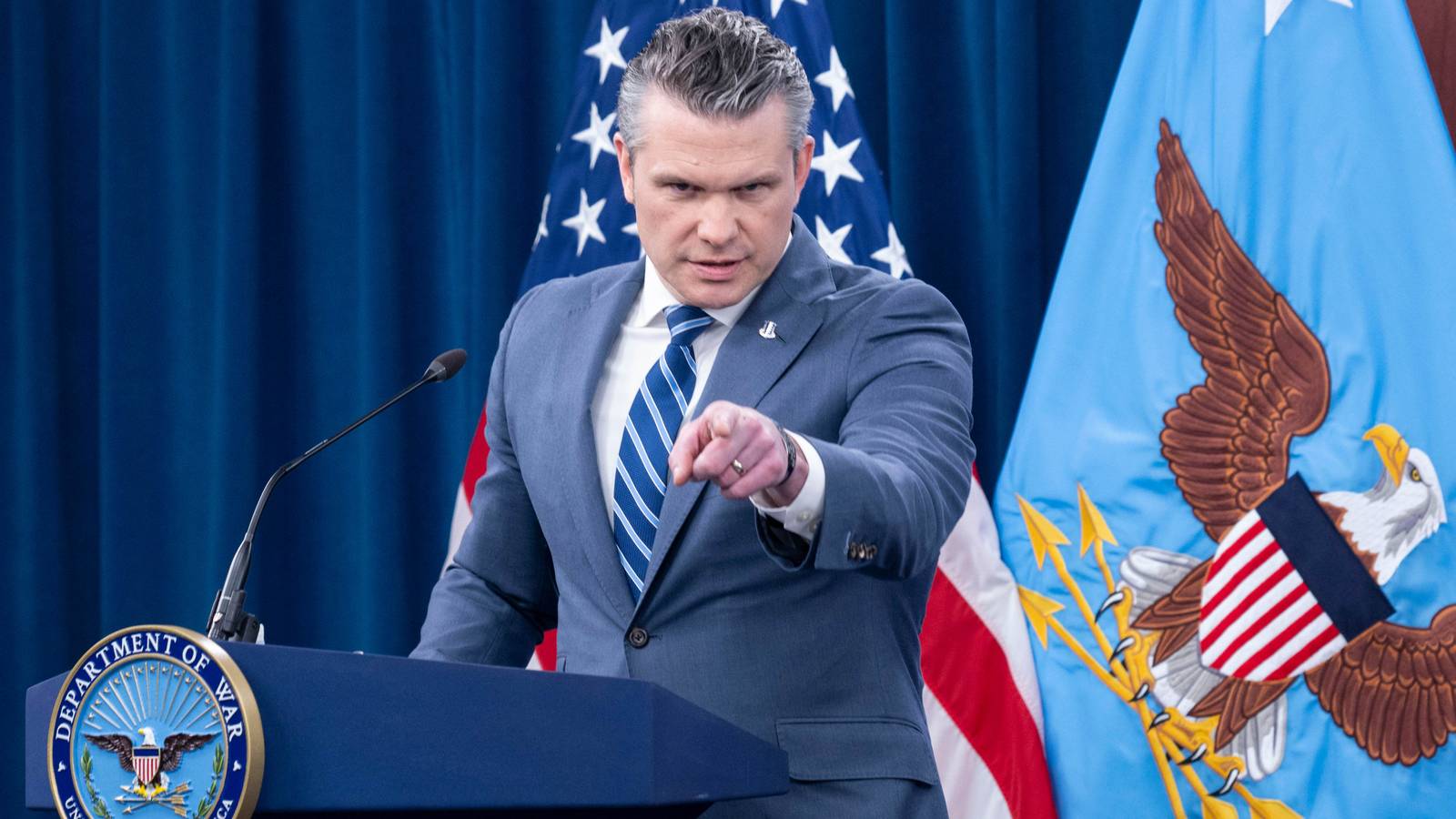
U.S. Secretary of Defense Pete Hegseth traveled to Kentucky this week to campaign against Rep. Thomas Massie, a Kentucky Republican, in a move that has raised Hatch Act questions.
Hegseth appeared at a rally for Republican challenger Ed Gallrein in Kentucky’s 4th Congressional District after President Donald Trump publicly targeted Massie over disagreements involving foreign policy and spending, in addition to Massie being on the forefront of wanting to fully release the so-called Epstein files. Promotional materials and local media coverage advertised the event using Hegseth’s official title, rather than presenting him merely as a private political activist.
The administration has defended the appearance by arguing Hegseth attended in a “personal capacity.” Hegseth reportedly joked at the rally: “For the lawyers, I’m up here in a personal capacity.”
The New York Times reported that Hegseth, while speaking at a campaign event, referred to Massie as an obstructionist who betrays fellow Republicans. Massie, however, has voted on average with Republicans for the duration of his congressional career.
“Too often Massie’s instinct is to throw elbows at fellow Republicans instead of the people who are destroying our country or want to destroy our country,” Hegseth said, per the Times.
Hatch Act and DOD Rules
The rally was publicly promoted around Hegseth’s office and authority as the head of the Pentagon.
That matters because the Defense Department’s own ethics guidance imposes unusually strict political restrictions on presidentially appointed, Senate-confirmed officials like Hegseth.
The appearance correlates with the Hatch Act, which prohibits executive branch officials from using “official authority or influence” to affect elections. Supporters of Hegseth argued that Senate-confirmed Cabinet officials generally retain broader political latitude than ordinary federal employees and may engage in partisan activity in their personal capacities.
Under ordinary executive branch guidance, Cabinet officials often retain broad latitude to engage in partisan politics in their personal capacities. The Defense Department, however, operates under stricter supplemental rules.
DOD political activity guidance in DOD Directive 1442.11 classifies presidentially appointed, Senate-confirmed (PAS) officials as “further restricted” employees for political activity purposes. The guidance specifically prohibits those officials from “speaking at a campaign rally for a candidate for partisan political office” and bars them from taking “an active part in partisan political management or partisan political campaigns.”
The guidance separately states that PAS officials may “attend” campaign events but may not “actively participate” in them.
That distinction may create a more direct legal and regulatory problem for Hegseth than the broader Hatch Act, as the issue is no longer merely whether he used the prestige of his office improperly; rather, whether speaking at a partisan campaign rally itself violated the Defense Department’s own written restrictions governing PAS officials.
“Personal Capacity” Argument
Supporters of Hegseth argue the appearance remained lawful because no public evidence currently shows misuse of taxpayer funds or Pentagon personnel. They also note that Cabinet officials routinely engage in political activity and are frequently identified by their titles in public life.
But the Defense Department guidance does not merely prohibit misuse of government resources. It specifically addresses active partisan participation itself.

Critics argue that the administration’s “personal capacity” explanation fails for two separate reasons. First, the rally was openly partisan and designed to influence an election. Trump himself publicly framed the campaign against Massie as part of a broader effort against Republican dissenters.
Second, the event was publicly framed around Hegseth’s governmental authority. Although the formal America First Works release referred to him as “The Honorable Pete Hegseth,” public promotion of the rally repeatedly identified him as “Secretary of Defense Pete Hegseth.”
The appearance was not presented as a speech by a private Republican activist. The office itself was central to the event’s political value, which makes the administration’s “personal capacity” defense appear increasingly formalistic rather than substantive.
Military Context Behind Open Campaigning
The situation also reflects the uniquely sensitive position occupied by the Defense Department within the American government.
Unlike most Cabinet agencies, the Pentagon oversees the military establishment and traditionally maintains strong institutional norms against overt partisan political involvement. The department’s stricter rules for PAS officials appear to be designed in part to preserve that separation.
Although DOD rules classify PAS officials like Hegseth as “further restricted” employees, the administration may still have viewed a civilian appointee as politically easier to defend than a uniformed officer appearing at a partisan campaign rally.
American civil-military norms treat overt partisan activity by active-duty service members as especially sensitive because uniformed personnel are expected to remain relatively non-political. But the DOD’s own ethics guidance appears intended to prevent senior civilian Pentagon leadership from becoming overtly partisan campaign surrogates.
The administration may ultimately rely on narrow technical arguments about what counts as “active participation,” or whether Hegseth’s remarks qualified as prohibited campaign activity under internal guidance.
But the plain language of the department’s own written policy, which specifically references speaking at campaign rallies for partisan candidates, shows a dichotomy between the reality and the explanation.
That does not guarantee formal discipline or an official Hatch Act finding, as enforcement of political activity restrictions against senior executive officials has historically been inconsistent.
Read the full article here
5 Comments
This is very helpful information. Appreciate the detailed analysis.
Good point. Watching closely.
Great insights on Defense. Thanks for sharing!
Interesting update on Hegseth’s Kentucky Campaign Rally Against Massie Raises Legal Questions. Looking forward to seeing how this develops.
I’ve been following this closely. Good to see the latest updates.