

Listen to the article
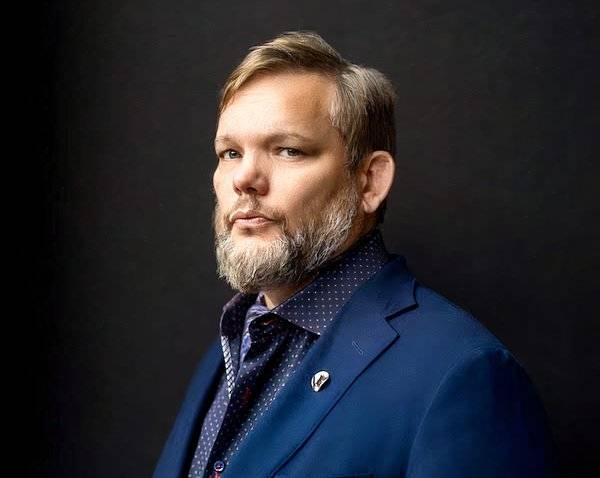
Fred Minnick was at his wits’ end.
The Army veteran had tried just about every form of therapy. Nothing worked. Nothing could stem the crushing tide of post-traumatic stress disorder (PTSD) that consumed his life.
With nowhere else to turn, the Iraq War veteran believed he was left with three outcomes: prison, homelessness or ending his life by suicide.
He tried that too.
Still, nothing could strip away the pain. Until one day, a breakthrough.
Determined to feel better, Minnick sat in the office of a Veterans Affairs therapist, like he had done many times before. But today was different. He wasn’t going to leave until he got help.
“The VA can only help so much; a lot of it depends on the veteran. It wasn’t until I was fully committed, and that took a couple of years, man,” Minnick told Military.com. “I don’t even know who that guy is anymore. I’m so far removed from that. But looking back, I was in so much pain. If I didn’t have my wife, Jaclyn, I wouldn’t be here because that guy wasn’t fit for society.”
Minnick’s therapist had a suggestion. She opened a bag of barbeque potato chips and told him to put one in his mouth, focusing on the taste, texture and flavor of the thin, crispy chip, peppered in savory barbecue seasoning and salt. Minnick closed his eyes and blocked out every other thought, focusing like a laser on that one chip.
It changed everything.
“It just blew my mind,” Minnick said. “The whole point was to connect my brain to my pallet and get me actively thinking about life in the moment, versus the past when something bad happened to me. I was thinking about the here and now, instead of something triggering me from my past. That was very powerful and absolutely gave me a new take on life.”
Tasting Unlocks New Life
Through taste mindfulness, Minnick finally found a remedy for his crippling PTSD. Loud noises didn’t bother him as much anymore. He could sleep through the night. Pieces of roadside trash didn’t make him weary. Seeing white vans didn’t send his blood pressure rising. The world began to slow down.
From there, he started savoring other tastes. He found an aging bottle of bourbon in his house and took a sip. Not drinking to feel the buzz of an oncoming stupor, no, Minnick was analyzing the taste. He liked bourbon and wine. As a journalist, he had written about the spirits industry before. He was pretty good at it, too.
The experience led Minnick to reinvigorate his passion for food journalism, while kickstarting a new career as one of America’s definitive bourbon tasters. On “The Fred Minnick Show,” he’s interviewed the likes of Peyton Manning and Ludacris. He also co-hosts “Fourth and Neat,” a regular podcast with NFL Hall-of-Fame Jared Allen. Minnick taught bourbon workshops at music festivals, sharing the bill with rock legends the Foo Fighters.
It’s an almost 360-degree turnaround for a veteran who, less than two decades ago, was about to end it all.
Escaping Death in Iraq
Growing up in Oklahoma in the 1980s and 1990s, Minnick had an affinity for the military, falling in love with the G.I. Joe character.
To help pay for college, he joined the Army National Guard in 1996, tapping into his creative side to become a photojournalist.
“I started out as infantry, and then I wanted to do the photography side of things in the Army. But I was told it didn’t exist, and then I eventually found a path to it,” Minnick said. “It was an incredible way to see the military because you touch everything.”
When his unit was deployed to the Middle East during Operation Iraqi Freedom, Minnick was in the thick of the action, capturing the evils of war on his camera.
“In Iraq, my commander was very enthusiastic to do every mission beyond what our mission scope was, so we were doing combat camera operations; one day we’d be attached to civil affairs, the next day we’d be attached to some special forces outfit,” Minnick said. “But when you look at the images, it’s there constantly. You can’t just delete it; it’s part of the job.
I do think the literal images kept the images alive in my mind even longer. The natural human instinct for trauma is avoidance, and you can avoid some things, but eventually you have to confront them head-on and there was no way to ever avoid the visuals because I had to process the images and that probably did contribute to my PTSD a little bit.”
While he had seen plenty of destruction up close, nothing prepared him for June 24, 2004.
In Mosul, investigating whether enemy forces were launching missile attacks from mosques, a violation of international humanitarian law, a firefight ensued. After several minutes, it was snuffed out by a larger fighting force, which moved on to the next mission. Minnick’s team was left behind and was quickly ambushed.
“A white van pulled up, these dudes exited and one of them had an RPG (rocket-propelled grenade launcher), fired it … and I was right in the kill zone where it landed,” Minnick said. “It’s one of those things where you know you’re dead. Once it came, I knew I was dead. It’s a matter of seconds. There was nothing there to block the RPG, nothing in the way of stopping it and killing me. But it did not explode. It was a dud.”
Surviving serious injury or death, Minnick thought he was fortunate. Lucky. But the brain works in mysterious ways. That moment, when his life hung in the balance on whether that RPG would detonate or not, would haunt him for years.
“It’s one of those moments where you can’t comprehend it. Even to this day, even though I’ve spent years working on keeping it from dominating my life, when I really think about it, I still can’t comprehend how I was spared,” Minnick said. “The enemy was pretty quickly eradicated. We got back into our vehicles and took off, and got ambushed again. But the RPG was the closest call that I had. I would go on to have other incidents, like snipers coming close to me and barely missing mortars, but the RPG incident was the big one.”

Can it Help Other Veterans?
Leaving the Army in 2005, he came home a changed man. He struggled to hold down jobs and didn’t know how to adapt to his new surroundings. His wife suggested therapy through the VA, which led to the mental health turning point he desperately needed, sensory mindfulness. Minnick shares his unforgettable story in his USA Today and Associated Press best-selling book, “Bottom Shelf: How A Forgotten Brand of Bourbon Saved One Man’s Life.”
Writing also helped the former Army journalist process trauma. Minnick would sit down, reflect upon his feelings one by one, and jot them down on paper.
“It started with exposure therapy, and my therapist had me write down everything that happened on June 24, 2004. Every single day I was in therapy and I would read it out loud. That was hard. It was very hard getting through that. I would have to stop – I’d be shaking,” Minnick said. “But the whole point of that was to lessen the June 24 moment in my life and try to get it to where if it came up, the impact wouldn’t be as big. After about 100 sessions of writing, I could get through it and think about it, and it wouldn’t kill me.”
Minnick also did cognitive behavioral work to process images that triggered his PTSD and sessions where he held a quarter between his fingers and described the coin’s texture.
“We developed some coping skills, but I would tell my therapist that I would be able to get through a day, a month, a year, but I’m not truly feeling alive. I’m not truly on cloud nine with happiness,” Minnick said. “That’s when she said, ‘Well, let’s try some other techniques. You’re a foodie, and you’re really big into tasting things, let’s try some aroma therapy.’”
That led to tasting when Minnick was able to ground himself, separate everything else, and enjoy the moment. He developed the skill of articulating flavor and a fruitful, rewarding career that’s led to many opportunities judging spirits and becoming a distinctive voice for The New York Times, People, Forbes and other national publications.
Minnick shares his story of overcoming anxiety and depression to help other veterans, encouraging them to be open-minded about alternative forms of therapy.
“There is absolutely some power in having a mindfulness technique in your arsenal for coping with life,” Minnick said. “But also, it’s important to find a hobby that you can invest a lot of time in. It could be horses or surfing. For me, it’s also ju-jitsu. It’s very important to find things to help you cope with the trauma because, otherwise, more layers of trauma can compound on the original one and that’s where we all get in trouble: A divorce happens, bankruptcy happens, and suddenly you have new trauma that has nothing to do with the war, but the war caused it.”
Read the full article here
6 Comments
I’ve been following this closely. Good to see the latest updates.
Good point. Watching closely.
Solid analysis. Will be watching this space.
This is very helpful information. Appreciate the detailed analysis.
Interesting update on Army Veteran Who Nearly Took His Life Found an Unusual PTSD Coping Tool. Looking forward to seeing how this develops.
Great insights on Defense. Thanks for sharing!