

Listen to the article
A bipartisan effort to remove a controversial U.S.-Israel defense integration provision from the National Defense Authorization Act (NDAA) never received a vote on the House floor after the House Rules Committee declined to make the amendment eligible for debate.
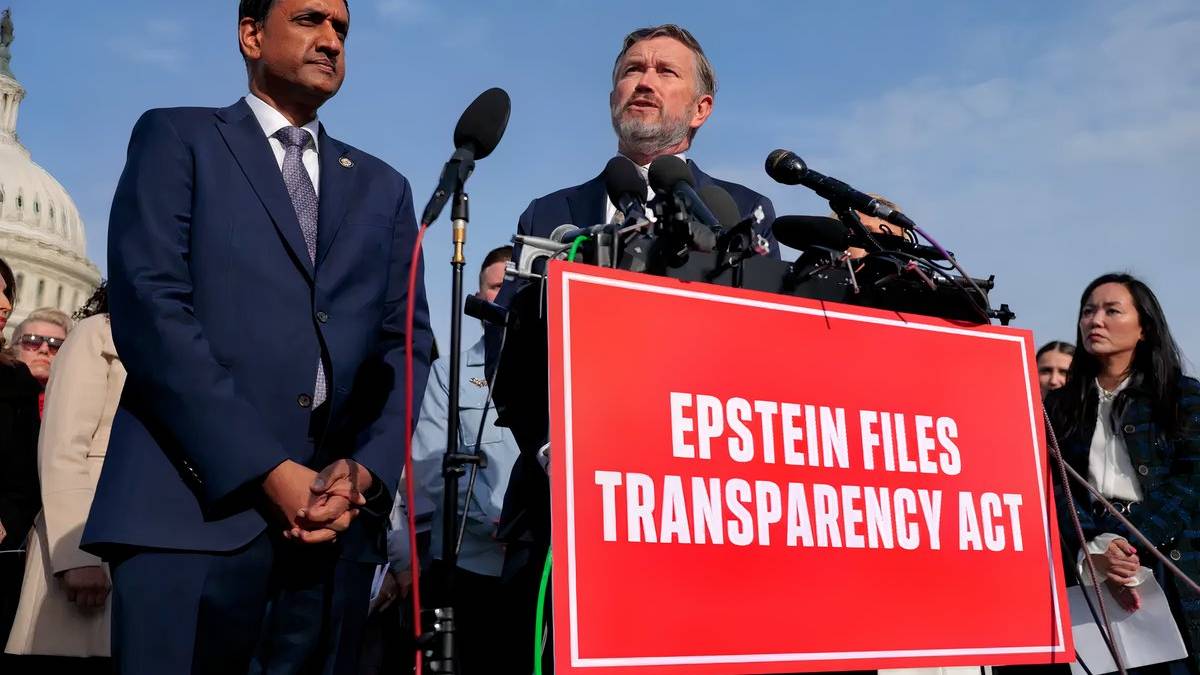
The amendment, introduced by Reps. Thomas Massie (R-Ky.) and Ro Khanna (D-Calif.) would have removed Section 219 of the NDAA, formerly Section 224. The Rules Committee’s list of amendments made “in order” did not include the bipartisan proposal, ensuring it would not receive debate or a recorded vote before the House considered the broader defense bill.
The decision effectively prevented lawmakers from publicly voting on a proposal that had attracted support from across the political spectrum and generated significant grassroots opposition to the underlying provision.
“Congress has blocked the amendment @RepThomasMassie and I introduced to stop the integration of our military with Israel’s,” Khanna wrote Tuesday on X. “It is unconscionable to not even have a vote. We will be continuing on and will not be intimidated by the pro-Israel lobby.”
Bipartisan Amendment Stopped Before a Vote
Massie and Khanna have worked together on numerous issues involving congressional war powers, surveillance, and limits on executive authority. Their partnership on Section 219 reflected shared concerns from both parties about expanding U.S. military commitments abroad despite coming from opposite ends of the political spectrum.
Outside Congress, opposition to the provision has also crossed traditional political lines. Constituents contacted lawmakers from both parties, advocacy organizations urged Congress to remove the language, and commentators from across the ideological spectrum argued that the proposal deserved an open debate and recorded vote.
Despite that interest, House leadership never allowed members to vote on the amendment.
Section 219 would establish a “United States-Israel Defense Technology Cooperation Initiative” within the Department of Defense by creating an executive agent responsible for expanding defense technology cooperation between the United States and Israel across a broad range of military programs.
“Section 219 of the NDAA is an unprecedented escalation of foreign involvement in our military,” Massie said. “This goes well beyond our pre-existing military relationships, such as with Five Eyes nations, or our more conventional defense partnerships with foreign militaries that are typically limited to information sharing, joint exercises, or bilateral development of specific weapons contracts.
“If Section 219 is signed into law, the American people should see it as Congress fully capitulating our nation’s autonomy to foreign influence.”
Critics Say Congress Is Creating an Unprecedented Relationship
Opponents argue that Section 219 goes far beyond authorizing a single joint weapons program.
Instead, they contend that it creates a permanent framework for integrating portions of the American and Israeli defense industrial bases through expanded cooperation in areas such as artificial intelligence, cyber capabilities, autonomous systems, biotechnology, and data-sharing.

Critics also point to Israel’s long history of conducting intelligence operations against the United States. Cases such as the Jonathan Pollard espionage affair, longstanding concerns about Israeli intelligence activities on U.S. soil, and current disputes regarding solutions in the Middle East have prompted former intelligence officials to question whether Congress should be embedding deeper military and technology integration into federal law.
The Defense Intelligence Agency has recently identified Israeli intelligence collection efforts as a significant counterintelligence concern in documents obtained through public reporting, describing them as “unhinged.”
Supporters of Section 219 argue that the initiative strengthens an already close alliance, improves defense innovation, and helps both countries respond more effectively to emerging threats. Organizations backing the provision, such as AIPAC, have described it as a natural extension of existing defense cooperation.
Although the House amendment was blocked, the issue remains alive.
The Senate is considering its own version of the NDAA, and any differences between the House and Senate bills must ultimately be resolved in a conference committee before legislation reaches the president’s desk.
Read the full article here
6 Comments
I’ve been following this closely. Good to see the latest updates.
Good point. Watching closely.
Solid analysis. Will be watching this space.
Great insights on Defense. Thanks for sharing!
This is very helpful information. Appreciate the detailed analysis.
Interesting update on Israel Defense Provision Blocked From House Vote Despite Bipartisan Push. Looking forward to seeing how this develops.