

Listen to the article
Army officials announced Tuesday that the service has scrapped its decades-old height and weight standards, tape tests and supplemental body fat assessments in favor of a single waist-to-height ratio, becoming the last military branch to adopt the standard the Pentagon ordered in December.
Army Secretary Dan Driscoll signed the directive July 1, and it took effect immediately July 7. Every soldier has 90 days to get measured and recorded under the new system. Waist divided by height now has to be below 0.55.
On its face, the change looks fairly straightforward. Measure the waist, divide by height, stay under the line. Buried in that fine print, however, is a policy that goes a little further than the announcement suggests: the tape test is now gone.
Also eliminated are alternative assessment methods and appeals. Exemptions that let the Army’s strongest performers on the fitness test skip body composition screening altogether have also been cut.
“This is about lethality and health,” Sgt. Maj. Edgar Monsanto, a senior enlisted leader in the Army G-1’s Directorate of Prevention, Resilience and Readiness, said in the service’s announcement.
New Measurements
Under the new policy, an assessor will measure a soldier’s waist circumference at the navel in inches and divide that figure by the soldier’s height in inches. Anything below 0.55 passes.
Soldiers will be screened twice per calendar year, and results go into the Army Training Information System on a DA Form 5500, according to a ‘frequently asked questions’ document the Army published alongside the directive.
Consider a 6-foot soldier, 72 inches tall. That soldier passes with a 39.5-inch waist and fails at 39.6. Precision matters more than it used to since ratios are recorded to three decimal places and never rounded, per the Army’s guidance. A 0.549 is a pass. A 0.550 is not.
Since factors such as bloating and fatigue can affect a measurement, the policy also includes a clarification requiring at least 7 days between a recorded fitness test and a body composition screening, though commanders can adjust that window at their discretion.
Fail Once, Same Day Re-Tape
Any soldier who measures at 0.55 or higher gets a confirmation test from a different measuring team within the same duty day, according to the directive.
If they fail that second attempt, the soldier is flagged and also enrolled in the Army Body Composition Program. This is the service’s remedial track for diet, exercise and counseling, with a medical assessment ordered as part of enrollment. Keep in mind that flags are non-transferable; they’ll follow soldiers to their next unit until they meet the standard.
Commanders may now direct a soldier to undergo a waist-to-height screening at any time if they believe the soldier is out of standard, meaning the twice-yearly schedule is a recommendation rather than a law.

Medical exemptions for pregnant and postpartum soldiers remain in effect.
One detail might hit differently, depending on a soldier’s component. Active-duty and Active Guard Reserve soldiers enrolled in the program receive a commander-directed medical exam. Army Reserve and National Guard soldiers who want one may request it at their own expense, according to the Army’s FAQ.
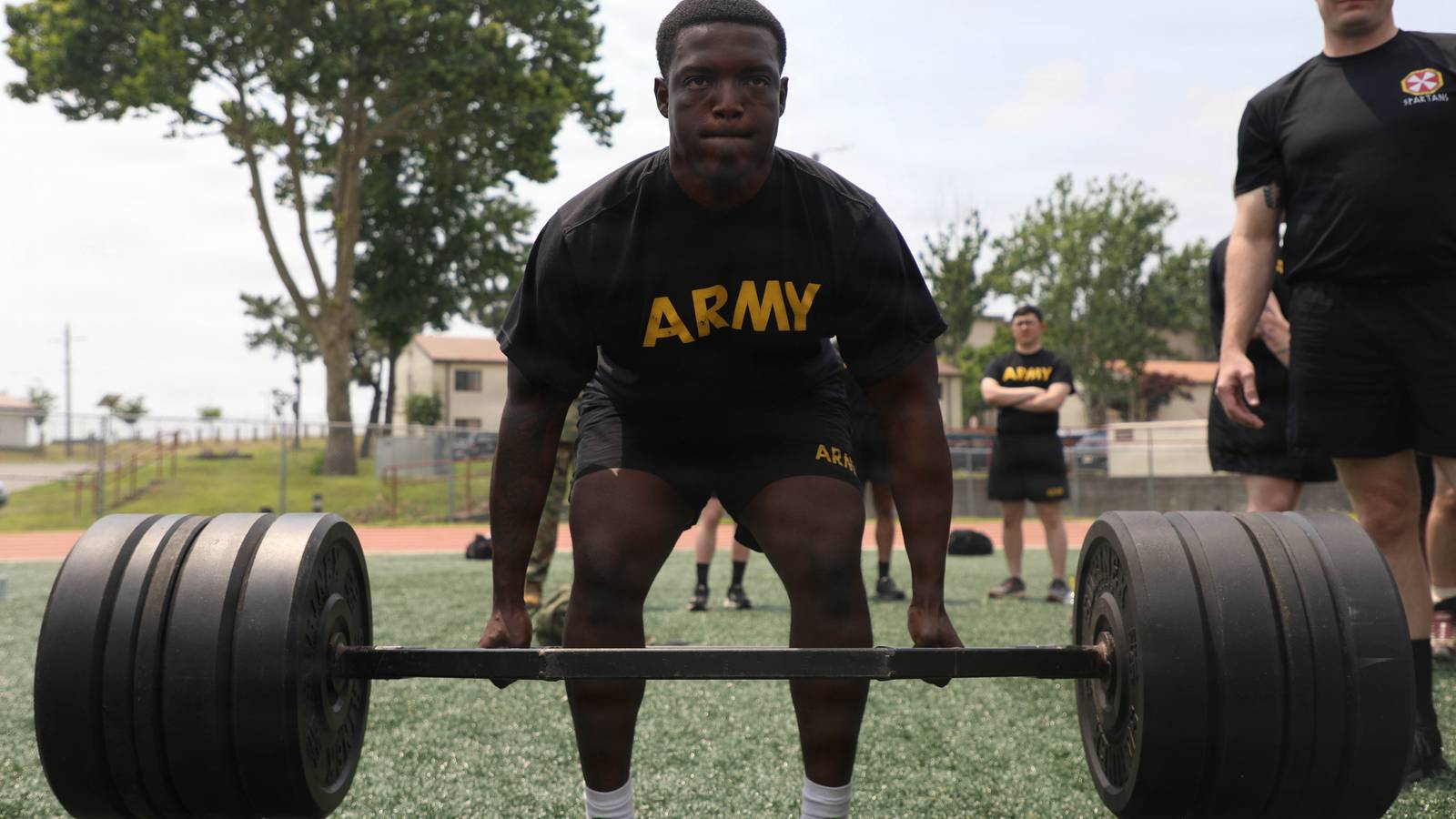
Soldiers who scored 465 or higher on the Army Fitness Test were previously exempt from body fat standards under Army Directive 2025-17. That directive is now inactive, and the exemption is gone. A soldier can max the deadlift, crush the two-mile run, then still end up flagged if the tape says 0.550.
Soldiers may not request a tape test or any other legacy method to challenge a waist-to-height result because all previous assessment methods have been rescinded. West Point and Senior ROTC cadets will also fall under the standard.
Nobody Gets Separated Yet
Failing the new measurement will not end a career this year. The Department of the Army will be conducting an 180-day assessment of the standard to validate its accuracy and fairness.
While units may initiate separation actions for flagged soldiers, no soldier will be separated until that review is complete and further guidance is issued, according to the directive.
Responsibility for the program shifted, where units used to be required to designate a non-commissioned officer to run the body composition program. Commanders now directly oversee its execution and quality control.

Sister services beat the Army to the finish line, but not all adopted the same standards. Navy, Air Force and Space Force standards match the Pentagon’s 0.55 ceiling.
Marine Corps leaders went slightly leaner, setting their limit at 0.52 in February—a threshold that a service spokesperson told Task & Purpose balances health screening with performance, noting that most Marines below that line earn first-class fitness scores.
Basically, the Marine standard requires a waist 2 to 3 inches trimmer than the Defense Department baseline for a service member of the same height.
Where the Standard Originated
Momentum for the change built last fall when Defense Secretary Pete Hegseth told a gathering of senior officers at Quantico that he was tired of seeing “fat generals and admirals” and overweight troops in formation.
A Dec. 18 memo from Anthony Tata, the Pentagon’s personnel and readiness chief, made it policy, ordering every service to drop height-and-weight tables for the waist-to-height ratio beginning Jan. 1 and setting body fat limits of 18% to 26% for men, and 26% to 36% for women.
Under that memo, troops who exceed the standards face remedial programs and medical referrals, and continued failure can result in withheld promotions or administrative separation.
Medical researchers have increasingly favored the waist-to-height ratio over body mass index and height-weight charts, arguing that where weight is carried on the body better predicts cardiovascular risk than how much of it there is.
Army officials made the same case, calling the ratio a more accurate predictor of health than the tables it replaces.
Read the full article here
6 Comments
I’ve been following this closely. Good to see the latest updates.
Great insights on Defense. Thanks for sharing!
This is very helpful information. Appreciate the detailed analysis.
Solid analysis. Will be watching this space.
Interesting update on Army Soldiers Have 90 Days to Get Measured Under New Height-Weight Rules. Looking forward to seeing how this develops.
Good point. Watching closely.