

Listen to the article
If the power goes out, you don’t need an electric coffee maker to make good coffee. You really need two things: a way to heat water and a way to run that hot water through coffee grounds.
For a power outage, I think the simplest approach is also one of the most fuel-efficient: heat only the water you need, shut off the burner, and make pour-over coffee. A French press works nearly as well.
A stovetop percolator certainly works too. In fact, it’s a classic power-outage solution. But there’s one disadvantage that doesn’t get much attention. The burner has to keep running while the coffee perks.
During a one-day outage, that hardly matters. During a week-long outage when you’re cooking with stored butane or propane, those extra burner minutes start adding up.
As an Amazon Associate I earn from qualifying purchases. There is no extra cost to you.
→ Melitta Pour-Over Coffee Cone
The Best Way to Make Coffee During a Power Outage
My first choice for outage coffee would be a simple pour-over brewer.
Heat the amount of water you’re actually going to drink. Once it’s hot, turn off the stove. Put the pour-over cone over your mug or insulated carafe, add the coffee and filter, and pour the hot water through it.
That’s it.
👉 Best Butane Stove for Indoor Use: Iwatani vs Gas One + Safety Tips
The coffee brewer itself uses no electricity and no additional fuel. A basic plastic pour-over cone also takes up almost no storage space and has very little to break.
A French press operates on the same basic preparedness principle. Heat the water and shut off the burner. The coffee steeps in the press for several minutes without requiring additional heat.
This is the part I would pay attention to during a long outage. Use your stored fuel to heat water, not to operate the coffee maker.
How Hot Does the Water Need to Be?
There’s no need to get overly precise during a blackout. Practically speaking, bring the water close to a boil and make your coffee.
If you want to get technical, research indicates that brewing temperature affects how quickly coffee extracts, with about 199°F, commonly associated with coffee brewing. So, if you want better potential flavor results, pour before the water boils (saves fuel anyway).
Why I Wouldn’t Make a Percolator My First Choice
There’s nothing wrong with a stovetop percolator. It may be exactly what you want if you enjoy percolated coffee or need to make a larger pot for several people.
It also has an obvious advantage during an outage. Put coffee and water in it, set it on a gas or butane stove, and you have coffee without electricity.
The tradeoff is burner time.
A typical stovetop percolator must first heat the water and then remain over heat while the coffee percolates. Brewing instructions commonly call for roughly another 4 to 8 minutes of perking after the process begins.
Compare that with pour-over coffee. As soon as the water is hot, the burner goes off.
That difference seems minor until you start counting fuel.
Here’s a simple example.
Suppose your percolator requires five additional minutes of burner time after the water reaches brewing temperature. You make coffee twice a day.
That’s:
5 minutes × 2 pots = 10 extra burner minutes per day
Over seven days:
10 × 7 = 70 additional minutes of burner time
That’s interesting because an 8-ounce butane canister can provide roughly an hour of operation at high output in many portable stoves. The Iwatani VA-30, for example, is rated at about 70 minutes at maximum output.
→ Iwatani VA-30 Butane Stove (Amazon)
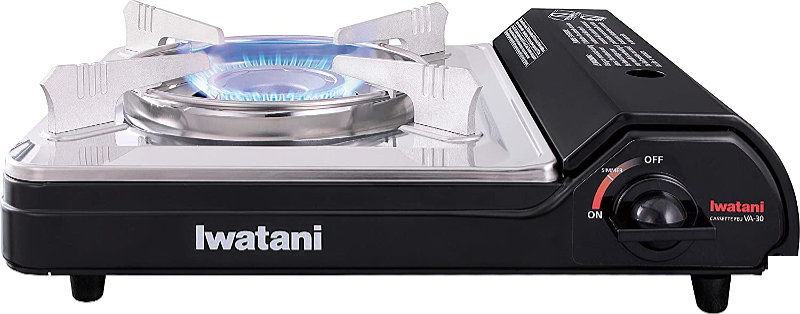
In that particular example, the additional percolating time over a week could amount to roughly the maximum-runtime equivalent of an entire butane canister.
Actual fuel use will vary greatly with stove setting, pot size, water temperature and how much coffee you’re making. I’m not suggesting that one week of percolator coffee will always consume one extra can of butane.
The example shows why burner minutes matter during a longer outage.
👉 How Long Does a Butane Canister Last?
Pour-Over vs French Press During an Outage
Either method is a good choice.
A pour-over is probably the simplest. There’s almost nothing to clean except the cone and mug. If you’re using paper filters, lift out the filter and grounds and throw them away.
That can be an advantage if water is limited too. Cleanup uses very little water.
A French press doesn’t require disposable paper filters. Add coffee, pour in the hot water, wait about four minutes, and press.
The disadvantage shows up at cleanup time. Wet coffee grounds tend to stick inside the press, and getting them out usually takes more water than removing a paper filter from a pour-over.
For a normal morning at home, that difference is trivial.
During a long outage with limited water, I would rather deal with a paper filter.
→ Melitta Pour Over Coffee Cone Brewer & #2 Filtes (Amazon)
What If You Don’t Have a Pour-Over Coffee Maker?
You still have several ways to make coffee.
Cowboy Coffee in a Pot
Put the grounds directly into hot water and let them steep. Give the grounds time to settle, then carefully pour the coffee from the top.
You may get a little sediment in your mug, but it works.
No special coffee equipment is required.
Instant Coffee
Instant coffee deserves more respect as an emergency supply than it usually gets.
Heat one mug of water, shut off the stove, stir in the coffee and you’re finished. There are no grounds to dispose of and almost nothing to clean.
→ My preferred instant coffee that I keep on standby (Amazon)
It may not replace someone’s favorite fresh coffee every morning, but from a strictly preparedness standpoint, instant coffee is hard to beat.
I would consider keeping some on the shelf even if you normally drink brewed coffee.
Coffee Bags
Single-serving coffee bags work much like tea bags. Put one in hot water, let it brew, remove it and drink.
Again, the advantage is simplicity.
You aren’t trying to reproduce a coffee shop during a blackout. You’re trying to make a decent cup of coffee without burning unnecessary fuel or creating a pile of dishes.
Don’t Forget About the Coffee Grinder
Here’s another outage problem that’s easy to overlook.
You bought a manual brewer. You have your butane stove and plenty of fuel.
Then you discover that all your coffee is whole bean and your grinder is electric.
A manual burr grinder solves that problem and is useful even when the power is on.
→ Manual Burr Coffee Grinder (Amazon)
There’s an even simpler preparedness solution: keep some ground coffee on hand.
Freshly ground coffee generally gives better flavor, but we’re talking about emergency planning. A sealed bag or two of coffee that’s already ground removes another point of failure.
I would rather have slightly less fresh coffee than stare at a bag of whole beans while the electric grinder sits dead on the counter.
Rotate the coffee through your normal supply rather than leaving it forgotten for years.
How Should You Heat the Water?
If you have a gas range that can safely be operated without utility power, that may solve the problem.
Otherwise, a portable butane stove is a useful outage cooking option. I already consider one of these a very useful piece of emergency kitchen equipment because the same stove can heat soup, cook meals and boil water.
Use common sense regarding indoor use and ventilation. Don’t assume that every camping stove is suitable for use inside a house.
What About Running Your Regular Coffee Maker From a Power Station?
You can do that too.
A typical electric drip coffee maker may draw somewhere around 800 to 1,200 watts while it’s actively brewing. A capable portable power station can handle that load, assuming its inverter is large enough.
I’ve covered the basic watt and watt-hour calculations in my article on choosing a portable power station.
👉 What Size Portable Power Station Do I Need?
But would I use stored battery power to make coffee during a long blackout if I already had a butane stove?
Probably not.
That electricity may be more useful for a refrigerator, freezer, lights, communications equipment or other things that can’t easily be powered another way.
Coffee is unusually easy to make without electricity.
That’s what makes a manual brewing method worth having.
My Simple Power-Outage Coffee Setup
You don’t need a cabinet full of specialty coffee equipment.
For outage use, a very simple setup would cover it:
- Pour-over coffee cone
- Paper filters
- Ground coffee
- Kettle or small pot
- Safe non-electric heat source
- Stored fuel
A manual grinder is useful if you normally keep whole-bean coffee.
I would also keep some instant coffee as the backup to the backup. If fuel is getting low, water is limited, or you simply don’t want to deal with brewing equipment, it solves the problem.
A stovetop percolator still has a place, especially when making a larger batch. But if I’m thinking specifically about a multi-day power outage, pour-over coffee makes more sense to me.
Heat the water once. Turn the burner off. Brew the coffee.
Save the fuel for dinner.
Read the full article here
6 Comments
Interesting update on Best Way to Make Coffee During a Power Outage Without Wasting Fuel. Looking forward to seeing how this develops.
I’ve been following this closely. Good to see the latest updates.
This is very helpful information. Appreciate the detailed analysis.
Great insights on Hunting. Thanks for sharing!
Solid analysis. Will be watching this space.
Good point. Watching closely.