


Listen to the article
A veteran’s shortlist of tabletop games that help you come down to baseline, reconnect with the people at your table, and make downtime feel like actual decompression.
I’m a veteran, and like a lot of veterans I know, I don’t always relax easily. Quiet can be loud, and idle time can send me spiraling.
I didn’t go looking for board games as some magic fix, but the more I noticed them and that they worked for me, the more I got into it.
On a rare night away from our kids, my wife and I wandered into a local board-game café, paid five bucks each, and grabbed whatever looked fun. We stayed for hours. By the time we left, my brain had finally powered down, not numbed, not distracted. Just… quiet. And we had fun making jokes, spending time with our friends, and building community. It was an experience we’ve repeated a few times now, making board games a more consistent part of our lives.
That night stuck with me. And since then, I’ve noticed how often tabletop games come up in conversations with other vets, not as therapy and not as a buzzword version of “self-care,” but as something simpler: a way to decompress, reconnect, and be present without having to explain yourself.
This isn’t medical advice or a replacement for real support. It’s a field report, and a list built from experience and from games that do one crucial thing well: they give your mind somewhere safe to land.
Why Board Games Help You Unwind
Board games work because they give structure to downtime.
There are rules. There’s a goal. There’s a beginning, a middle, and an end. For a couple of hours, your brain isn’t hunting for the next thing to solve, or looping on the day. It’s solving a problem in front of you, with people you trust, inside a system that makes sense.
For veterans especially, that combination matters. Games ask for focus without urgency, teamwork without stakes, and decision-making without consequences that follow you home. You don’t have to talk about anything heavy. You don’t have to perform. You just play.
A Note on Veteran Gaming Spaces
If tabletop gaming as decompression sounds familiar, it’s not just anecdotal. Organizations like Stack Up, a veteran-led nonprofit focused on gaming and community, have been building spaces for vets to connect through video games and tabletop play for years.
What they’ve figured out, and what this list reflects, is simple: structured play creates a low-pressure connection. You don’t have to talk about anything heavy. You just show up, sit down, and play.
That matters more than it sounds.
The Best Tabletop Games to Play in 2026
These aren’t all new releases, but instead are my favorite games of the year that I think are worth putting on your table in 2026. So, without further ado, here’s the list:
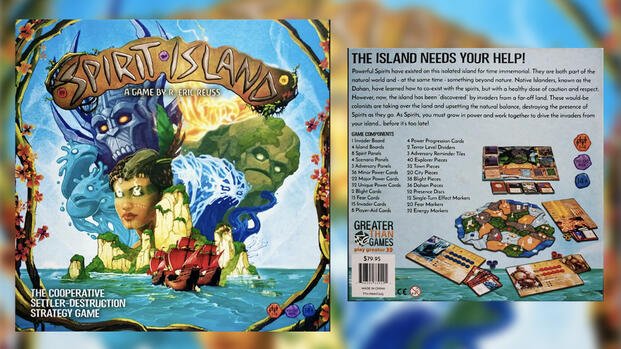
Spirit Island
- Best for: Cooperative strategy with purpose
- Spirit Island is a fully cooperative game where players work together to protect an island from invading forces. There’s no backstabbing, no winner-take-all pressure. Everyone either succeeds together or fails together.
- It’s challenging, deeply strategic, and incredibly satisfying when a plan comes together. If you like teamwork and problem-solving without interpersonal friction, this one delivers.

Wingspan
- Best for: Calm, low-conflict play
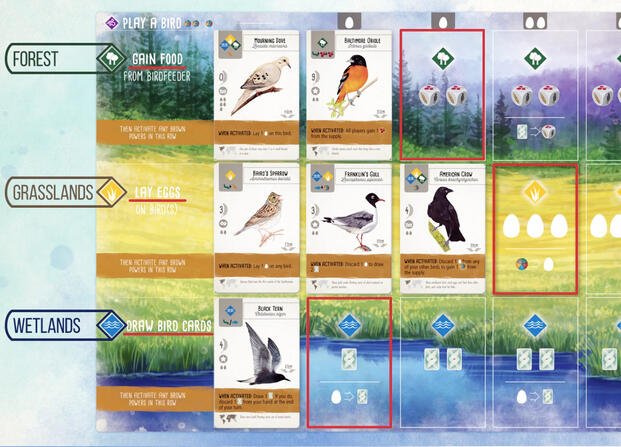
- Wingspan is quiet in the best way. You’re building an ecosystem of birds, managing resources, and making small, thoughtful decisions each turn. It’s beautiful, easy to learn, and rarely stressful.
- This is a perfect game for decompressing after a long day or easing into a game night without jumping straight into competition.
Dixit
- Best for: Creative play and conversation
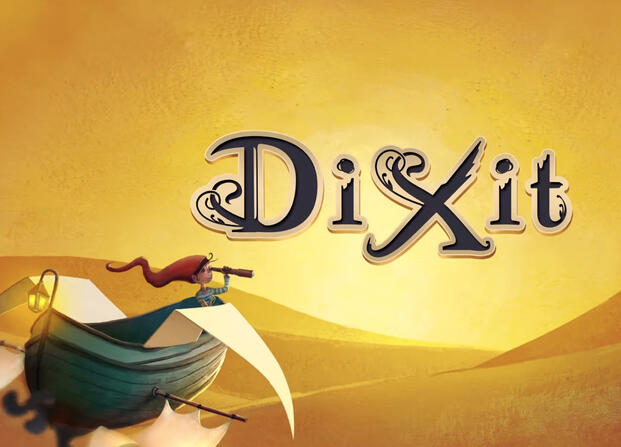
- Dixit is less about winning and more about interpretation. Players describe surreal artwork using short phrases, and everyone guesses which image matches.
- It’s a great choice when you want to connect without pressure. The game naturally sparks conversation, laughter, and unexpected moments, without demanding strategic intensity.
Ark Nova
- Best for: Deep focus and long-form strategy
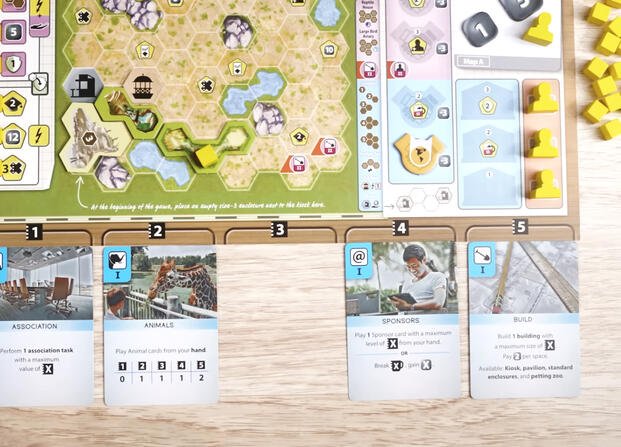
- Ark Nova is a heavier game, but a rewarding one. You’re building and managing a modern zoo, balancing conservation, reputation, and logistics.
- If you enjoy getting fully absorbed in a system and letting the outside world fade out for a couple of hours, this is the kind of game that pulls you in and holds you there.
Wilmot’s Warehouse
- Best for: Pattern recognition and gentle cooperation
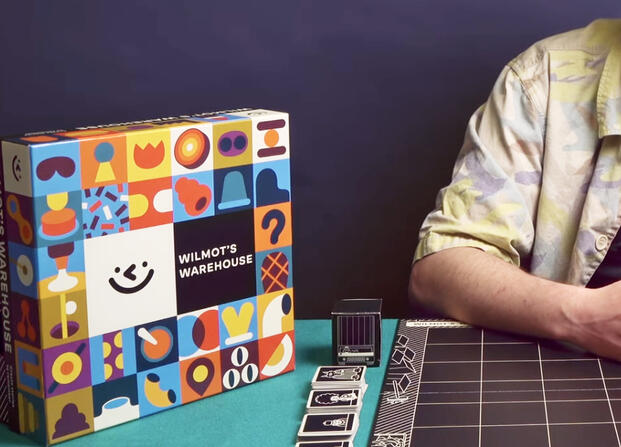
- Wilmot’s Warehouse is deceptively simple. Players work together to organize and retrieve items from a warehouse, relying on shared memory and visual association.
- It’s low pressure, quietly challenging, and oddly soothing. Great for couples or small groups who want something collaborative without intensity.
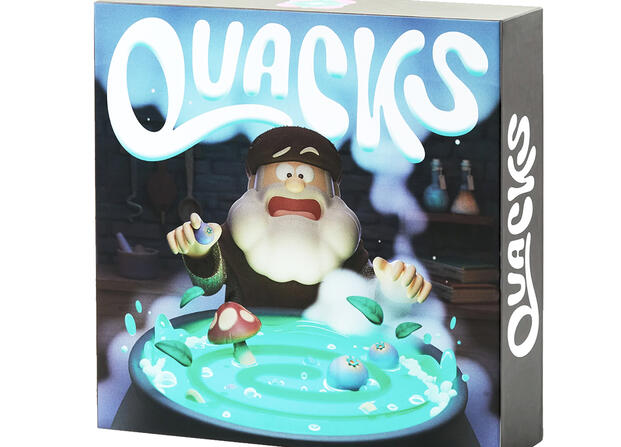
Quack
- Best for: Lighthearted chaos
- This is a push-your-luck game where you’re brewing potions and hoping your mixture doesn’t explode. It’s funny, unpredictable, and forgiving.
- When you want energy at the table without emotional weight, Quacks hits that sweet spot.
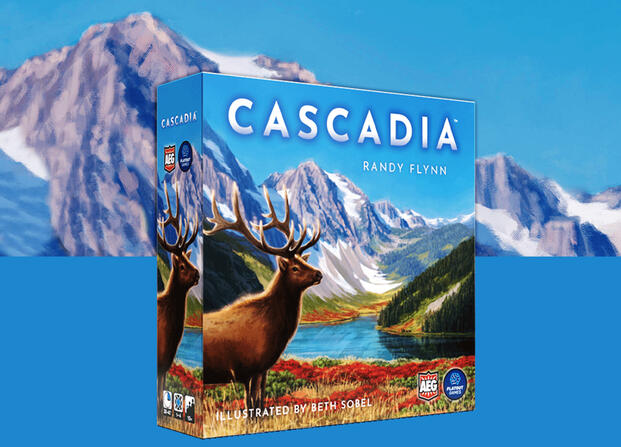
Cascadia
- Best for: Relaxed puzzle solving
- Cascadia is a tile-laying game focused on building ecosystems. Turns are quick, the rules are clean, and the decisions are satisfying without being overwhelming.
- It’s an excellent game for winding down, especially when mental energy is low but you still want something engaging.
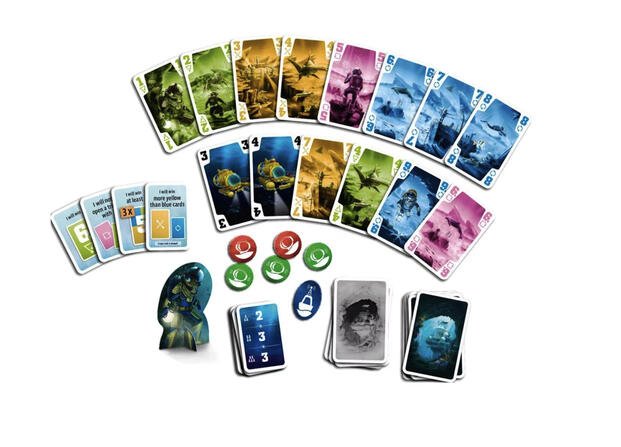
The Crew: Mission Deep Sea
- Best for: Short cooperative sessions
- This cooperative card game asks players to complete missions without fully communicating their hands. It’s quick, clever, and highly replayable.
- Perfect for shorter sessions or as a warm-up game that still emphasizes teamwork and trust.
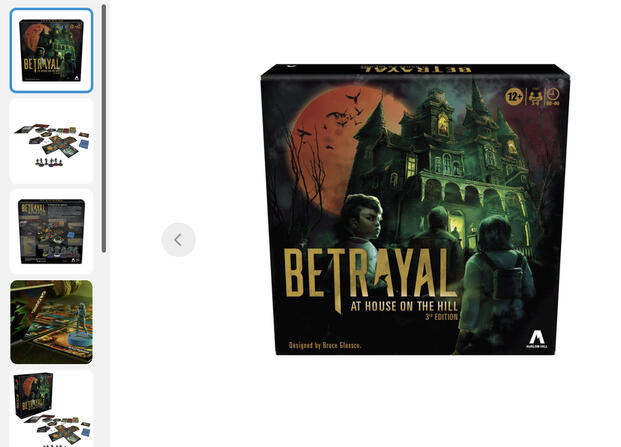
Betrayal at House on the Hill
- Best for: Story-driven group nights
- Betrayal starts as a cooperative exploration game, then shifts into something else entirely. Every playthrough tells a different story.
- It’s unpredictable, thematic, and best enjoyed with a group that likes a little chaos and surprise.
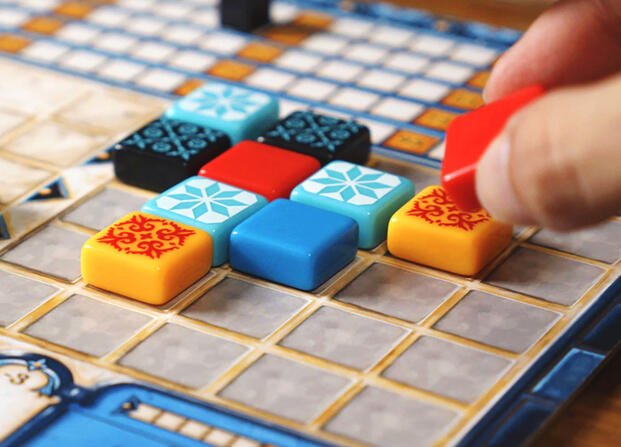
Azul
- Best for: Clean, focused competition
- Azul is a tile-drafting game with simple rules and elegant design. There’s competition, but it’s restrained and thoughtful rather than aggressive.
- If you want something visually satisfying and mentally engaging without emotional friction, Azul is an easy recommendation.
If you’re feeling… try this:
- Mentally overloaded: Cascadia (calm pacing, gentle choices, low cognitive friction)
- Restless but unfocused: Azul (tactile, visual, rhythmic decision-making)
- Looking to reconnect: Wingspan (low-conflict, easy conversation, satisfying planning)
- Wanting controlled chaos: Quacks (laughs + tension release, no emotional stakes)
- Needing teamwork, not competition: The Crew: Mission Deep Sea (quiet, cooperative, trust-based)
- In a storytelling mood: Dixit (creative, expressive, no personal disclosure required)
- Craving deep focus: Spirit Island (immersive, demanding, absorbs your attention)
- Wanting spooky group energy: Betrayal at House on the Hill (narrative adrenaline, safe stakes)
- Short attention window: Wilmot’s Warehouse (pattern recognition + shared memory)
- Wanting something big and strategic: Ark Nova (long-form planning, satisfying mastery)

Why Game Night Matters
None of these games is a cure for stress, and they can’t fix any baggage you carry.
But they do something important: they give your mind permission to rest inside a structure that feels familiar. A mission with rules. A team with a shared goal. A clear endpoint.
Sometimes that’s enough.
And sometimes, on a random night in a board-game café, it’s exactly what you didn’t realize you were missing.
Most Anticipated Tabletop Games of 2026
Not every game I’m watching for 2026 is “relaxing.” Some look promising because they seem built to lock your attention in, the good kind of absorbed. Here are the upcoming releases I’m watching closest.
- Restart
- A tactical, engine-building time-travel game where you bounce across past, present, and future to complete missions, harvest adrenaline crystals, and outplay rival travelers rewriting history for their own timelines.
- Hanami
- A serene-but-tense tile-laying reimagining of Reiner Knizia’s Samurai, themed around cherry blossom “flower viewing.” Minimal rules, layered strategy, and a fresh map with new actions that rewards clever placement and calm planning.
- Bagged and Boarded
- A comic-collecting strategy game about being a kid with big fandom dreams and limited cash. Buy, grade, flip, and display key issues, turning nostalgia into sharp decisions about value, timing, and brag-worthy collections.
- Horror on the Orient Express
- A board-game take on Call of Cthulhu mystery-horror from Chaosium, built for immersive investigation, escalating dread, and campaign-style play. Think slow-burn paranoia on rails, with deluxe content and expansions for deeper nightmares.
- Class of ’89
- A medium-weight, nostalgia-driven strategy game that turns late-’80s high school culture into smart worker placement and tile-laying. Beneath the neon and mixtapes is a surprisingly thoughtful system about organization, memory, and making meaning out of fleeting moments—one to watch for players who like theme with real mechanical teeth.
Not every anticipated game will stick the landing—but the ones that do might earn a permanent spot on the table.
Story Continues
Read the full article here
16 Comments
I’m curious to know more about the different types of games that are recommended for veterans, the article mentions cooperative strategy games like Spirit Island, but what about other types of games, such as role-playing games or card games, can they also be beneficial?
I’m skeptical about the idea that board games can replace real support for veterans, the article does mention that it’s not meant to be medical advice, but rather a personal experience, I’d like to see more research on the topic.
I appreciate how the author emphasizes that board games are not a magic fix, but rather a way to decompress and reconnect with others, the fact that they mention it’s not about therapy or self-care, but rather about having a safe space to be present, resonates with me.
The idea that board games can provide a low-pressure connection and a sense of structure is really interesting, I can see how this would be beneficial for veterans who may be struggling with anxiety or depression, the fact that it’s a low-cost and accessible activity makes it even more appealing.
The author’s personal experience with board games as a way to decompress is relatable, I’ve also found that games can be a great way to unwind and socialize, the fact that they mention it’s not just about the game, but about the people you play with, is so true.
I’m concerned that the article may be oversimplifying the issue of veteran mental health, while board games can be a helpful tool, they should not be seen as a replacement for professional help, I’d like to see more discussion on this topic.
The author’s mention of the importance of having a safe space to land is really interesting, I can see how board games can provide that sense of safety and structure, the fact that they mention it’s not just about the game, but about the people you play with, is so true.
I’m excited to learn more about the different organizations that are using gaming as a way to support veterans, the fact that Stack Up is a veteran-led nonprofit is really impressive, I’d love to learn more about their programs and how they’ve been successful.
The author’s experience with board games as a way to decompress is fascinating, especially how they mention that games give structure to downtime and provide a safe space for the mind to land, I’m curious to know more about how this works for veterans with PTSD.
Yes, the structured play and low-pressure connection can be very beneficial for veterans, as seen in organizations like Stack Up that use gaming as a way to build community and provide support.
I appreciate how the article highlights the importance of community and social connection for veterans, the fact that board games can provide a low-pressure way to connect with others is really valuable, I’d like to see more discussion on this topic.
The mention of Spirit Island as a cooperative strategy board game that focuses on teamwork and long-term planning is interesting, I’ve played this game before and can see how it would be beneficial for veterans, the fact that it’s designed by R. Eric Reuss adds credibility to the recommendation.
The fact that the author and their wife stumbled upon a board-game café and had a great experience is a great example of how accessible and fun board games can be, the fact that they mention it’s not just about the game, but about the community and social aspect, is really important.
The fact that organizations like Stack Up have been building spaces for vets to connect through video games and tabletop play for years is a great example of how gaming can be used to create community and support, I’d love to learn more about their programs and how they’ve been successful.
The fact that the author mentions that board games are not a replacement for real support, but rather a way to decompress and reconnect, is really important, I think this is something that needs to be emphasized, especially for veterans who may be struggling with mental health issues.
I’m excited to try out some of the games mentioned in the article, the fact that they’re not all new releases, but rather the author’s favorite games of the year, makes me trust their recommendations, I’m looking forward to seeing how they can help me decompress and connect with others.