

Listen to the article
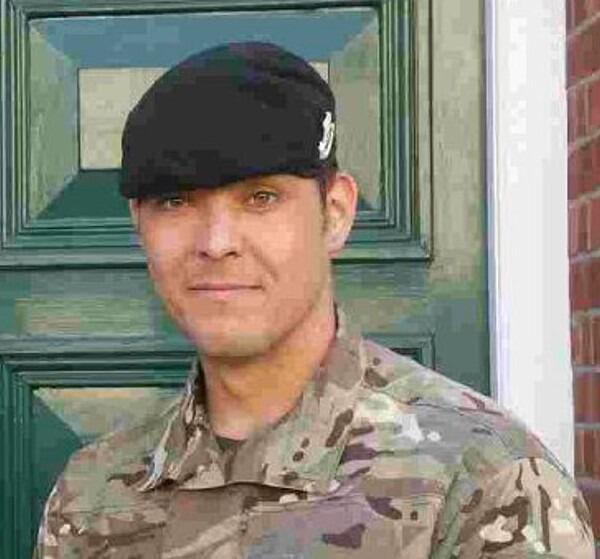
Andrew Borthwick served combat tours in Iraq and Afghanistan and, as a member of the British military’s elite Rifles Regiment, faced some of the heaviest fighting in both wars.
Borthwick retired as a lance corporal and was honored with several accolades for bravery and sacrifice in service. Despite all his accomplishments, the pain was too great.
Borthwick took his own life in November at age 41.
The veteran was married with two children, according to the Daily Mail. Shockingly, he’s the 29th known member of the Rifles Regiment to die by suicide since 2013, based on information from a UK veterans’ group that keeps tabs on veteran suicides.
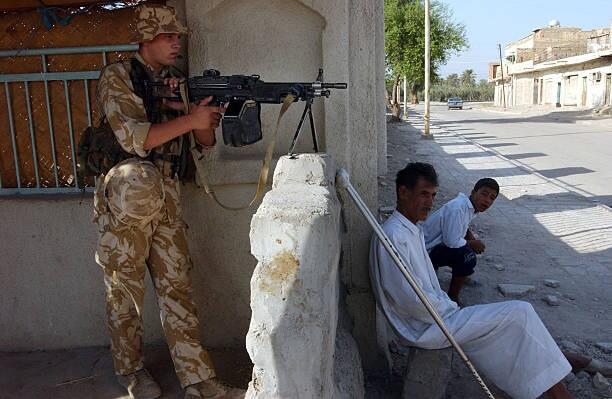
Most of the former soldiers who took their own lives had been deployed to Iraq or Afghanistan and battled depression, PTSD and other mental health issues. Some members of the unit fell into substance abuse problems after fighting in combat zones, watching battle buddies get wounded or killed.
In the UK, since 2016, 600 veterans or active-duty military personnel have taken their own lives. Bothwick’s regiment suffered more casualties fighting in Afghanistan and Iraq than any other British unit. From the Rifles Regiment, 66 soldiers were killed in action, and 344 suffered injuries, based on official statistics.
Surviving Close Calls
Captain Gary Case was one of the nearly 30 soldiers from the Rifles Regiment who died by suicide. In 2019, just weeks prior to his death, Case had accepted the Most Excellent Order of the British Empire from Queen Elizabeth, honoring him for 28 years of dedicated service.
Friends were shocked over Case’s untimely death. But the veteran had experienced awful images of war multiple times, serving in Bosnia in the 1990s and barely surviving an attack in Iraq years later.
Borthwick, nicknamed “Borth,” spent his childhood in Reading, England. Like Case, he too narrowly made it out of Afghanistan alive after being shot in the chest during a Taliban sneak attack.
He crawled to cover with other unit members, telling comrade Brett Campbell, “Man down.”
“Who?” Campbell asked.
“Me,” Borthwick replied.
The lance corporal had emergency surgery, and part of his lung was removed. Borthwick could have accepted a medical discharge with a pension and left the military, but he turned it down, opting to stay in the service and build back his fitness. In 2013, he returned to Afghanistan.
“The man survived what should have taken his life when we were ambushed in Sangin, Afghanistan. Even after taking a round through his lung, he carried on serving with the same grit and heart he always had,” Campbell posted on social media following Borthwick’s death. “I will never forget the moment we took cover. Face to face, calm as ever, he said, ‘Man down.’ I asked who, and he looked straight at me and said, ‘It is me.’ That will stay with me forever.
“Borth was given a second chance once, but life became too heavy in the end. I wish he had known how much he meant to the lads, the impact he had on all of us, not only in the platoon but in the regiment, and how much he is missed.”
Sad, Heartbreaking Loss
Borthwick kept up his physical stature after leaving the British Army, raising money for Combat Stress in 2020 by box jumping over 29,000 feet to match Mount Everest’s height.
News of Borthwick’s suicide spread through social media, with Cpl. Ricky Fergusson writing on Facebook: “I’m sad and heartbroken to say that we lost another Rifleman, a soldier, and a good friend on Sunday, November 23rd, to suicide.”
Fergusson endured heavy loss as well in Afghanistan, losing one of his eyes and both legs. He was honored with the Military Cross.
“He was a top bloke, funny, always laughing, and would always be there for his mates if needed,” Fergusson wrote. “Unfortunately, for many reasons, some unknown, things got too much, and he wanted out. Please, when you are feeling lower than low, thinking that life is too much and you want out, then please pick up the phone.”
Suicide Numbers Too Great
Jim Wilde, a retired warrant officer with the British Army, works with programs to support better mental health among veterans. Since 2017, he’s kept track of suicides by former soldiers. Wilde is trying to light a fire under the Ministry of Defence (MoD) and the UK government to address the nation’s high veteran suicide rate.
“There is clearly a problem with the number of suicides in the Rifles, as the figures clearly show,” Wilde told The Daily Mail. “We have told the MoD and the government about this, but we have been ignored, and in the meantime, the death toll from suicide continues to mount.”
Mental health challenges show no bounds, affecting some of the British military’s highest-ranking officers. General Sir Patrick Sanders, 55, a Rifles alumnus and a senior officer in the British Army, said in a 2021 interview he had battled thoughts of suicide following a violent deployment. He pleaded with active-duty members and veterans to reach out for help if they’re going through similar struggles.
“I found myself obsessing about experiences, dwelling on photographs, video clips, and letters, replaying in my mind what happened in a dark and obsessive way,” Sanders said. “These thoughts took me to a dark place. When I caught myself at two in the morning with a bottle of wine or whisky next to me, I realized that I needed help.”
The MoD seems to be taking the rise in suicides more seriously following Borthwick’s death.
“Any death by suicide is a tragedy that is felt across our community, and we are determined to provide those experiencing mental health challenges with the support they need,” the MoD said in a statement.
“This includes deploying expert mental health professionals to the front line and ensuring that briefing on the support and treatment available is offered to every serviceman and woman, both before and after deployment. We are also investing £25million ($33,712,500 in U.S. dollars) each year into Op COURAGE, so veterans in England can continue to access specialist NHS mental health and wellbeing services, and £50million ($67.4 million) into the VALOUR programme to improve veterans’ access to essential care.”
Story Continues
Read the full article here
21 Comments
Andrew Borthwick’s story is a heartbreaking example of the struggles that many veterans face after leaving the military, and it’s shocking that he’s the 29th known member of the Rifles Regiment to die by suicide.
It’s devastating to think that someone who survived so much, including being shot in the chest during a Taliban sneak attack, could still succumb to the pain and trauma of their experiences.
The UK’s veteran suicide rate is a national tragedy, and it’s essential that we take immediate action to address the root causes of this crisis, including lack of support, poverty, and social isolation.
It’s a complex issue that requires a comprehensive response, including increased funding for mental health support, as well as efforts to address the social and economic challenges faced by veterans.
The story of Andrew Borthwick and other veterans who have struggled with mental health issues is a reminder that we need to do more to support our military personnel, both during and after their service.
It’s essential that we prioritize their mental health and wellbeing, and provide them with the support and resources they need to thrive.
The statistic that 600 veterans or active-duty military personnel have taken their own lives in the UK since 2016 is staggering, and it’s clear that more needs to be done to address the mental health crisis affecting our military community.
Captain Gary Case’s story is another tragic example of the impact that war can have on veterans, and it’s shocking that he died by suicide just weeks after being honored for his 28 years of dedicated service.
It’s a reminder that even those who appear to be coping with their experiences can be struggling with inner demons, and we need to do more to support them.
It’s devastating to think that so many veterans are struggling with mental health issues, and that more isn’t being done to support them, given the sacrifices they’ve made for their country.
It’s essential that we hold our governments and military leaders accountable for providing adequate support and resources for our veterans, and that we prioritize their mental health and wellbeing.
The fact that 29 members of the Rifles Regiment have died by suicide since 2013 is alarming, and it highlights the need for better mental health support for veterans, especially those who have been deployed to combat zones like Iraq and Afghanistan.
This is a tragic reminder that the effects of war can last long after the fighting stops, and we need to do more to support our veterans who are struggling with PTSD and other mental health issues.
The fact that many members of the Rifles Regiment have struggled with depression, PTSD, and substance abuse problems after being deployed to combat zones highlights the need for better support systems for veterans.
It’s not just about providing mental health support, but also about addressing the social and economic challenges that many veterans face after leaving the military.
The Rifles Regiment’s high casualty rate and subsequent mental health issues among its members is a stark reminder of the human cost of war, and the need for governments to prioritize the wellbeing of their military personnel.
The Rifles Regiment’s casualty rate, with 66 soldiers killed in action and 344 injured, is a sobering reminder of the sacrifices that our military personnel make, and it’s essential that we do more to support those who are struggling with the aftermath of their experiences.
Borthwick’s experience of being shot in the chest and then returning to Afghanistan is a testament to his bravery, but it also raises questions about the long-term effects of repeated deployments on mental health.
The fact that many veterans are struggling with mental health issues, including PTSD and depression, highlights the need for more research into the effects of combat on mental health, and the development of more effective treatments and support systems.
It’s surprising that more isn’t being done to address the mental health crisis affecting veterans, given the high number of suicides among the Rifles Regiment and other military units.
Borthwick’s decision to turn down a medical discharge and stay in the service after being shot in the chest is a testament to his bravery and dedication, but it also raises questions about the support systems in place for veterans who are struggling with physical and mental trauma.