

Listen to the article
The first camera was simply pointed the wrong way.
In early April 2025, Jerry Reina, leader of a local neighborhood watch in the Harbor View area of Suffolk, Virginia, noticed that one of their community’s six Flock Safety cameras had been turned away from the road it was installed to monitor, according to his testimony at a preliminary hearing reported by WAVY.
A Suffolk police sergeant who helps oversee the city’s camera program soon found another aimed into a wood line. By summer, entire poles were down. Some cameras were thrown from the Hampton Roads Parkway onto Interstate 664 below, where they shattered on the pavement, the sergeant testified.
The tampering continued for six months.
In October, Suffolk police arrested Jeffrey Sovern, 41, an engineer and mechanic in the U.S. Air Force, according to his defense attorney, Cole Roberts. Sovern faces 13 felony counts of destruction of property, six counts of petit larceny, and six counts of possession of burglary tools, tied to 13 Flock cameras that were damaged across North Suffolk between April and October 2025, court records show. He has pleaded not guilty.
A local vandalism case would normally stay local. This one has become a national boiling point in the ever-burgeoning fight over automated license plate readers.
Privacy advocates across the country have donated more than $15,000 to Sovern’s legal defense, and his case is unfolding in Hampton Roads, a region that holds one of the largest concentrations of military personnel in the country, as well as more than 600 of the cameras.
What Are Flock Cameras, and Where Are They?
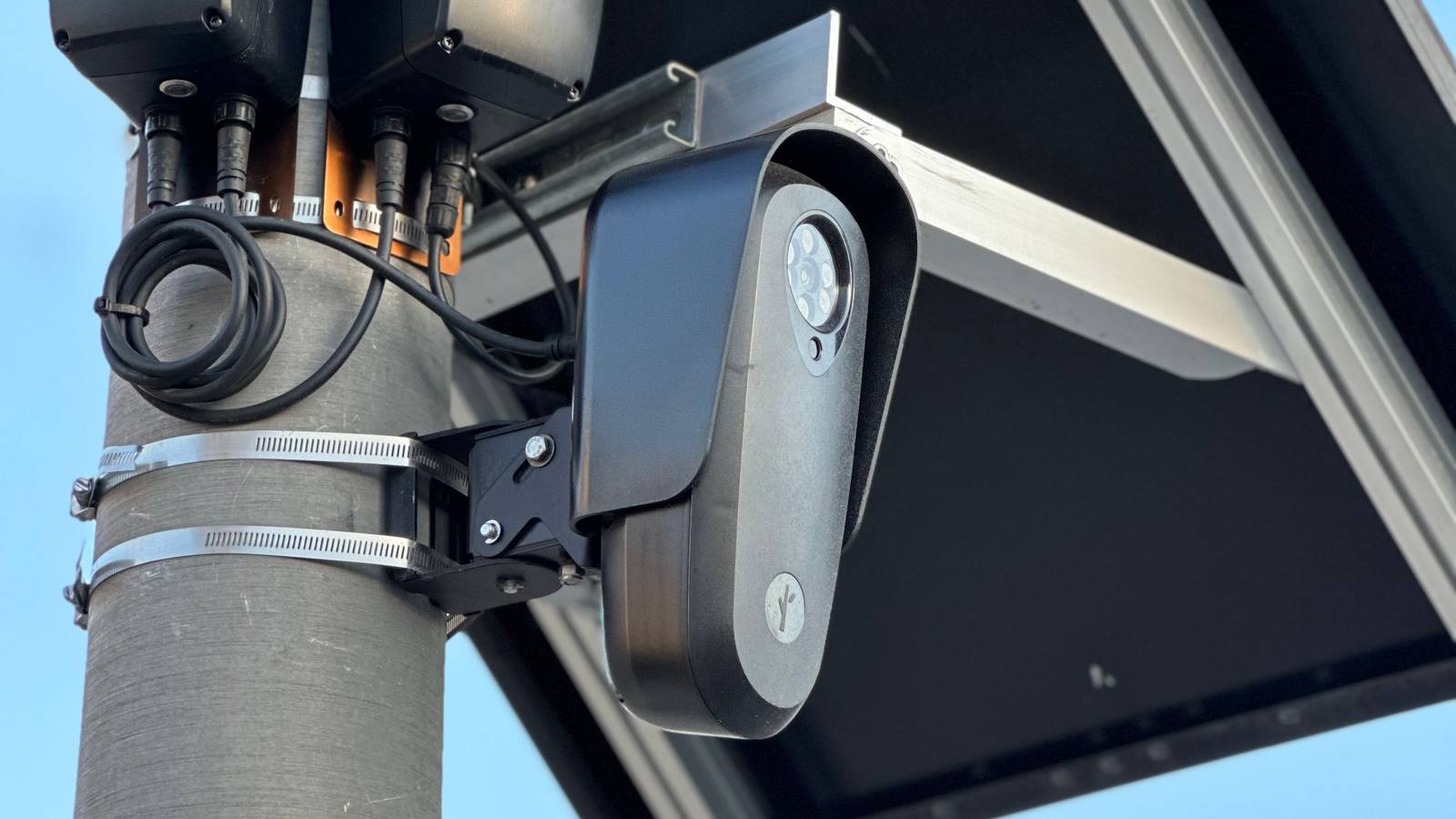
Flock Safety builds automated license plate readers, solar-powered cameras that photograph every plate that passes and store the images in a searchable database for 30 days, according to Flock Safety’s evidence policy. The company’s software can also log a vehicle’s make and color, along with identifying features such as bumper stickers.
Its network now operates in more than 6,000 communities nationwide. Hampton Roads has embraced the technology at scale. More than 600 Flock cameras operate across the region, including 70 in Suffolk, according to an exhibit filed in a federal lawsuit and reported by WAVY. Police departments credit the readers with helping to solve crimes and deter offenders.
Critics argue the cameras amount to a warrantless tracking network that logs the daily movements of ordinary drivers. That argument already reached a courtroom in neighboring Norfolk, where a federal judge ruled in January that the city’s network of 176 Flock cameras did not violate the Fourth Amendment, finding the system does not track the whole of a person’s movements.
The two residents who sued, backed by the Institute for Justice, are appealing.
Sovern’s alleged campaign put him on one side of that fight, with a saw rather than a lawsuit.
Why He Says He Did It
Suffolk police Det. Zach Hyman testified that during an interview, Sovern called the cameras “unconstitutional and a violation of his and others’ Fourth Amendment rights,” according to coverage of the June preliminary hearing.
Sovern has made the same argument publicly and repeatedly. On a GoFundMe page raising money for his defense, he introduced himself as a man who values privacy and wrote, “I appreciate everyone’s right to privacy, enshrined in the Fourth Amendment.”
In a late June update posted after the hearing, he thanked supporters and encouraged them to petition their local governments to remove the camera systems.
He has stopped short of admitting the conduct. Sovern told Straight Arrow News he does not admit to vandalizing the cameras, while maintaining that license plate reader systems are unconstitutional and accusing Flock of building “an unhealthy surveillance state.”
How Police Say They Caught Him
According to a criminal complaint filed in Suffolk General District Court, then reported by WAVY, Sovern admitted to investigators that he damaged the cameras, telling them he used vice grips to disassemble the two-piece poles and kept some of the wiring, batteries, and solar panels.
Hyman would go on to testify that the break in the case came in July 2025, when a traffic-monitoring camera captured a gray pickup belonging to Sovern near a Flock camera that had recently begun having abnormal issues.
Investigators obtained a warrant to place a GPS tracker on the truck. In October, a search warrant executed at Sovern’s home turned up camera components, including six solar panels, according to the testimony. Hyman said Sovern told him the panels were being used for camping.
Each installation carries a real price tag. Suffolk police Sgt. Paul Helvestine testified that a single unit consists of an $800 camera, a $500 pole, plus a $350 solar panel.
The detail drawing national attention is simpler: a man accused of destroying surveillance cameras was identified by one. This pattern is not unique to Suffolk. An analysis of police audit logs by Straight Arrow News found that law enforcement agencies around the country have repeatedly used Flock’s own search tools to investigate vandalism against Flock cameras.
 A National Fight Over License Plate Readers
Sovern’s case has intensified a much larger ripple working its way across the American zeitgeist. In Newport News, police reported in November 2025 that a pole holding one of the department’s Flock cameras had been destroyed, with no suspect identified, a spokesperson told WAVY.
The Virginia Pilot reported that communities have begun pushing back against the new tech, and some cities and towns have canceled their Flock contracts entirely.
The constitutional ground is gaining momentum, too. On June 29, the Supreme Court ruled 6-3 in Chatrie v. United States that obtaining a person’s cellphone location data is a search under the Fourth Amendment, rejecting the government’s argument that the data loses protection because a third-party company holds it.
This ruling, on the other hand, does not mention license plate readers, but the Norfolk camera appeal is headed to the Fourth Circuit, the very same court the Supreme Court just directed to reconsider the limits of location surveillance.
Flock has defended its work publicly, stating, “Flock Safety takes damage to our devices seriously,” company spokesperson Paris Lewbel said in a statement to WAVY, adding that the company appreciates law enforcement partners who hold individuals accountable and stands behind technology it says protects communities.
What Happens Next
At the late June preliminary hearing, Fifth Judicial District Court Judge Nicole Belote certified all charges to the Circuit Court, WAVY reported, sending the case toward a possible grand jury indictment and trial. Sovern also faces separate petit larceny charges in Chesapeake, according to WAVY, and was free on bond as of December.
Whatever the courts eventually conclude, the cameras he is accused of cutting down have already been counted, quantified, and entered into evidence. However, the network they belong to will still be watching your roads, ever vigilant.
Read the full article here
6 Comments
Solid analysis. Will be watching this space.
This is very helpful information. Appreciate the detailed analysis.
I’ve been following this closely. Good to see the latest updates.
Great insights on Defense. Thanks for sharing!
Interesting update on Air Force Engineer Accused of Cutting Down 13 Police Cameras Says They’re Unconstitutional. Looking forward to seeing how this develops.
Good point. Watching closely.