
Listen to the article
Key Takeaways
🌐 Translate Article
📖 Read Along
💬 AI Assistant
00:00:00
Speaker 1: There are days. There might be days where you’re gonna be it might be easier than you thought. There’s definitely gonna come a time where it’s gonna be either harder than you thought, or physically it’s gonna be so hard that mentally you start to shut down a little bit. So if you can hedge that fitness side of it to make it more enjoyable, here’s a good thing to think about.
00:00:17
Speaker 2: Have you, Rich Broning, ever been on a hunt you thought you were over prepared for and like you were like, ah, this is to me a Western hunt. You’re like, dude, I was shouldn’t have done that extra workout?
00:00:29
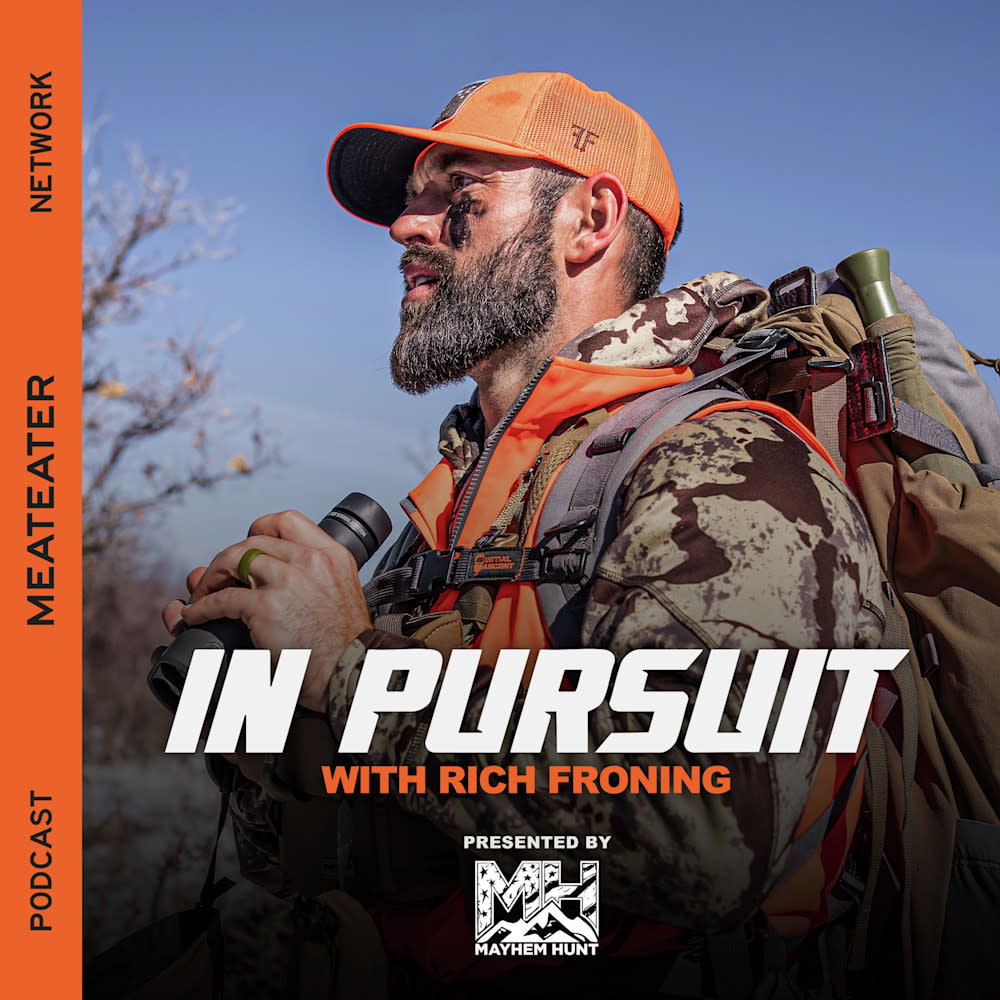
Speaker 1: Yeah, that once out here, the stakes are real. Effective preparation starts with fitness, but it requires so much more. This show explores the tools, knowledge, resilience, and skills needed to be ready when it matters the most. Join me, Rich Broning as we apply the decades of wisdom I’ve gained through training and competition to hunting in the back country. This is In Pursuit brought to you by Mount Knocks in collaboration with Mayhem Hunt all Right, Spike Camp, Jeffrey Dodds, Angelo to Chicho, and myself.
00:01:15
Speaker 3: The Chilo.
00:01:16
Speaker 1: You like that, the Chico. It’s Italian for Gila. All right, overall episode how to Pace a Hunt, How to pace a Western Hunt. Jeff’s got some notes, some stuff we’re gonna talk through. People should be getting tags and that type of stuff should be.
00:01:33
Speaker 3: We’re starting to like jump a little bit, getting excited.
00:01:36
Speaker 1: Yep, you got Montana’s, but put theirs out. Put Colorado’s out.
00:01:41
Speaker 2: You go to put in for it, at least.
00:01:43
Speaker 3: To put in is. I don’t think the draw results are out.
00:01:46
Speaker 1: No, not yet. So you should start having some type of plan or start your planning phase schedules.
00:01:52
Speaker 3: Getting close to dial then.
00:01:54
Speaker 1: You should have maintained your fitness should be well into that you’re in at this point with this episode, probably June ish, right, mid.
00:02:03
Speaker 2: June, yeah, June run, yeah, mid and late.
00:02:05
Speaker 1: Maybe so then just update on us. We got hunt camp. We have it coming up by the time this comes out after be done, we’ll fill you in on that. We’ll probably have a couple of podcasts from that, which pretty cool too.
00:02:17
Speaker 3: Sure.
00:02:18
Speaker 2: The Rock program, we’re gonna do a rough challenge, daily rock challenge.
00:02:23
Speaker 1: What’s the name, would you guys decide?
00:02:24
Speaker 2: What I like Rock Daily, Rock Daily. We had a lot of options for anyone listening. There are a lot of options that we were gonna choose. For a little tongue in cheek, Yeah, we’re still I mean, we’re working through a framework a little bit, but we want to put a challenge together for you guys that is of low cost that is going to honestly give you an opportunity to have a community within our fitness program and something that will give you little by and if you have a backpack that you can put some weight in, you can do this program. That’s all you will need. And we’re gonna try to do some giveaways with it, Like that’ll be totally get you to get you in our programming. You see it for low to no cost with the toe Dip the toe, dip the toe a little bit, and then if you can complete that, we’ll probably do some cool giveaways if you can do that, and then hopefully you stick around and see the importance of building that fitness base and finding the community of the guys in the app or guys around you that you want to work out with. Build a fitness community. Slash hunting community should be pretty much the same thing. For you, hopefully it is for us. And then yeah, this will kind of build the the start building some consistency in your fitness program leading into hunting. And yes, obviously rucking is very sports specific to our hunting, so that is kind of where we’re going to. I’m sure anyone who’s the first thing you think about when you’re gonna go on hunt, You like, dude, I gotta put U some way to my back and walk around yep, because that’s gonna you are for sure going to do that.
00:03:49
Speaker 1: So well, you’ve been talking to Jeff, not you, Jeff other Jeff. Oh, that’ll hunted access with he said about a month month and a half out, he just starts loading a fifty pound bag and walking with that. Yeah, that’s his prep for hunting season.
00:04:04
Speaker 3: That’s what I watched my dad do growing up. Yeah, he even had the little ankle weights and the wrist weights.
00:04:10
Speaker 2: Yeah, So I mean that’s it’s the best place to start. Like, it’s just it’s just so simple, it’s so obvious that something you’re gonna need. And then, in our opinion, it gets a little mundane after a little while, you’re gonna want to change it up. Get some you don’t want to go. I don’t. Maybe someone does. I don’t want to go have to walk for two or three hours a day to get the kind of fitness in I’d rather go and do a high intensity workout for twenty to thirty minutes and get the same maybe two.
00:04:34
Speaker 1: Times a week. It along slow, but I’d prefer to.
00:04:37
Speaker 2: But you’re gonna I mean this, the science I won’t get in the side, but the science supports the high intensity stuff twenty to thirty minutes is a little bit better at moving the needle for you in your overall fitness, then it will be doing that two to.
00:04:49
Speaker 3: Three hour rock.
00:04:50
Speaker 2: So yeah, we’ll we’ll keep you posted on that. Probably we’re probably looking at the month of July for that. We’ll do. Yeah, and then we’ll.
00:04:56
Speaker 1: Give you more.
00:04:57
Speaker 2: We’ll do more of these, We’ll get more details now. Yeah that would be cool.
00:04:59
Speaker 1: Yeah, yep, sweet. Then you got the first pursuit. First pursuit.
00:05:05
Speaker 2: Similar idea, A little less buying, uh, mostly body weight, some rock stuff, a dumbbell, maybe a box. I think I left it literally rock dumbell box. I believe that it’s all you need for to do eight weeks of working.
00:05:19
Speaker 3: Out, So back up. What is the first pursuit? Why do we design it?
00:05:22
Speaker 2: Yeah, the first pursuit is kind of as a sounds. It’s for that person who is going out for their first hunt, or you haven’t gone a hunt a long time.
00:05:29
Speaker 1: Or you haven’t had fitness background.
00:05:31
Speaker 2: Fitness background, limited equipment, and you just want to get you know, you gotta hunt coming up. You want to get in shape. And even if you’re even if you have no hunts planned, no difficult hunts planned, you’re like, man, I do think it’s about time to get in the gym a little bit more. Garage, Yeah, garage anything like literally dumbbell box and the box can be just something that is stable that you can step on then and positive attitude.
00:05:58
Speaker 1: If you’re Jeff, might might go to crap at some point.
00:06:02
Speaker 2: But so all this will be on playbook. We’ll leave that link in the description to give you access to all that stuff and just yeah, get in there, let us know how you like it, and there will be more. There’s a lot in that app There’s a ton now, so if you are interested in any of our Finnis programs, there’s a ton in there.
00:06:19
Speaker 3: Have apparel, apparel, Yeah, we got plenty.
00:06:22
Speaker 2: Of tons, and then we’re Jeff’s working on some new stuff that looks really cool, So I’ll get that set up.
00:06:27
Speaker 3: Where can they find that?
00:06:29
Speaker 2: That can also be in the link. But that’s also that that link is in playbook, so if you go to playbook, all that will be there, or we can put in the apparel link as well and make it easier for them in description.
00:06:37
Speaker 3: Either want just buy it also makes more.
00:06:39
Speaker 1: Yeah, yeah, all right, so we’ll get into it. Obviously we’re biased, but you know you’re going out west. You know you should get fit. We’ve had a whole episodes kind of on that, that process and what you should do. So that is first and foremost.
00:06:58
Speaker 2: Yeah, all right, prep as well as you as well as you can, as well as your schedule and your fitness and everything will allow. We’ve talked about it. The gear is important. Having good gear is important. Number one gear is your body.
00:07:12
Speaker 1: You never want to show up under prepared. You want to be like, oh that wasn’t as bad as I thought. For sure. Usually there are days, there might be days where you’re gonna be it might be easier than you thought, but there’s definitely gonna come a time where it’s gonna be either harder than you thought or physically it’s gonna be so hard that mentally you start to shut down a little bit. So if you can hedge that fitness side of it to make it more enjoyable.
00:07:35
Speaker 2: Here’s a good thing to think about. Have you Rich Frohning, ever been on a hunt that you thought you were over prepared for, Like you were like, ah, this is to a Western hunt. You’re like, dude, I shouldn’t have done that extra workout.
00:07:47
Speaker 1: Yeah, not once.
00:07:49
Speaker 2: So, but I also like than any sitting here, he’s probably fitter than the rest of you.
00:07:54
Speaker 1: I also like to enjoy it, you know, but I also enjoy kind of the suffering and the pain side of it. I enjoy It’s like, man, you know.
00:08:01
Speaker 3: Just put your head down, get it done.
00:08:03
Speaker 1: Yep. Yeah, So it’s always going to be harder and steeper than you think, so train that.
00:08:08
Speaker 2: Yeah, how many times you’ve read a topo map you get out there, you go.
00:08:14
Speaker 3: A lot closer to yeah, or even I know when I like, look at a mountain, you’re glassing it, Like, oh man, I can get up there in forty five minutes, Like that’s no problem. Besides when we were in Texas, we actually could, but in Colorado, Montana, realistically, i’d say triple the amount of time that you think you’re gonna be able to do it in. And that’s probably where you’re at.
00:08:34
Speaker 1: Well. A lot of those times you’re not seeing the bottom the steepest part, usually the thickest vegetation.
00:08:40
Speaker 3: So it’s where the creek is. Yeah, it’s roaring. It’s always further than you think.
00:08:45
Speaker 1: Yep. So a couple of things to think about. You know, what’s your buy in distance? So what’s it going to cost you to get there? Yeah? And once you’re up there, what’s it going to cost to then go make a play somewhere else?
00:08:59
Speaker 3: Yeah?
00:09:00
Speaker 1: Those are things you’ve got to. Like, I’ve got to know in training, where I’m training at, what I’ve been doing at, what time or what amount of time on my feet or distance? Am I starting to like? Okay, this sucks. I don’t want to do this anymore.
00:09:15
Speaker 3: Because at some point you’re using a vehicle, maybe a horse and mule. You know, lamas are pretty popular, but you’re trying to figure out, Okay, if I’m camping here a in the elk or mule deer are at b what’s that buy in process going to look like? And what type of fitness level does that going to take?
00:09:33
Speaker 2: Yeah, because I mean, yeah, you have to be a certain fitness level, but you also have it’s like it has to be feasible to like the time you’re like, well I can just get over there, Well, yeah, you can do over there, But if you’re gonna go over there at dark, why go why are you going over there dark? You know, you need to have a plan set up to where you’re gonna be like, Okay, realistically today, can I get over there where I if I’m at a glassing point, I see those out come across, Can I go over there? Or am I going to do the jeffery? Am I going to pack a backpack and I’m gonna get halfway and then get the rest of the way. You know, there’s things to think about and then that all that is plays into packing your pack, which then probably makes your pack heavier yep, which then goes back to being fitter.
00:10:12
Speaker 3: THET scouting is a really good tool for this too, Like you can get in there whatever medium you use for EST scouting, you can get to three D mode and it’ll tell you how much vert you’re you’re gonna be doing from A to B and like understand what that actually means. A thousand feet is not that bad, but are you doing it in a quarter mile that’s horrible.
00:10:32
Speaker 1: Yeah.
00:10:33
Speaker 3: Yeah, So understanding that balance of like Okay, this is a thousand feet in a three mile radius. Okay, it’s kind of like a gradual incline. So have an idea of your of your area prior to the hunt via et scouting is always a benefit when it comes to pacing on hunt.
00:10:50
Speaker 2: Yeah, and this is you can use that in your prep too. If you’re gonna go off for those rucks, use the use the topo map for that too, and say, okay, well I just covered five hundred feet over a quarter mile. I kind of that’s and you have a gauge of what that feels like. And then you can use that gauge of like, Okay, well this is gonna be longer but less steep, or it’s gonna be shorter and more steep, and you kind of have an idea of those times and that and I also comes with like knowing the place you’re hunting. Obviously, the more you do the east scouting, you use it for yourself. But when you get your when you get boots on the ground, boots on the ground, you get boots on the ground, things change. I mean you can you can definitely assess it a little bit more. But having the reps of just going out west or just going up and downhills or mountains, it’s gonna make it easier for you to determine that time in which is going to take you to cover certain distances at certain elevations.
00:11:39
Speaker 1: That’s also a fitness tracker is helpful in that when you’re training. You know, I we wear the ring and it’s a little less GPS, but a watch could help you with in training knowing all right, hey, I like here you take fight for Mountain for example, it’s about one thousand feet of elevation chain in three miles. Granted one mile is about flat.
00:12:04
Speaker 2: Yeah, and so.
00:12:05
Speaker 1: It’s it’s it’s a bit deceiving because it is super steep in two different spots and so but that’s a good way to be like, Okay, at home where I train, you know, this hill is four hundred feet of elevation change in a mile. You’re like, oh, okay, that was hard. So now I need to look at all right, what is on this map? What’s that distance? You know, my sidehilling it a little bit, am I gonna kind of you know, You’ll get on a hill and you’re like, I’m gonna go straight at it, and next thing you know, you’re you’re kind of zig.
00:12:33
Speaker 3: Zag, which it does help totally.
00:12:35
Speaker 1: Those are some tactics that you can kind of save your legs a little bit. Your heart rate might be a little bit higher, but your legs won’t get as burnout. So that’s where fitness comes into play. You know, we did that a lot early years in Colorado. You’d get back at night and you’re you know, there’s that wall, that one spot where we hunted, and you’re like, oh, I’ll just go straight up it. The next thing, you know, you start and.
00:12:58
Speaker 3: Find just a tiny little game.
00:13:00
Speaker 2: Oh I like that one.
00:13:01
Speaker 1: Well, yeah, and there’s a reason why they do it too.
00:13:04
Speaker 3: Yeah, they don’t go straight up their corner. Yep.
00:13:06
Speaker 1: You can find a game trail, a good game trail, and that just comes with yeah, years of doing it.
00:13:11
Speaker 3: Yeah, if you have the ability to get boots on the ground in your hunting area prior to your hunt, you know, maybe it’s like, oh, it’s three miles from A to B, but two out of the miles is deadfall. Oh my gosh, Like that will make a man quick quicker than anything. So like understand the terrain again. It’s always further and harder than you think, so just be prepared and over prepare.
00:13:35
Speaker 2: A good tool that I’ve used for myself for just like run. If I’m training for a run or something, I will if I’ll just set my watch and i won’t look at it, and I’ll run whatever pace feels comfortable. This can be just used just for rocking the same way. I’ll do three miles and then i’ll stop. It doesn’t have to be three miles. I just go it for a distance. I’ll stop it and I’ll say, Okay, that was comfortable, or that was too hard, or I can go faster. You can use that same approach if you’re gonna go out and ruck. Hey, I’m gonna start my watch. I’m gonna go from A to B, and from A to B maybe two miles, and I’m not gonna look, I’m not gonna pace it. I’m just gonna go at the pace that feels comfortable to me that I think I could continue the rest of the day doing yeah, and then stop it and say, okay, well I cover two miles and you know, twenty five minutes, and now I know that’s the pace that like, that’s my daily pace that I can do and I can continue to hunt the rest of the day because if you get eye, I know I’m not when I’m running, I’ll do the same thing and I’m like, oh man, I need to go faster or I need to go slower. This is the wrong pace. Really, you’re you can kind of self regulate pretty good. So like you’ll you can do it if you’re not over fixated on being at that point at a certain time, and then you use that data when you go to a hunt. You map it out and say, okay, well that’s two miles roughly similar elevation change is what I did in that ruck I did. I kind of know long it’s gonna take me, and that’s gonna be the pace that I can hold and continue to move and tinue to move the rest of the day.
00:15:02
Speaker 3: Yeah, the old timers would always talk about before all this technology and stuff, the old mountain crettes. Yeah exactly, but they would, Yeah, but they would always talk about how the sweat was always your limitter, right, So if you’re starting to sweat, yeah, and then I was thinking of you and Scott when I thought was thinking about this. But if you’re pacing it and you’re starting to sweat more, you’re going too fast because you’re like, yeah, that that was pretty much their pacer back in the day.
00:15:32
Speaker 2: It’s not bad, but it’s not good for you. It’s impossible for you, but it is. But I mean it’s a decent gauge, like to if you’re starting to sweat, you’re working probably too hard for most people. If you are, if you have a light sweat going, you’re probably okay. But yeah, if you start it starts pouring down your face, you probably aren’t gonna be able to maintain that.
00:15:54
Speaker 3: Slow down, take a breath, take a drink, and then if you’re Scott Rich, just figure it out. Just hang on.
00:16:01
Speaker 2: Yeah, you will not be sleeping, well, you said something, we are going down to Texas, you go. I just associate hunting trips with little sleep, And it is true.
00:16:12
Speaker 1: That was an in a cabin. We were still getting back at ten o’clock, ten thirty eleven, waking up at five.
00:16:20
Speaker 2: Because it didn’t get you could hunt to like eight forty five, so we’d hunt forty five back, an hour, drive back, an hour, eat dinner, and then like if you were rushing to bed, you’re in bed.
00:16:29
Speaker 1: I was trying to rush to bed. Yeah, yeah, because I know how sleep affects me. Totally, sleep affects me.
00:16:35
Speaker 2: And and I mean that puts Oh you can’t Jeff napped. He napped, good big nap, guy, big big Jeff Jeff helm Yeah. Help meat. It’s like a good nap.
00:16:46
Speaker 1: Oh yeah.
00:16:48
Speaker 2: And that ties into the little food because if you are, like Richa said, we’re getting back late. We want to go to sleep. So you’re not going to be just stuff in your face for two hours, which I mean we try. You try to put in as much food as possible because you’re on your feet all day. It was hot. It wasn’t terrible, but it was hot, and you’re walking a lot, so you’re not just like eating all day. I was kind of no, but you’re not eating all day. You don’t want to have it. You don’t want to be eating all day. You kind of want to be on the move. Anyways, you’re gonna get back and try to get as much sleep as possible, which is still gonna be little, which means you’re not gonna have time to just like get back and eat and gorgeous.
00:17:26
Speaker 3: And also ninety nine percent of the time you don’t have a guy cooking for you for sure.
00:17:30
Speaker 2: That getting there, So you’re cooking.
00:17:32
Speaker 3: You’re getting here, You’re like, okay, do you want to do a quick you know, dehydrated meal.
00:17:37
Speaker 1: Are you cooked?
00:17:38
Speaker 3: Yeah, mountain ups? Are you cooking a real meal? Do you have a you know, a something you can like a PEB and J. That’s easy with a lot of protein, protein shake maybe, but you’re by no means getting a.
00:17:50
Speaker 2: You’re putting in enough food so you can go to sleep with that an empty stomach. It’s really the idea, you know, and then throughout the day you want something on your stomach at least I do. I like something on my stomach to move around in the morning. I’m not as it’s not as absolutely imperative for me. But everyone’s different, Like some people have to eat breakfast to feel good. Some people, you know, have to eat a big dinner to go to sleep.
00:18:12
Speaker 3: Like there’s just you know, you got your hunting partners, yeah, for sure, Like I need caffeine.
00:18:17
Speaker 1: That’s it.
00:18:18
Speaker 2: You have to be putting some food in. Caffeine is huge. I mean, I think it’s I think it’s it is like a performance enhancer. So you and I mean, I don’t see why you wouldn’t use a fronting some people something make.
00:18:31
Speaker 1: It make some jittery.
00:18:32
Speaker 2: But yeah, unrial.
00:18:35
Speaker 1: I usually just one to two cups of coffee a day in the morning, that’s it. When I hunt, No, there’s no every time I can get it. Yeah, me and Scott will just mix a giant ninety six ounce of nalgene of YETI mode. Yep, we just sip on it through the days. Yeah. Nice, just completely taxing the nervous system.
00:18:55
Speaker 3: Yeah, probably not the best. You know, we’re oute if you can get a good meal in it, but that is oh yeah, yeah. Your dietary settlements are always a good option because they’re quick, easy, and they pack up calorie dance.
00:19:06
Speaker 1: Yeah, that’s those meals. I mean, and you know, obviously Mountain Ups is a sponsor, but they are really the macros on those.
00:19:12
Speaker 2: Yes, really great.
00:19:14
Speaker 3: Forty five grams of protein is huge and.
00:19:16
Speaker 1: One of those meals, so those are awesome. But and just having a hot meal can bring you back for you know, like eating a sandwich, eating a bar, eating fruit or whatever, just sing or whatever. But but having a warm meal at night or when you get us sit down time or if it’s cold.
00:19:35
Speaker 3: I don’t know about you guys, but every time I go through like the can or the granola bar section of a of a grocery store, I just cring. I’m burnt out on that one. I’m burnt out on that one.
00:19:45
Speaker 2: Yeah, you have to like you have to keep it on a rotation three years. I can’t eat that one.
00:19:50
Speaker 1: For you know.
00:19:51
Speaker 3: I ad to nature valley bars.
00:19:55
Speaker 2: Uh, what you were something that I can eat trash? I don’t care what you’re saying about the hot meal is is true, and this is this isn’t necessarily about I don’t know. I guess this does tie into this. There are just like a few things that I try to get me back, that I try to do to get me back to baseline. So like a hot meal can do it, teeth can it? Bringing like wet wipes and wiping my body down just a little bit can bring me back to it. Like there’s just these simple like human creature comforts or like having like a nice pillow, like something very simple that just like makes it not feel like you’re absolutely in hell when we’re you know, when we’re talking about getting deep into a hunt. I think it’s important because I am Me and Jeff have hunted together now twice. I am very negative. Rich is very similar to me too, very negative period be in the middle.
00:20:51
Speaker 1: I can be persuaded by whoever I’m with.
00:20:53
Speaker 2: I’m very negative. So if I like, if I know that I’m gonna go back to camp and there’s going to be a me that is hot, that might be just enough to keep me on my feet all day, right, and I don’t need a lot, but just like one thing to get me to not be so negative is good. So I’m sure there’s more people like me. So like that does tie into like wanting to be out there, continuing to want to be out there, and continuing to push while you’re out there, if you have something to look forward to, and maybe it is just a peanut butter and jelly, like it could be something simple. It doesn’t need to be something crazy.
00:21:24
Speaker 3: We’ll go in depth on a nutrition podcast too soon, just like how to actually prepare nutrition wise. But that’s actually a good segue to the next section of knowing your hunting partners fitness as well.
00:21:37
Speaker 1: True with your hunting partners totally.
00:21:40
Speaker 3: That’s obviously that’s best case scenario.
00:21:42
Speaker 1: You can be or even virtually, I mean, we had a group for a while before we kicked you off, before you went and slept with the enemy.
00:21:49
Speaker 2: You can’t serve two masters.
00:21:51
Speaker 1: Still the screenshot where we still want motivation, where we still where we would send workouts, share workouts. Yeah, like, hey, this is what we’re doing. We’re all we’re all technically going on a hunt together in a couple of weeks or whatever. We’ll share the workout that we did or give times on the workout that we did.
00:22:11
Speaker 2: Yeah, I mean being in person training with somebody is great. Second best that would be texting with somebody and go having that virtual conversation of going back and forth doing the same workouts. You know, Hey, there would be a program. There’s a program you can follow.
00:22:25
Speaker 1: Yeah, you know.
00:22:27
Speaker 2: Yeah, you guys can share a place for you to do it in there. Hey, I’m just saying playbook. Yeah, there’ll be linking description. We got that part handled. You just find a partner to do with. Yeah, you’re texting with a friend. We I mean we say it all the time about like having friendzy hunt with you, work out with it will make anything a lot easier, It will make it a lot more fun, will make you the accountability is second to none, like having somebody that you know, even if you don’t both don’t want to work out, Yeah you can go. I’ve said, I think I’ve said this story. My dad literally told me this. I didn’t have to say anything to him. He said, yeah, like I used to work out this guy when I was like twenties, my twenties or thirties or whatever. He’s like, dude, I did not want to work out at five am, but like he was there, so I went. And he said, after a while, they both I mean, I think they just got busy, but like they both had said that I don’t want to be here, you don’t want to be here, but they just show up because they’re both gonna be there, so they just show up. And I mean, so that’s like that’s an age old truth. It’s not just us saying that like that will happen.
00:23:25
Speaker 3: But talking about like in a hunting scenario, right, if you bury your buddy, it’s just it’s not a good look like you’re probably I don’t know, it’s just not a it’s not gonna be fun. Yeah, totally for that person.
00:23:37
Speaker 2: Well down, not for you either too.
00:23:39
Speaker 1: They’re gonna be mad at you.
00:23:40
Speaker 3: Yeah, it’s just so understand. You know, maybe you’re a little bit fitter than or a little less fit. Like I always think about like if I’m hunting in a group, or I’m hunting with a partner and I’m the slower one, or they’re the slower one, whoever’s the slower one leads the pace. Yeah, sets the pace. So it’s not like they’re chasing the tail or. You know, you look up in your five which backs above them.
00:24:03
Speaker 2: You know what the real problem with that is that the male ego. Oh for sure, you don’t want to be that Yeah, you don’t want to be that guy, and you don’t have to be that guy, but you have to be Like if if I’m hunting with Rich, I know I am that guy, Like I don’t have that ego, I know that I am that guy. Just like drop the ego, have the have the conversation. You guys will both have a better time if you do. If I know I’m the if I know I might be fitter. If I know I might be a slower one. They’re not gonna bite your head off. Most likely they’re your friend.
00:24:31
Speaker 1: They’re gonna be like, all right, unless we’re going after something that we can see. Yeah, that’s different at that point because you didn’t do anything.
00:24:40
Speaker 3: That is way different if you’re saying you’re putting the work in and you’re not, and then you show up on game day and you’re huffing and puffing the you.
00:24:48
Speaker 2: Know, like, all right, man, let’s do it. Let’s do ten miles today, and you’re like they three in You’re like, where is he that?
00:24:55
Speaker 1: Uh?
00:24:56
Speaker 3: Another good segue is I don’t know about you guys and your experience, but it the for me, the first thirty minutes of any hike is the.
00:25:04
Speaker 1: Worst, the worst. Yeah, yeah, you’re you’re not warmed up the warm up. Yeah. We actually had a guy what we were on last year was no actually with one raised where he was like, is there any way not to make the first thirty minutes of a like any any hike back And I was like, no, dude, it’s just your warm up. You know. Anytime I even hop on a bike in here, you know, warming up for a workout. I’m like, oh, I don’t want to work out today, and then you know, ten fifteen minutes in, I’m like, oh okay, I’m back.
00:25:30
Speaker 2: Yeah you can kind of like, oh no, we did this study. This is weird how you were in a study. I was a subject of the study. It’s really interesting that this was just with a cross oft workout. It can be with anything, though. What we’re saying that thirty minutes you are it feels like the hardest because you were heart your heart, it wasn’t up. But then you get to this point and for a long time you can level off at that at that point, so when you this is what I tell myself, Once I get up to that comfortable pace, Yeah, then you just settle out and it’s like it doesn’t really get much worse than that. You’re so just know that thirty Yeah, know that first thirty minutes is gonna be is gonna suck. But after that thirty minutes you’re you’re like, I can just keep doing this, right, Like you kind of settle into a mindset and a and a and a pace that you’re like, I can just put in some type of yeah that.
00:26:23
Speaker 3: Yeah, also a lot I see a lot of guys quit in that first thirty minutes mentally, just like, dude, if this is already that hardy, why do you think I can do this for four or five days. It’s not like it does get better.
00:26:36
Speaker 2: You have to tell yourself this, I’m gonna get through this, and it’s gonna it’s gonna be uncomfortable, and then I’m just gonna kind of sit in it. But however, fine.
00:26:44
Speaker 3: On the flip side of that, you’re like day zero, day one, you’re excited, you’re fired up, You’re gonna start crushing these hills. You have to pace yours like you have to understand what threshold is going to be sustainable for that four or five six day window, however long you have allocated to hunt.
00:27:02
Speaker 2: It’s the feet. It’s the feet and the knees.
00:27:04
Speaker 1: For me, it’s like if you’re not side hill and my feet are fine. If you’re side healing. That first couple of years in Gunnison, it felt like you know when you buy pizza and like it just comes out of the oven and you go to pull piece, so he just slides off. That’s what the bottom of my feet felt like.
00:27:20
Speaker 2: Yeah, I mean that’s come from you training and basically the shoes you’re going to be hiking in that helps you don’t have to train all the time. And your hiking boots should train some Uh, to know that they’re going We’ve talked about that a bunch, but like to know that they’re going to work for you, but that you’re the feet in the knees. Manage the feet in the knees, and I think you are in like a hard back here in a pack. But yeah, they’ll heart rate. But like for i’d say muscle or joint pain, which is probably gonna limit most guys. Is the probably the muscle pain of their feet and or the joint pain of their knees is gonna want to limit you.
00:27:56
Speaker 1: I’m on the joint pain side.
00:27:57
Speaker 2: The sidehilling that I told Jeff that downhill, it’s the downhill on my knees. It’s not the uphill, it’s not the side hill. It’s the freaking downhill we’re doing on loose rock, and I’m like, dude, I can’t keep doing this. It sucks.
00:28:10
Speaker 1: Yep.
00:28:12
Speaker 2: So those are the things I think you’re thinking about when we’re talking about conditioning and when we’re talking about pacing. Those first few days. If your feet are absolutely killing you after two hours, just stop for a few minutes. You those few minutes are going to pay off way more later on down the week than if you try to push through them.
00:28:33
Speaker 3: You get blisters. Yeah, you can get hotspots that turn into blisters, and then you are hurting every single step. That’s just a recipe for you wanting to leave early.
00:28:44
Speaker 2: Because you can. You can almost feather that red line. You can keep just like as you I think about this a lot, even with cross of it or whatever. I feather that red line and then I rest. And then when I feel like I’m feathering the red line, because once you dip past the red line for a second, you ain’t really coming back down. It’s gonna take a long time for that ticker to come back down totally. You feather it, it’ll drop. You feather it, it’ll drop. You go too far, you’re kind of screwed for a while, right, and and then you you develop blisters. If you just rest your feet for a second, you may not develop any blisters, right, But if you push just ten twenty minutes farther, now you have a blister. Now you’re feeling all weak.
00:29:23
Speaker 3: Yep, it ain’t going away, and in a I guess a good scenario, I wouldn’t take notes from us while we were in Gunnison. But usually yeah, yeah, Usually you’re going to a glassing knob or you know, a place that you’re not hiking all the time, right, a glassing knob or a spot that you want to sit and listen for bugles, anything like that. So understand like, Okay, my boy is gonna be forty five minutes, but then I’ll probably be hanging out for a couple hours. That’s when layering systems really come in because you’re gonna get hot.
00:29:59
Speaker 1: What is it?
00:29:59
Speaker 2: Just say it just start cold, Michael Scott, it is that’s Is that where you Is that where you’re headed?
00:30:07
Speaker 3: Well, I mean no, not really, but like I mean, I’m just trying to like encourage these guys that you know, thirty forty five minutes in you’re probably gonna be resting. You’re gonna get to that spot where you’re gonna be able to cool down your heart rate.
00:30:20
Speaker 2: Yeah, so what But what I’m what I think about if I’m doing something like that is I I mean, this is even for white tail hunting because and that actually is very true white.
00:30:31
Speaker 1: I actually wait more for white tail.
00:30:32
Speaker 2: Yeah, because you are going it’s cold, it’s very cold usually, and you are like for me, when I was in Illinois this year, I’m I’m I was hiking like a mile where I was going. I hiked like a mile in and I had to set up my my stand everything, and I’m carrying I’m carrying my like actual cameo. I’m wearing next to nothing out there because I mean it’s only it’s like forty or forty five degrees. But I’m wearing next to nothing because I know I’m gonna be working for an hour to too possibly and then I’m gonna get freezing cold because I’m gonna get sweaty. There’s no way around that. I’m gonna get sweaty, and I don’t want to get extra sweatas I’m wearing too many layers and I don’t want to get those layers wet. I see you have that on here. It’s true. I don’t want to get those wet because if I have, I do this and this is weird. I bring a second pair of socks out. I will do all this work. I’ll hike and I’ll set my tree stand up in thin socks, just regular socks, And as soon as everything’s set up, I take those socks off and I put on my nice socks and the rest of the sit is so nice. It is so nice. So, yes, the sweat. You think your boots. If you’re like me, you think your boots aren’t warm enough, they probably are. It’s because and they’re not too warm. Some people say they’re too warm. No, you’ve sweat through your socks and now they’re getting cold because they were wet. So find a way to not get wet is the best thing. Or have a system like I do. If you do get wet, what are you going to do? If you get sweaty slash wet and then you don’t want to get cold, how are you going to manage that?
00:32:07
Speaker 3: Yeah? The very literally the very first hunt Steven, my father, Stephen Gadbury and I ever went on like day one. We I wake up early and like we’re starting to hike and he’s in his like he’s got a down jacket on a fleece underneath, and I’m like, dude, trust me, you’re gonna want to take that off. Yeah, it was no man, I’m freezing like this is you know, a guy. He’s lived in Arkansas his whole life. He hasn’t even been below forty degrees, and it’s obviously it gets warm up with it. Like, dude, trust me, you’re gonna want to take off those classes. He goes, no, I’m not like, let’s just start hiking. I’m like, okay, I’m not kidding you. Within thirty minutes, he was in his underwear jumping into a creek, completely drenched himself into a creek.
00:32:54
Speaker 1: He was so hot.
00:32:57
Speaker 2: I’m serious. That is it really is good advice, is still but as it is b bold, start cold, yeah is uh, it’s it’s a great. It’s great advice because, like you just said, you most likely the morning hike is not that far. If you’re going to a glass knob, that’s kind of the goal. Get up there and then we’re gonna sit. We’re gonna sit till daylight, maybe an hour past daylight, see what’s moving, and then make your play from there. Uh, so you’re gonna you can get there, then throw that hoodie on or whatever it is while you’re sitting there and take it off. By that time, it will be warmed out, the sun will be up, and then things will be warm most likely depending on the time of season. Obviously, if you’re in like late season, it’s different, but similar similar things will apply, as in you will start colder and then put on layers and then probably take those layers off again to get moving again.
00:33:45
Speaker 3: So yeah, especially learn this lesson as the camera guy on a lot of hunts because as the camera guy you obviously want to be low key as possible. Not there, yeah, exactly. And so if you’re like halfway into a hike and you’re like, oh crap, I have to take my backpack off, my bino harness off to d layer and put everything back on, your hunter is not gonna want to wait for true, And so when I’m starting to hike, I’m dang near and nothing as well.
00:34:12
Speaker 2: Yeah yeah, And then you usually are like, ah, this is fine. Yeah maybe, and then by the end of the day you’re like, maybe I could add one more layer, but probably still you’re like I’m good, totally.
00:34:23
Speaker 1: Smooth as fast. That’s pretty obvious. It’s overstated, probably, but it’s pretty true, you know, talking about some of these where your hunts get blown up. It happened to Billings one we went our first hunt in Montana he got blown up on.
00:34:35
Speaker 2: The first day and did he t stand how the rest of the week.
00:34:38
Speaker 1: Tree Stand hunted for the next the next afternoon and then the full next day, and he was the only one that saw elk.
00:34:45
Speaker 3: So wow, oh there you go.
00:34:47
Speaker 1: Yeah, he wasn’t. He wasn’t his eye wasn’t as trained, and he wasn’t sure if it was a legal bull.
00:34:52
Speaker 3: Sounds like it was, didn’t You say he has some like hat gauge that you use with Oh.
00:34:56
Speaker 1: Yeah, it was hat gauge. Whichever. When they we’re hunting together, if his hat goes here, you know, he’s starting to get kind of hot. It goes here, how is Yep, it’s a good gage. That’s knowing your partner and knowing your teammate. Yeah, and then you know, don’t blow up before the pack out, because that’s when it really gets hard.
00:35:16
Speaker 2: Yes, absolutely, I mean how many times this so cliche? You guys know what I’m about to say. The hunt doesn’t start until the package doesn’t start. Now the bull’s down to work starts now. Yeah, it is cliche. But then there’s cliche for a reason, like people say, for a reason because it’s true, Like the real work, I hey, I actually, I don’t know. You guys tell me, yeah, you’ve never packed, I don’t know.
00:35:38
Speaker 1: It sucks, dude. I’ve been on some hard packouts and then I’ve been on some like hey, the trails just right over there, yeah, by side there, So that’s yeah.
00:35:45
Speaker 3: Usually you’re taking the path of these resistance, but a lot of times the released resistance is still a lot of resistance.
00:35:51
Speaker 1: What’s gonna be fun? As we’re talking through these things and I’m thinking about hunt camp, is like, guys, are gonna know what if free day hunt feels like because we are fitness in the morning and be like getting up to your spot. Then yeah, and then we’re gonna have kind of two involved breakout sessions where there’s gonna be some hiking and walking in the afternoons, we’re gonna do some mock backouts yea. And so you’re gonna feel what I feel like for about a three day hunt and you’ll know that, hey, three day hunt, this is how hard I need to push? Or a five day hunt, what’s it gonna feel like in day three? So yeah, I think it’s gonna be really a lot of there’s gonna be a lot of knowledge gained. I think through for sure.
00:36:29
Speaker 3: Four days or three especially too for this point of like, don’t blow up before the before the pack out. A lot of the times you’re mentally giving up before the approach of to the bull even starts. I know obviously on this table, probably not the case.
00:36:43
Speaker 1: It’s an emotional freaking roller coach totally.
00:36:46
Speaker 3: You see a bull and you’re just like a you know, the wind’s not right. You know, he’s in that next little ridge over. I probably can’t get to him in time. That’s because you’re you’re gased, you’re smoked, your you’re four days in you know. So that’s what I kind of meant when I threw in that note, is like you’re you’re mentally like doing the calculation and you’re already beating yourself. Yeah, exactly, So you’re trying to hype yourself up for that moment to even get into that moment.
00:37:19
Speaker 1: Yeah, this is all physical. You can’t prepare yourself for the mental and emotional highs and lows and nope, and it just drains your nervous system more than and so once again that’s where all this fitness and prep were out of season or leading into is crucial because physically it’s gonna be hard no matter what. But mentally and emotionally and and once again, first world problems within reason whatever, but we are not made to do that regularly, or haven’t done that regularly for a year. And then the emotional toll it takes of like the hope of like oh this, you know, this dark timber or something.
00:38:05
Speaker 3: That’s it.
00:38:06
Speaker 1: That’s then then you get through the dark timber and nothing, and then you’re like the feet and they’re like, oh more dark timber. All right, we’re gonna go kind.
00:38:12
Speaker 3: Of slow, sign yeph.
00:38:15
Speaker 1: And it’s just such an emotional role. And then that doesn’t even count if you get in a situation yeah, and you’re about to draw or you do draw and and something happens and then it’s gone again. And so the like the the endorphins and all that, it is real and takes a toll on your nervous system.
00:38:32
Speaker 2: So is the more.
00:38:33
Speaker 1: Prepared you can be and have more fall back things or more things saying creature comforts or you know, fresh pair of socks, whatever it is to bring you back, have it ready because you’re gonna need it, and you’re gonna need three or four of them.
00:38:47
Speaker 2: If it’s the if it’s the now gene full YETI mode yep, that’s what it is. That that might be literally what it is. Or if you you stash a you stash a peanut bur and jelly, you stash an energy drink or something you find or.
00:38:58
Speaker 1: Just make peanut burr and jelly than before and you couldn’t eat it until after the like walk out at night, so it’s nice and soggy. It was like, I still, you know what?
00:39:08
Speaker 2: Would you know? What will mentally and emotionally prep you for any hunt? White tail hunting in Tennessee. Hunting in Tennessee will make you will absolutely either ruin you emotionally or have you will be you will have the heart like the I don’t know the heart of a line, I guess is what I was. What I have to say, you will be pushed through. Maybe this year a little different, but the emotional and mental roller coaster that I go through white tail hunting here is absolutely it needs to be studied. It needs to be studied.
00:39:44
Speaker 1: It does because I get the texts and I’m bro I will I’m serious, He’s quit hunting.
00:39:51
Speaker 2: Then like that.
00:39:56
Speaker 1: Hunting for he said multiple times last year I’m done for the rest of the year.
00:39:59
Speaker 2: I’m done. I mean, I’m no that.
00:40:02
Speaker 1: Afternoon, it’d be like that morning, like and dead serious, You’re.
00:40:05
Speaker 3: Like, he’s dead your boat selling your guns.
00:40:08
Speaker 2: Yes, I’m done. I hate this. I’m done hunting, like I’m quitting. And then I’ll get then I’ll.
00:40:13
Speaker 1: Text, I’m like, hey were doing for training? I’m in the stand.
00:40:18
Speaker 3: It’s insane.
00:40:19
Speaker 2: It’s insane. What it does to me. What’s going on in my brain has got to be studied, right because by by ten thirty in the morning, I have quit hunting. I’ve quitted, I’ve started, I put my camera on marketplace, I’ve I’ve given my boat to the next guy, you know, down the road, and by three o’clock I’m in the stand again.
00:40:37
Speaker 3: That’s hilarious. Let me ask you as a question, when, like you guys do that twenty four round. We just got done with the twelve hour bike. When it starts to suck in the honeymoon phase of you know, the coolness of it, like where does your where does your mind go? I was reminded, I was reminded of this past twelve hour bike where my mind actually went. And it’s the same exact place my mind goes during a hard hunt. Where does your guys mind go if you’re willing to share it?
00:41:07
Speaker 1: Honestly, the twelve hour does not take me there because I’m at my house. I’m not like, sure, it’s hard, I’m more of it used that for a training. The hard part for me is being away from the kids and my wife, where I’m like, man, am I out here? Really? Is this doing anything? You know? Like, am I actually you know what? Am I contributing to my family? Yeah? Yeah, But I know that on the other side, I’m gonna be better off more mentally, Like you know, the absence makes the heart grow fund retreat and it’s not a retreat where I’m going out and getting you know, a bachelor party with my buddies. It’s like kind of the opposite.
00:41:45
Speaker 3: You’re sitting against to a tree looking at it, you know, into a meadow with absolutely nothing around.
00:41:50
Speaker 1: There’s probably nothing going to be in that meadow ever, and so you know, I think, man, I think it’s just you look at all, right, I know that in this moment and it’s gonna suck, But I’m gonna look back on this and be like that was pretty awesome.
00:42:03
Speaker 2: Yeah, yeah, Yeah, that’s that’s good.
00:42:05
Speaker 1: That’s probably trying to get your mind in the right place of like, hey, I this is a this is a benefit, Like a lot of people don’t get to do this. Yeah, this is something that like I do enjoy this.
00:42:16
Speaker 2: It is suck in the.
00:42:17
Speaker 1: Moment, like sometimes I’m like why do I do this? Sucks?
00:42:20
Speaker 2: Yeah, and then I get done on my that’s true. Like even that twenty four hour run, You’re like that was Yeah, that was mean, but it is true. But that’s it’s still that’s kind of like I guess that what does keep me going is like, dude, this is pretty cool that I can just do this. I didn’t train all that much. You didn’t train all that much. We just kind of went out there and like we just do cross. You can just like yeah, keep moving for twenty four hours and still keep up a jog at most At most points, yeah.
00:42:45
Speaker 3: I know when I get to that mental point and I know, like I’m an optimist, like when I’m like yeah, yeah, I when I’m getting to that mentally low spot, either a hunt or a hard effort, I’m I’m I always tell myself, like, man, my life, I’m so blessed. If this is the least of my concer this is if this is gonna end exactly, this is this is my problem that I’m dealing with right now. Oh it’s a little hard, like man, And I’m not saying like, oh, I’m I have this great life. I’m just I’m thankful.
00:43:16
Speaker 1: Yeah, yeah, I think and mentally it’s that’s a good place to be and be like, all right, man, I’m like I get to do this.
00:43:22
Speaker 3: This is school totally.
00:43:23
Speaker 1: This is an adventure. Most people look forward to me. This does suck in the moment, but it is almost like good that I get to do things that are hard right where it’s you know, I could you know, I don’t even know how that came up, but it was like, you know, people that get knee replacements because they’re sitting on the couch all the time their joints go stiff or whatever, or just because they’re morbidly obese. I’m like, I’ll probably need a knee replacement soon, but I’ve used the crap out of that knee. It’s not from lack of use. It’s more of like, you know, probably push it a little too hard at times. Yeah, that’s like a privilege as that sounds like you know, some people are like, oh I get and like sit on the couch for six or eight weeks after I have a kne replacement, Like that’s not That’s like I’m like, how do I get back to do what I want to do as fast as I can?
00:44:08
Speaker 3: Maybe the question is would you trade those memories of those adventures that you were able to obtain with that knee and you still have a good knee. I don’t think you would. Hell, yeah, that’s a that’s a great spot to be. And I’m always trying to like we talked about this previously on the text streetcap, but I’m always trying to give myself a reason to not give myself an option to start mentally quitting.
00:44:35
Speaker 1: Yeah.
00:44:35
Speaker 3: Yeah, like one more ridge, one more treat, one more timber, you know, like, Okay, this this creek bottom was dried up. Where did the water go? Okay, it’s at this creek. Therefore they have to be getting water there, even though it’s probably just made up in your head. You have that like five more percent in your capacity now because you’ve told yourself, oh, this is going to work.
00:44:56
Speaker 2: Like if we I guess it’s true because if we would have had two or three more days to look for that access year, I would have done it. Like I I wouldn’t have just stopped because I didn’t want to. Like the part of me is still playing those games, like, oh, when you look on the map, he’s kind of going that way, you might as well try exactly. And then you’re like, I wasn’t there. Yeah, it gets just a little bit of hope. That’s I mean, that’s and that’s again that’s the emotional that’s obviously.
00:45:22
Speaker 3: That’s a wounded animal. Obviously it’s a different roller coaster.
00:45:26
Speaker 2: Yeah, obviously we’re even if you’re looking for an animal.
00:45:30
Speaker 3: You’re looking for a legal animal to potentially kill. Yeah, yeah, you have to get go into the woodworks to find some some mental juice there. Yeah, cool, right, awesome, the good one.
00:45:44
Speaker 1: Yeah, li’st no comments. What topics she want us to tackle next?
00:45:47
Speaker 2: Yep, check out that rope program yea and the first first, first pursuit, first pursuit.
00:45:53
Speaker 1: Ye just think an initial assent, initial pursuit first.
00:45:57
Speaker 2: Yeah, we went with all the we went and named everything pursue with under pursuit. As we’re training for training for the pursuit, the pursuit, the pursuit of anything you would like I wrote on this, the classic.
00:46:13
Speaker 3: Alright yeah
00:46:23
Speaker 1: Hm,
Read the full article here
6 Comments
This is very helpful information. Appreciate the detailed analysis.
Interesting update on Ep. 42: Spike Camp – How to Pace Yourself in the Backcountry. Looking forward to seeing how this develops.
Solid analysis. Will be watching this space.
I’ve been following this closely. Good to see the latest updates.
Great insights on Hunting. Thanks for sharing!
Good point. Watching closely.