

Listen to the article
IRBIL, Iraq (AP) — A series of explosions sounded near a military base hosting U.S. forces in northern Iraq and sirens rang out in Bahrain on Friday, hours after the American military said it finished its 13th night of strikes against Iran.
The conflict has flared again over the past week, as the U.S. has pounded Iran while Tehran has attacked ships in the Strait of Hormuz and targeted U.S. assets and allies in the region. The strait, which is a crucial passage for the world’s energy supplies, is at the center of the latest fighting since Iranian attacks can effectively shut the waterway, sending fuel prices soaring worldwide and causing widespread economic turmoil. The Iranian-allied Houthi rebels added further pressure this week by targeting two Saudi tankers in the Red Sea, making good on a threat to cut off an alternative route for the region’s oil.
Despite the unpopularity of the war in the U.S. and the widespread damage it has caused in Iran and to the global economy, the latest round of fighting has no clear off-ramp. Iran’s Health Ministry said 55 people have been killed and over 600 wounded in strikes in recent weeks, as fighting escalated.
US strikes sites across Iran and countries in the region are targeted
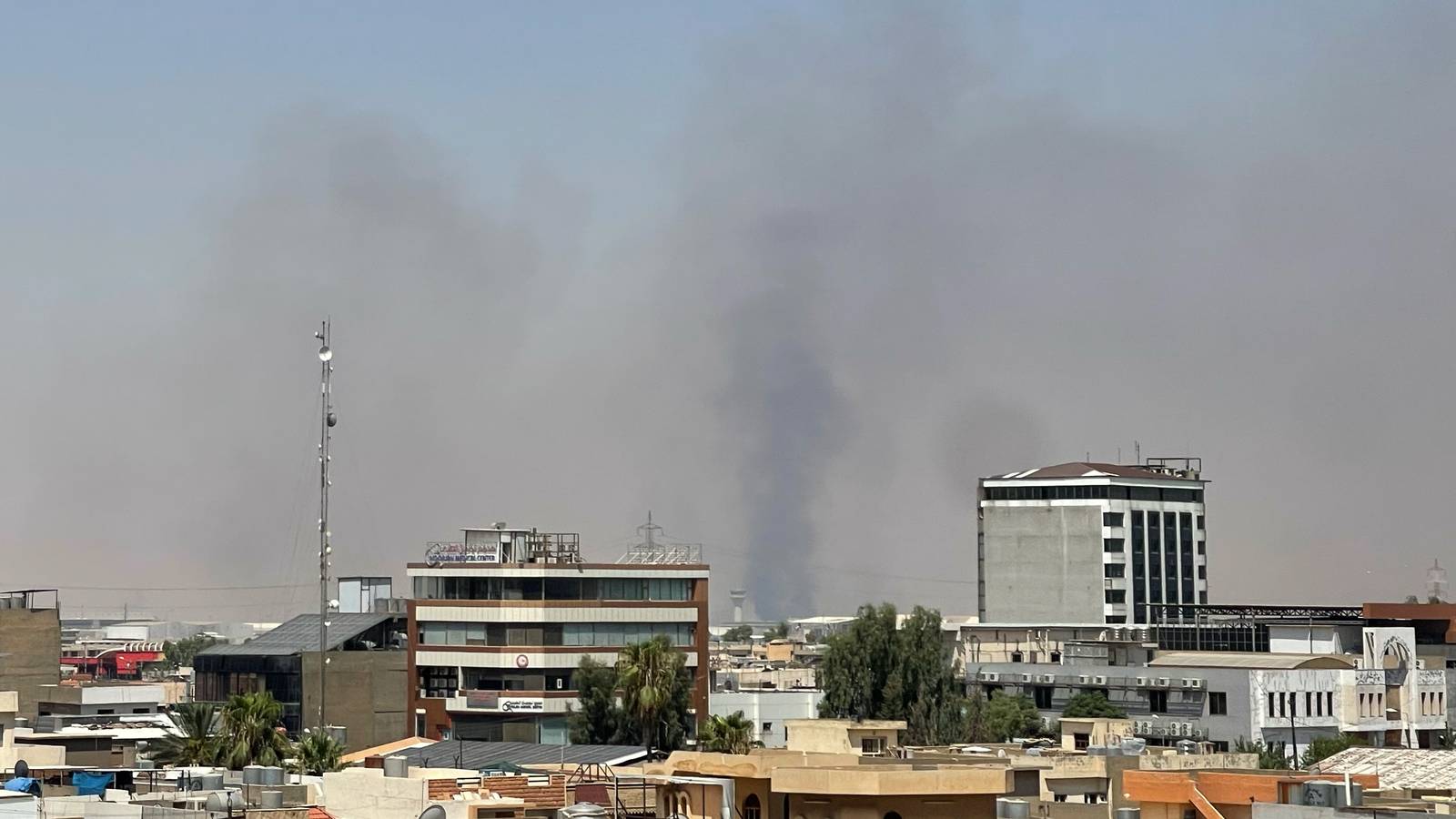
An Associated Press journalist heard at least seven blasts Friday morning in the city of Irbil, the capital of Iraq’s semi-autonomous Kurdish region, and saw at least four plumes of black smoke rising from areas near or inside a base at the city’s airport.
As the U.S. has bombed Iran, Tehran has targeted several countries in the region that host American troops. Bahrain sounded sirens twice on Friday; there were no immediate reports of damage.
U.S. strikes hit a naval base for the Revolutionary Guard in the north of Iran, the Iranian semiofficial news outlets Fars and ISNA reported Friday morning. Blasts from U.S. bombardment overnight were also reported on Iran’s Qeshm Island, a base for naval assets including drone boats that Iran can use to attack vessels in the Strait of Hormuz, as well as in Isfahan province, home to a major Iranian air base and one of Iran’s nuclear sites. More strikes reportedly hit Iran’s southwest Khuzestan province and southern Fars province.
U.S. Central Command said the latest barrage was designed to “further degrade Iran’s ability to threaten civilian mariners and commercial vessels transiting regional waters” as the Americans push to regain control over the Strait of Hormuz, through which a fifth of the world’s oil and gas transited in peacetime.
Houthis open a new front in the war
Iran’s ability to effectively close the Strait of Hormuz — and thus cause economic chaos far beyond the Middle East — gives it tremendous leverage in any negotiations. Its Houthi allies only increased that leverage when they targeted two Saudi oil tankers in the Red Sea on Thursday — increasing the risks of shipping through another vital route for Middle Eastern oil.
Brent crude, the international standard, topped $100 a barrel in the wake of the attacks, though it has since come down.
The attacks made good on the Houthis’ threat to close the Bab el-Mandeb Strait to Saudi-linked shipping. The strait at the southern tip of the Arabian Peninsula connects the Red Sea to the Gulf of Aden, and around 12% of the world’s trade, including a fourth of global container traffic, passes through there.
That passage has become ever more crucial for Saudi Arabia, which has diverted millions of barrels of oil a day to its Red Sea port of Yanbu as a way of bypassing the Strait of Hormuz.
U.S. President Donald Trump threatened “major military punishment” against the Houthis if their attacks on ships continue.
Trump also warned Iran over its attacks on ships, saying on social media Thursday that sanctioned Iranian funds in U.S. possession will be used to cover the expense of fixing boats damaged in the war.
“Please let this statement serve to represent, until further notice, that from this point forth, any and all damages done to Ships, Cargo, or anything related thereto, will be paid for by Iranian Money that the United States has in its possession, and controls,” Trump said.
It was unclear what legal mechanisms Trump would use to access and spend the funds.
Iran’s Foreign Minister Abbas Araghchi condemned the suggestion, writing on X that “once governments normalize confiscation, no one’s assets are safe. Ensuing chaos will not be pretty or peaceful.”
Iran says it has the right to manage traffic and potentially charge fees in the Strait of Hormuz, which was open to all toll-free before the war. It has attacked ships using a route through the strait that is overseen by U.S. forces and intended to be outside Tehran’s control. ___
Frankel reported from Jerusalem.
Read the full article here
6 Comments
Great insights on Defense. Thanks for sharing!
Good point. Watching closely.
This is very helpful information. Appreciate the detailed analysis.
Solid analysis. Will be watching this space.
I’ve been following this closely. Good to see the latest updates.
Interesting update on Explosions Are Heard Near a US Base in Northern Iraq as US-Iran Fighting Escalates. Looking forward to seeing how this develops.