

Listen to the article
Marines at Cherry Point have activated the service’s first unmanned maintenance squadron, giving the Corps a dedicated unit to keep its most advanced drones flying from forward locations.
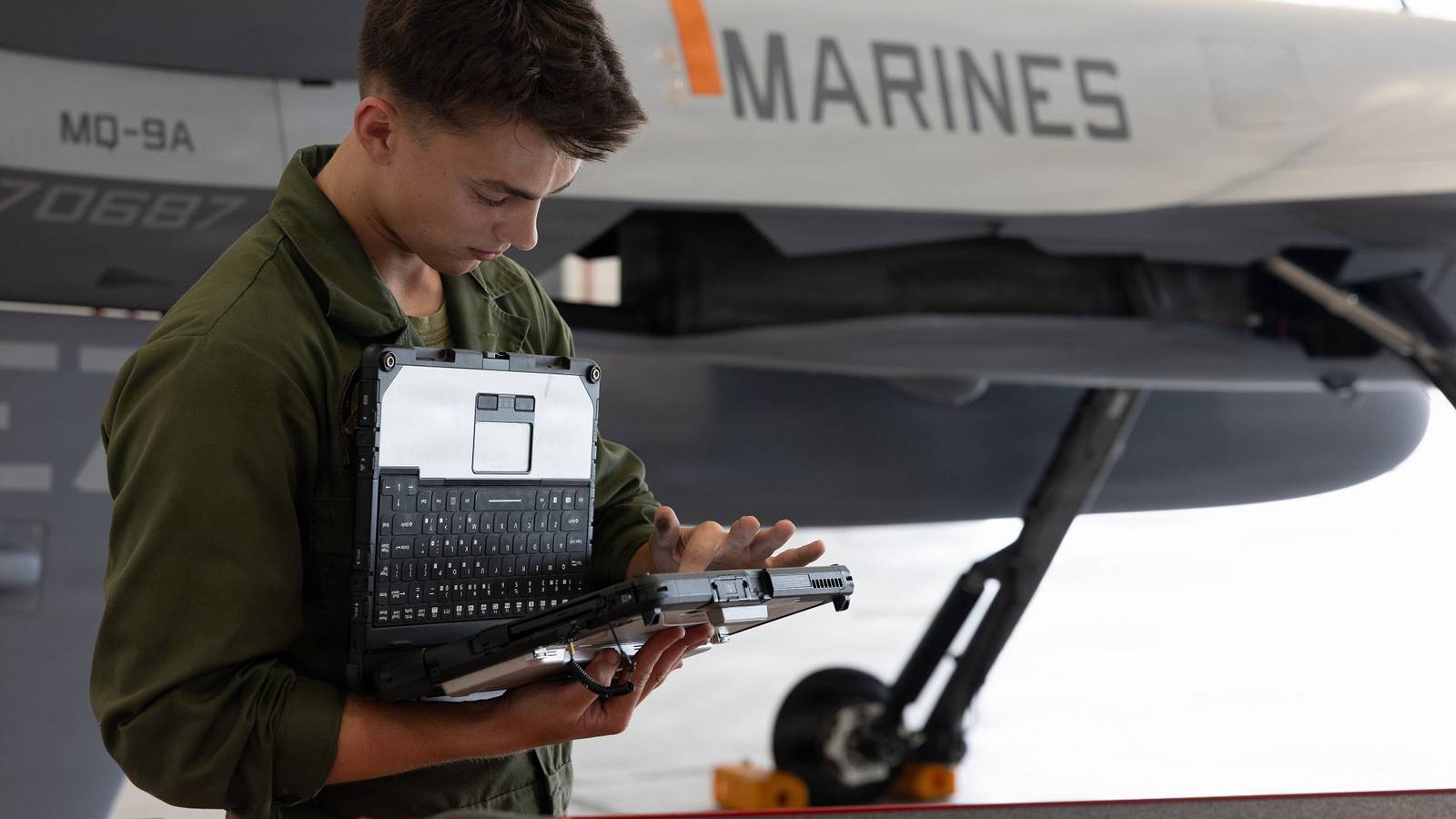
Marine Unmanned Maintenance Squadron 14 (MUMS-14) went into action Tuesday and will provide organic-level maintenance support for Group 5 Unmanned Aerial Systems (UAS)—the largest and heaviest category of UAS the military uses. The squadron is the only Marine Corps aviation unit organized, trained and equipped specifically to deliver that capability at forward deployed sites.
The stand-up fills a key sustainment role as the Corps fields more unmanned systems in support of Marine Air-Ground Task Force operations. It comes amid broader efforts to integrate unmanned platforms, including the Attack Drone Team the Corps launched last year, to sharpen tactics for affordable strike systems.
Lt. Col. Jeffrey Carben assumed command of MUMS-14 during the ceremony at Marine Corps Air Station Cherry Point, N.C. Sgt. Maj. Tavaris Douglas took over as the unit’s first senior enlisted leader.
Organic Maintenance Changes How UAS Supports Forward Ops
A unit built specifically for UAS maintenance at the edge removes a major friction point.
Previously, advanced drones often depended on contractor support or long supply chains diverting back to rear facilities. MUMS-14 puts Marine maintainers forward with the tools and training to handle repairs on site.
That directly affects how long the MQ-9A Reaper and similar platforms can stay on mission. Persistent intelligence, surveillance, reconnaissance and targeting coverage depends on aircraft that are available when commanders need them.
Gaps in maintenance translate into gaps in what Marines on the ground can see and target.
“Our unit ensures the Marine Corps will maintain a persistent, reliable, and expeditionary capability—one that directly strengthens deterrence and supports Marines operating forward,” Carben said in a statement.
MUMS-14 operates as a subordinate unit of 2nd Marine Aircraft Wing, the aviation combat element of II Marine Expeditionary Force.
How MUMS-14 Fits the Corps’ Unmanned Expansion
This squadron adds a sustainment piece to the Marine Corps’ wider unmanned systems work.
A Force Design update last fall stressed faster sensor-to-shooter links and the growing role of MQ-9 platforms alongside other unmanned assets.

Carben described it as the start of something larger, saying, “The work done here will have global impact.”
It takes disciplined, technically skilled Marines to keep these systems flying. Today’s activation is more than a ceremony – it’s the beginning of a new chapter of Marine Corps aviation.
The new squadron is also organized and resourced to handle maintenance for the MQ-9A Reaper.
The aircraft provides the Marine Air-Ground Task Force (MAGTF) commander with multi-mission Intelligence, Surveillance and Reconnaissance (ISR), as well as a targeting capacity that works over both land and sea.

Concentrating on one primary airframe lets the unit build specialized knowledge in its propulsion, avionics, sensors and ground stations. That depth should reduce troubleshooting time and raise the number of aircraft ready for tasking during extended operations.
The squadron will now focus on growing its teams and refining procedures at Cherry Point. For Marines who depend on unmanned systems for eyes and reach in contested areas, the dedicated maintenance capability provides a more expeditionary foundation to keep those platforms in the fight.
Read the full article here
6 Comments
Interesting update on First Marine Unmanned Maintenance Squadron Stands Up at Cherry Point. Looking forward to seeing how this develops.
Great insights on Defense. Thanks for sharing!
I’ve been following this closely. Good to see the latest updates.
Solid analysis. Will be watching this space.
Good point. Watching closely.
This is very helpful information. Appreciate the detailed analysis.