

Listen to the article
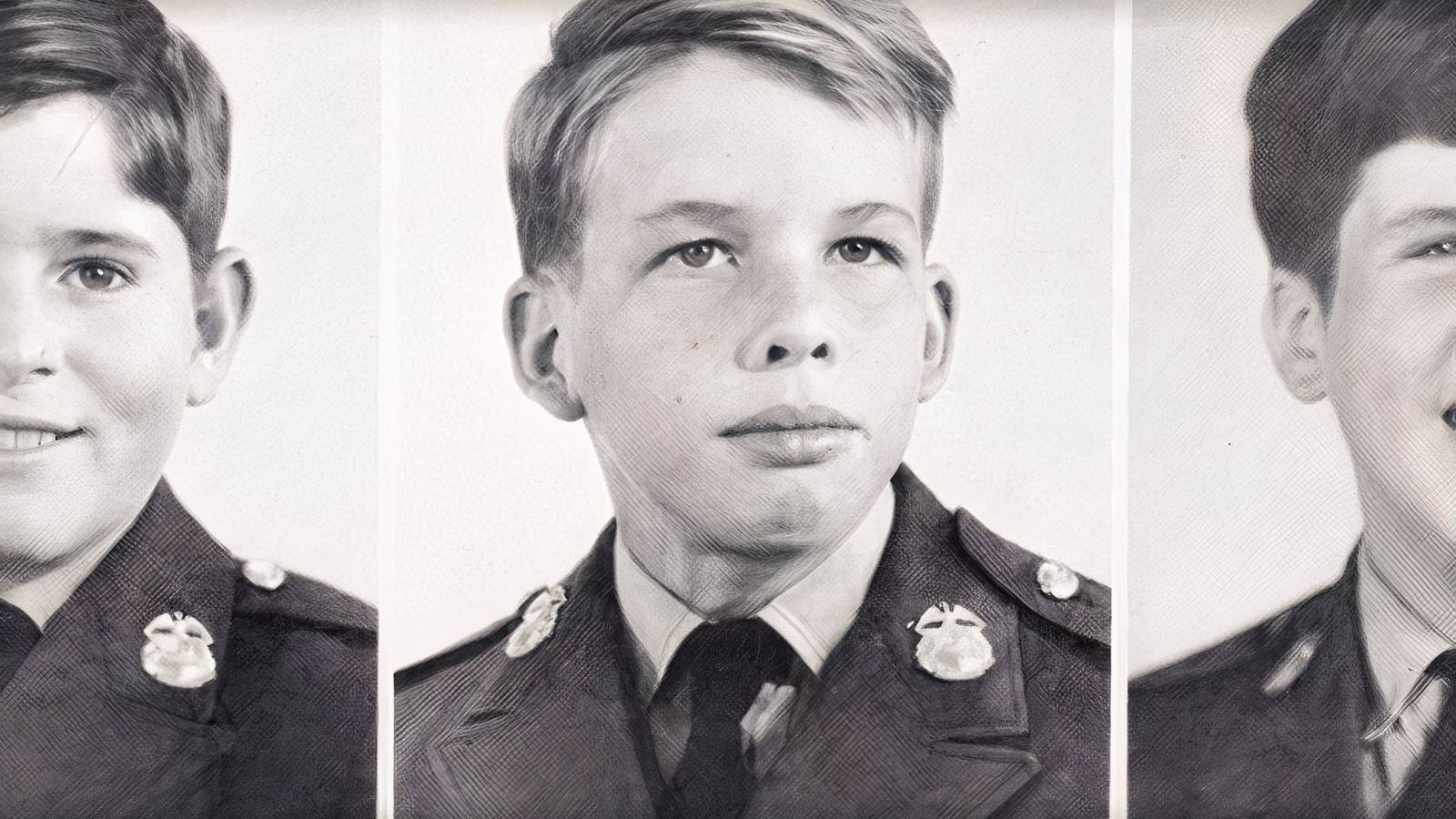
In 1968, John Bard Manulis and his classmates entered seventh grade at Harvard School for Boys in Los Angeles, an all-male, Episcopalian prep school that still carried the structure of a military academy.
They wore uniforms. They marched with rifles. They learned hierarchy early. Seniors had privileges younger students did no. Manulis remembers the school as a place shaped by discipline, authority and, at times, hazing.
More than 50 years later, those boys—now older men—found each other again on Zoom during the COVID-19 pandemic. Their conversations, arriving for a wider audience during Mental Health Awareness Month, became something Manulis did not often see: dozens of men talking honestly about their lives.
It’s a deep dive into stuff you don’t really hear from men very much.
Those conversations became Fortunate Sons, a documentary directed by Emmy-winning filmmaker Peter Jones and produced by Manulis, a member of Harvard School’s class of 1974. After airing on PBS, the film will be available May 26 on major video-on-demand platforms, including Amazon, Apple, YouTube Movies and TV, Kinema and Vimeo on Demand.
The film is not a military documentary in the traditional sense. But its questions about discipline, hierarchy, stoicism, male friendship and emotional silence may feel familiar to veterans, service members and military families who understand how easily composure can become armor.
Manulis told Military.com the project revealed “the power of connection, the power of friendship, the power of vulnerability” at a stage in life when many men have spent decades learning not to ask for help.
A Class Shaped by Discipline and a Country in Transition
The students who entered Harvard School in 1968 arrived at a strange hinge point in American life.
The Vietnam War was reshaping the country. The assassinations of Martin Luther King Jr. and Robert F. Kennedy had shocked the nation. The Beatles, Woodstock and the counterculture were changing what young people expected from the world.
Manulis said his class was caught between eras.
“We were kind of the hinge generation,” he said. “We were not the Woodstock generation and we were not the Vietnam generation. We were right in between, and we kind of hinged the two.”
The school itself changed during those same years. Manulis said the military structure disappeared after his seventh grade year, though the students did not know that change was coming. Restrictions loosened over time. Uniforms gave way to khakis, then jeans, shorts and a much less formal campus culture.
“The shift from ’68 to ’74 was just radical,” Manulis said.
Still, the early imprint mattered. He remembers seventh grade as a sudden introduction to uniforms, drills, rifles and rigid class distinctions. He said upperclassmen carried privileges and younger students learned quickly where they could and could not go.
There was adventure in it, he said, but also something rougher.
“When you’re 12 years old and you’re suddenly in military uniforms, marching with rifles on the field and doing drills, and doing shooting drills and being attacked by upperclassmen because there’s a definite hierarchy and hazing kind of structure to things—it’s a pretty big life change,” Manulis said.

He does not reduce the film’s mental health questions to the school’s military structure alone. He said few of the students seemed to be aiming for military careers, and only a couple went in that direction.
But he does believe that hierarchy, discipline and pressure shaped the boys in ways they did not fully understand at the time. That pressure, he said, did not come only from school.
Manulis said his class later showed a higher rate of addiction and suicide than what he has seen among other high school or college groups he has encountered. He said he would not place that entirely on military culture, the Vietnam era or the counterculture.
“I think I put more on parental pressure actually than anything else,” he said.
Relearning Connection After Decades Apart
The film began long before anyone knew it would become one.
About 12 years ago, one of Manulis’ classmates was dying. Due to the death being expected, word spread through the class. One person contacted a few others. Those classmates reached more. Before long, Manulis said, roughly 65 men from a class of about 90 were on an email thread, sharing memories and stories about their lives.
Years later, during the pandemic, another classmate asked whether anyone wanted to see a friendly face. About 35 men joined a Zoom call. They talked for hours. Then, they decided to do it again.

The second time, Manulis recorded the conversation. He said he was struck not only by the reunion itself, but by how unusual the exchange felt.
“I was really struck by not just how cool it was that we were reconnecting and that this was happening, but how rare it was to get more than, like, two guys to talk about life in a real way, let alone 35 or 50 guys,” he said.
Manulis reached out to Jones, a childhood friend and classmate who had built a career as an award-winning documentarian. Jones was skeptical at first.
“Peter’s initial reaction was classic, because he said, ‘Who’s gonna care about a bunch of middle-aged white guys? Is there a more hated group in America at the moment?’ This was 2020,” Manulis said.
That concern became part of the film’s challenge. Fortunate Sons is candid about privilege. These were boys from an elite Los Angeles school, many raised with expectations of achievement and leadership. But the film also looks at what privilege does not shield people from: addiction, shame, family dysfunction, isolation and regret.
A Lesson of ‘Trust’
One of the film’s most affecting figures is Brad Leonard, remembered by classmates as one of the school’s charismatic “cool” boys. Later in life, Leonard became a top cardiac surgeon before addiction derailed his career and personal life.
Manulis said classmates were shocked when they learned how far Leonard had fallen. But he also described Leonard’s later recovery as “a true redemption story.”
“He pulled his life back together, which is extraordinary,” Manulis said. “And he pulled his career back together, actually, which is even more extraordinary.”

Brad Leonard, one of the former classmates featured in Fortunate Sons, speaks during a Zoom conversation used in the documentary. (Courtesy of Peter Jones Productions)
Leonard later told classmates something Manulis said that cut to the heart of the film: he had not known how to connect with people.
“He said, ‘I just didn’t know how to relate to people. I didn’t know how to connect with people,’” Manulis said.
For Manulis, that is where the documentary moves beyond one class or one school. The men’s stories are specific, but the need is wider. He said viewers from very different backgrounds have recognized parts of their own families in the film, including young people he worked with in Jacksonville, Fla., whose lives were far removed from the world of Harvard School.
Women, too, have become some of the film’s strongest supporters.
“They feel for the men in their lives, whether they’re sons or brothers or fathers or lovers, that they need these conversations,” Manulis told Military.com.
That may be the most direct bridge to military audiences. Service members and veterans often know the value of discipline. They also know how easily isolation can grow when people are trained to stay composed, keep moving and handle problems alone.
Manulis said there’s a lesson he hopes people take from Fortunate Sons.
“I think completely about the power of connection and the importance of developing trust, having trust, and the trust to get vulnerable and to share with people,” he said. “That’s where valuable relationships come through, and that’s where your own strength and resilience comes from as well.”
For men raised to treat silence as strength, Fortunate Sons suggests another possibility: Sometimes strength is the call, the reunion, the awkward first sentence after decades apart. Sometimes it is letting another man hear the thing you were taught to bury.
Fortunate Sons begins streaming May 26 on major video-on-demand platforms, including Amazon, Apple, YouTube Movies and TV, Kinema and Vimeo on Demand.
Manulis said the release comes after the documentary’s PBS run and is intended to help the film “connect with an entirely new audience” during Mental Health Awareness Month.
Read the full article here
5 Comments
I’ve been following this closely. Good to see the latest updates.
Interesting update on ‘Fortunate Sons’ Reveals Military School Story for Mental Health Month. Looking forward to seeing how this develops.
Solid analysis. Will be watching this space.
Good point. Watching closely.
Great insights on Defense. Thanks for sharing!