

Listen to the article
Games are such a wonderful medium, allowing you to see the perspectives of heroes, villains, and everything in between—all while having your hands on the steering wheel, guiding the action. There is no shortage of games that allow you to play as the villain from the outset, or games that allow players to make “evil” choices, but sometimes, you get a game that pulls a bit of a trick on its own players: the surprise hero-to-villain reveal.
In each of the following games, the character is presented as a force for good or an otherwise neutral party from the outset, only for the truth to come crashing down on players’ heads. Whether it was by choice or entirely unintentional, here are seven games where it is revealed that you were the bad guy all along.
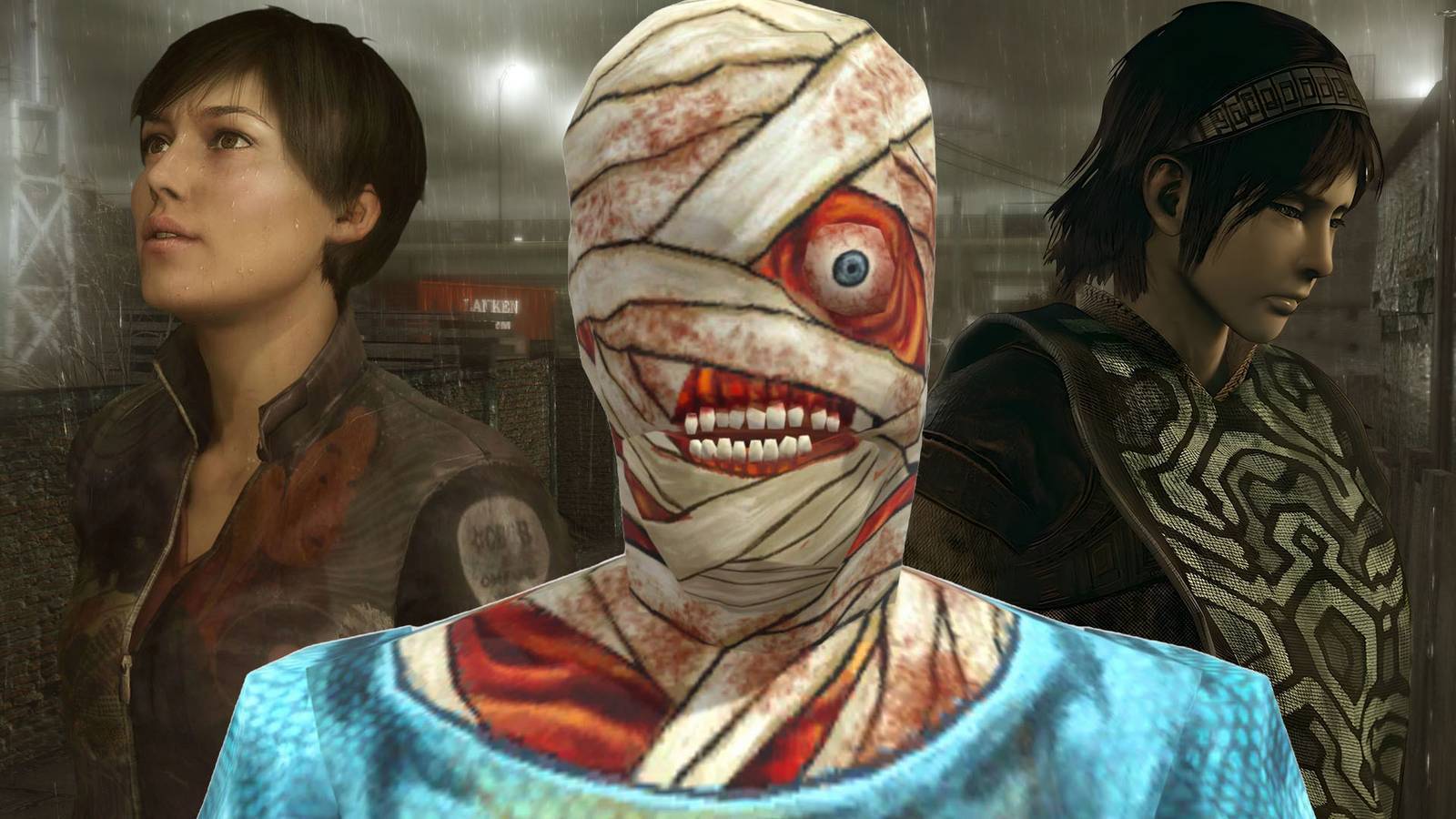
This article will contain major spoilers for: Baten Kaitos: Eternal Wings and the Lost Ocean, Spec Ops: The Line, Braid, Heavy Rain, Furi, Mouthwashing, Lisa: The Painful, Shadow of the Colossus, and Nier Replicant.
Baten Kaitos: Eternal Wings and the Lost Ocean — Kalas
Revenge is a Powerful Motivator
This GameCube RPG, which also had a remaster shadowdropped on Steam, was developed by Monolith Soft, the team behind the Xenosaga and Xenoblade Chronicles series, and follows the protagonist Kalas as he travels the world seeking vengeance for the murder of his grandfather and little brother. While the perspective of Baten Kaitos: Eternal Wings and the Lost Ocean is through the eyes of Kalas’s Guardian Spirit (and all dialogue choices made by the player are from the spirit), the player fully controls the movements and actions of Kalas throughout the game.
After meeting a woman named Xelha, Kalas inadvertently unleashes an “End Magnus” that could be used to unseal the evil god Malpercio when combined with the other four End Magnus. The party travels the world to stop the release of these beings, but is rebuffed at every turn, making Malpercio’s revival more and more likely.
However, it wasn’t by chance that the enemies seemed to be one step ahead at every turn. It turns out that Kalas was working for them the entire time, assisting in locating and capturing each End Magnus along the way. Eventually, Kalas absorbs the power of the End Magnus and becomes possessed by Malpercio.
Thankfully, there’s a bit of a happy turn to this tale. Kalas comes to regret his betrayal and looks for a way to reseal Malpercio. The player, now in control of Xelha, eventually reunites with Kalas and frees him from his servitude to the evil god. After which, they work together to defeat Malpercio and restore the world.
Spec Ops: The Line — Captain Martin Walker
Not Your Standard Military Heroism

One of the most famous “oh, we were the bad guys all along” stories in gaming, Spec Ops: The Line gradually strips away the hero facade that military shooters regularly employ to present their protagonists as a necessary evil. In charge of a three-man Delta Force squad sent to Dubai on a reconnaissance mission, Walker decides to go beyond his orders to attempt to liberate the remaining citizens from the tyranny of a rogue military unit led by Colonel John Konrad.
Initially, Spec Ops: The Line plays out like a relatively standard third-person cover shooter, throwing armies of enemies at the “heroes.” Walker’s descent into madness starts when he makes the decision to use a mortar with white phosphorus on what seems to be a group of opposing forces, only to learn that he just wiped out civilian refugees. To protect his own peace of mind, Walker builds up a massive conspiracy that positions Konrad as a butcher.
You spend the rest of the game slaughtering soldiers en route to a haunting ending that 100% confirms that Walker was the true monster all along, and the people he killed were the ones seeking order rather than chaos.
Braid — Tim
Tim Isn’t Mario

A lot of games throw out the “you’re the bad guy” twist at the very end by changing the meaning of a piece of dialogue or by pulling the rug from underneath the protagonist and player’s feet. Rather than holding back or manipulating key information, Braid relies on its mechanics to trick players into believing they are the hero. In 2008, 2D platformers were automatically associated with heroic rescues, particularly if they involved a guy trying to find a princess. The Super Mario Bros. premise is so ingrained in pop culture that Braid’s apparently identical premise shuts off critical thinking, causing players to assume they are the knight in shining armor. You ignore the cryptic, obsessive, and deeply unsettled text in the books before each world because you’re too busy solving clever puzzles.
Braid‘s structure is fantastic and incredibly clever. The game starts in World 2 and moves forward to World 6. For the final level, you return to World 1 to find the Princess on the edge of a ledge with a monster right behind her. During this stage, time flows backward, and things seem to play out like a fairly “normal” final stage. The princess helps you get to her, and then you both escape from the monster. However, after you seemingly reach the end, time returns to normal, causing the true events to play out: You kidnapped the princess while the monster tried to save her.
Mario? No, Tim is a stalker.
In 2026, players are more likely to expect a twist from games with such on-the-nose referential hooks, so this twist might be a bit more predictable. However, that’s largely because of Braid‘s legacy and the way it took people by surprise in 2008.
Heavy Rain — Scott Shelby
Perpetuating the Cycle of Violence Won’t Heal You

Throughout Heavy Rain, the player takes control of four different playable characters, all of whom appear to be searching for the Origami Killer, a serial killer who targets children during the rain. One of the four playable characters is a private investigator named Scott Shelby, who meets with the families of the previous victims and collects evidence from each that may lead to the Origami Killer’s whereabouts.
However, near the end of the game, it is revealed that Scott was not looking for the Origami Killer, but he was actually the killer. Changed by the experience of losing his brother to parental neglect, Scott kidnaps children to find a father willing to sacrifice themselves for their child. Scott Shelby’s actions throughout the game are then recontextualized, as he was not gathering the evidence for investigative purposes, but rather to dispose of it and ensure his escape.
The twist may feel a bit cheap to players, however, as Heavy Rain gives us the internal monologues of the playable cast throughout the game, and Shelby’s internal voice never mentions or alludes to his actual reason for gathering the evidence. The multiple endings, including whether Scott gets away with his crimes, are determined by player actions and which characters arrive to help Shaun escape.
Furi — The Rider
The Protagonist Is In Prison For A Reason

Now, here we have a somewhat extraordinary case where both sides can be argued. Furi kicks things off by introducing Rider, a silent protagonist held within a sci-fi prison. After being freed by a mysterious man, he sets out to kill all the jailers and earn his freedom. At this point, Rider doesn’t know why he is in this situation, but he needs to fight his way out.
Furi is a boss rush game that wisely starts things off with the cruelest jailer of them all, The Chain, who spent a long time torturing Rider. This introduction completely sells the idea that the bosses/jailers are pure evil; however, The Chain isn’t representative of the others. Rider meets jailers who clearly don’t want to fight or seem to only want to protect their home.
Once you reach the top, the full context is revealed. Rider is an alien sent to Earth as a scout for an impending invasion, and his mere presence corrodes everything. At this point, Furi lets players decide whether Rider completes his villainous role by giving the go-ahead for his mothership to take over Earth, or rebels and becomes the world’s savior.
Read the full article on GameRant
This article originally appeared on GameRant and is republished here with permission.
Read the full article here
6 Comments
I’ve been following this closely. Good to see the latest updates.
This is very helpful information. Appreciate the detailed analysis.
Great insights on Defense. Thanks for sharing!
Solid analysis. Will be watching this space.
Interesting update on Games Where You Realize Too Late That You Were The Villain. Looking forward to seeing how this develops.
Good point. Watching closely.