

Listen to the article
Thousands of fans pack a stadium for a World Cup knockout match. The crowd noise peaks as play resumes. In a nearby command post, screens flicker with feeds from cameras, radars and radios.
An alert appears: an unidentified drone has entered the airspace. Operators watch the signal strengthen, pinpoint the controller on the ground, and coordinate a response that keeps everyone safe. Security personnel jam the signal and safely bring the threat down.
Another call then goes to law enforcement, who trace the signal back to the operator. The match continues unmolested. Most spectators never know how close the incident came to catastrophe.
This is not a training scenario or a movie plot. It reflects real capabilities that security teams deploy today around high-profile civilian venues.
The same drone threats that have reshaped operations on battlefields in Ukraine and the Middle East now require answers in crowded stadiums and city centers hosting global events.
Cordell Bennigson, a retired Marine Corps Major now working with R2 Wireless as the CEO – U.S., spoke exclusively to Military.com about how low-cost, passive detection systems are closing that gap.
His perspective draws directly from years of military service and the practical demands of protecting events like the 2026 World Cup.
Bennigson described how every single member of R2 Wireless is either former active duty military, or has family that is active duty. So for the team at R2, it’s personal. “It’s the passion and personal connection that drove me to R2,” Bennigson said.

The Drone Threat Crosses from Battlefield to Home Front
Modern small drones and loitering munitions have erased old lines between combat zones and domestic security. A single operator can launch from miles away, hide in normal radio traffic, and create serious problems before anyone on the ground reacts.
Legacy systems built for state-level aircraft and high-end threats were not designed for this volume of cheap, agile targets.
Bennigson described the shift in plain terms during the interview.
With technology, we don’t have the distinction between battlefield and domestic security like we used to have. A single operator with a drone can create a lot of havoc and damage, said Bennigson.
“They are not constrained by terrain or distance the way threats used to be. A lot of the defensive technology development we have seen in places like Ukraine, Lebanon, Israel and Iran applies directly to the civilian arena. Low-cost, relatively unsophisticated actors can hide within the existing spectrum. We have to detect and respond to that. Legacy systems were not designed for this environment. The threat moves faster than our systems.”
Odin Delivers Persistent, Passive Awareness
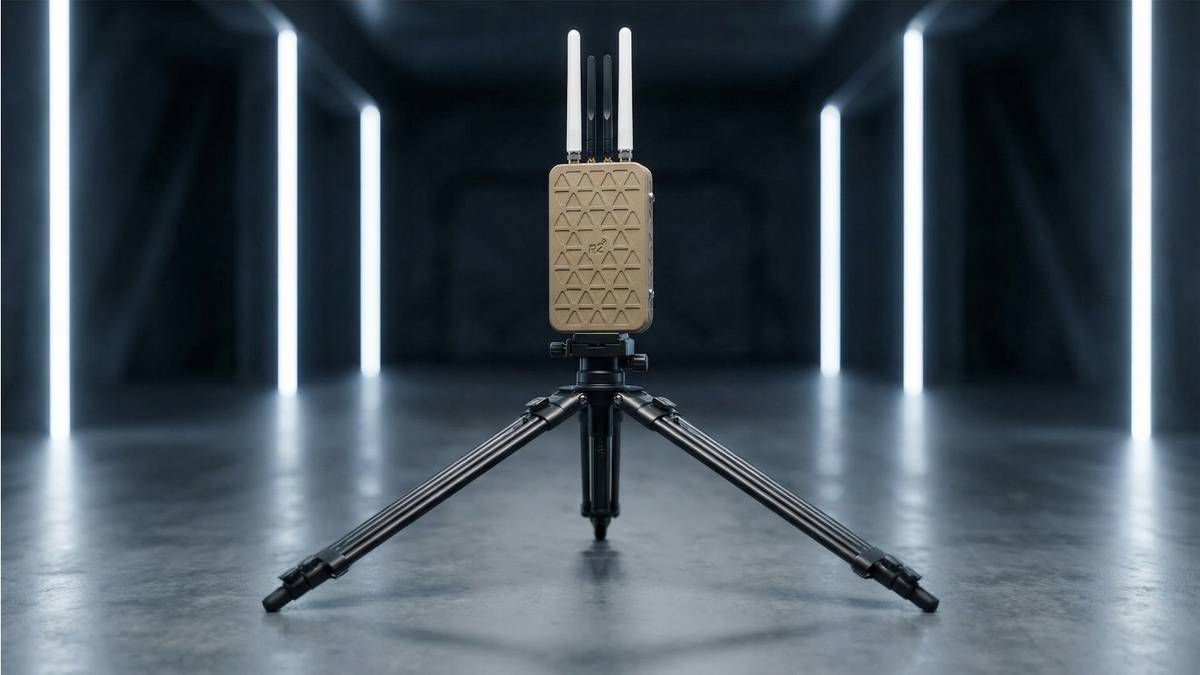
R2 Wireless built Odin as a low-cost, always-on passive radio frequency detection network. Sensors listen across a broad spectrum for any transmitting device (such as drones, controllers, or other emitters) and feed location and signal data into existing security command centers.
The system requires no active emissions from the sensors themselves, so it avoids interfering with civilian communications or drawing attention.
Deployments in several cities worldwide already provide 24/7 airspace situational awareness. Bennigson explained how the network works in practice.
“Odin is low cost and always on. It is passive detection, always listening across the full spectrum. We already have it deployed in some cities across the world, providing 24/7 continuous airspace situational awareness for anything that is transmitting. In one city, sensors form a ring around the perimeter that creates an electromagnetic dome. If a drone enters from outside, we see it more than 10 kilometers out. If something takes off inside the ring, we pick it up too. We detect the controllers as well. We want to defend against the arrow but also against the archer.” The ability to see both the drone and its operator gives security teams options. They can track the aircraft, locate the person at the controls, and respond with the minimum force necessary, all while the system stays invisible to the people it protects. This matters at events where thousands of spectators and complex communications infrastructure share the same airspace.”

Designed for Civilian Constraints, Not Combat Zones
High-visibility events like the World Cup bring rules that forward operating bases do not. Active radar can create interference. Kinetic interceptors and jamming carry legal and safety risks in populated areas.
Security teams need tools that fit inside existing command centers, deploy quickly, and leave civilian life uninterrupted.
Bennigson stressed that the best solutions meet those real-world limits.
Detection and defense systems have to be low cost, small footprint and easy to deploy. We need something more ubiquitous than what we put at high-visibility events. We have to think about the realities of the civilian environment. We don’t always have the ability to bring in active radar. We cannot use kinetic options or jamming in civilian environments. We need systems that meet all those requirements without disrupting civilian infrastructure.
Odin sensors can create a ring around a stadium, festival grounds, or even critical infrastructure like a power substation. Data flows into the same center that monitors fire, medical and law enforcement feeds. Bennigson stated how the open API nature of Odin was a feature from the beginning: Integration matters as much as detection range.
Why This Capability Matters for World Cup 2026
The 2026 tournament spans the United States, Canada and Mexico with dozens of matches and millions of visitors. Venues will range from massive NFL stadiums to smaller training sites.
Each one represents a concentrated target in an era when small drones have already demonstrated their ability to reach symbolic locations and disrupt operations. Military.com has reported extensively on drone threats to large public gatherings and the challenges of protecting sports venues from small unmanned systems.
A passive, always-listening network that works inside civilian rules gives planners a practical layer they can add without militarizing the environment or breaking budgets.
It does not replace trained teams or other sensors. It fills the gap legacy systems left open.
Bennigson noted that the underlying problem, and the solution, looks familiar whether the site is a forward base or a World Cup stadium. Know what is transmitting in the airspace. See it early. Give decision makers time to act.
As World Cup security planning moves from concept to execution, tools like Odin show how innovations forged in combat are finding new purpose protecting civilians at scale. The technology is not flashy. It simply listens, locates and informs; the quiet work that keeps events running and people safe.
For security managers facing the same spectrum challenges that service members have confronted for years, the message is straightforward: the tools exist. The question is how quickly they get put in place before the next big event.
Read the full article here
5 Comments
This is very helpful information. Appreciate the detailed analysis.
Solid analysis. Will be watching this space.
Great insights on Defense. Thanks for sharing!
Interesting update on How Security Teams Plan to Stop Drones at World Cup 2026 Matches. Looking forward to seeing how this develops.
Good point. Watching closely.