

Listen to the article
In mid-May of 2025, my son Bear Newcomb and I headed to southeast Alaska to hunt with my friend and outfitter David Benitz. I’ve previously hunted for mountain goats and also went wolf trapping with David. He’s an incredible Alaskan bowhunter, trapper, commercial fisherman, and he’s been an outfitter for most of his life. Not to mention, he’s just a great guy.
Southeast Alaska is home to some of the best black bear hunting in the world because the region boasts some of the highest densities of black bears in the US. The way I like to hunt them in the spring is boat-based. Southeast Alaska experiences massive tide swings. So when the tides are low, the bears come onto the shore to eat grasses, blue mussels, crabs, carrion, basically whatever they can scavenge.
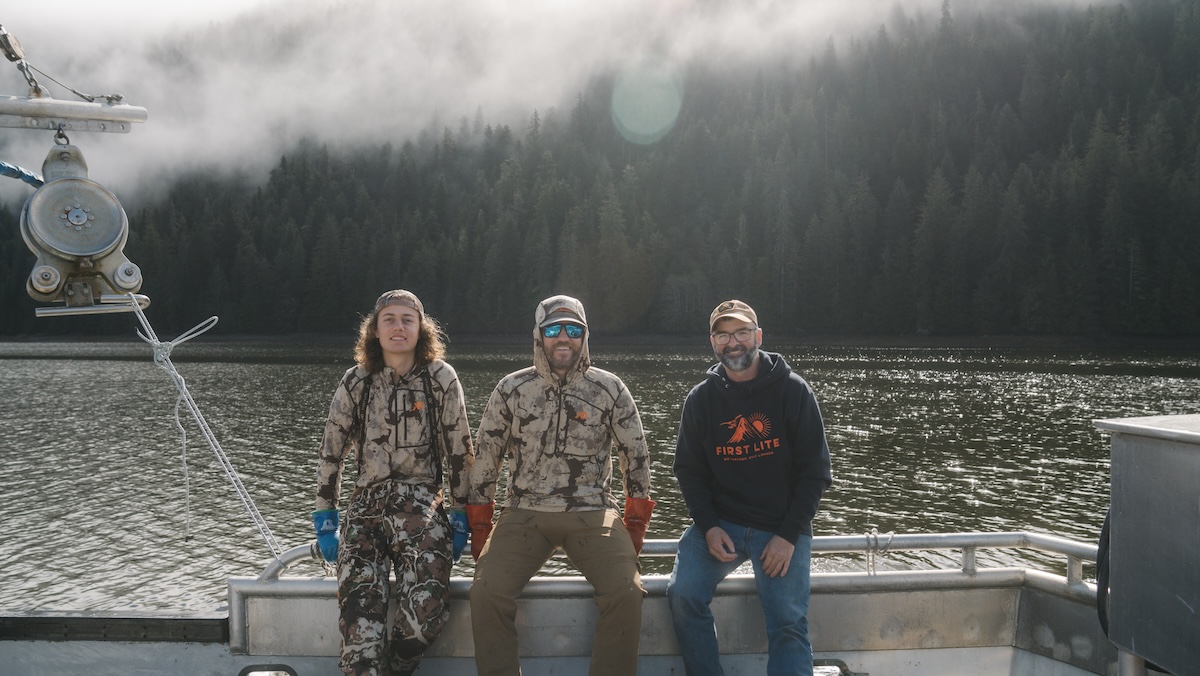
David has a 48-foot fishing boat called the Sandpiper, which has living quarters and a kitchen. We set out on the Sandpiper on this trip, and it served as our bear camp for eight days. The big boat also carried a skiff with a 60-horse motor. We’d anchor in a secluded cove protected from the weather and take the skiff out every day to hunt from.
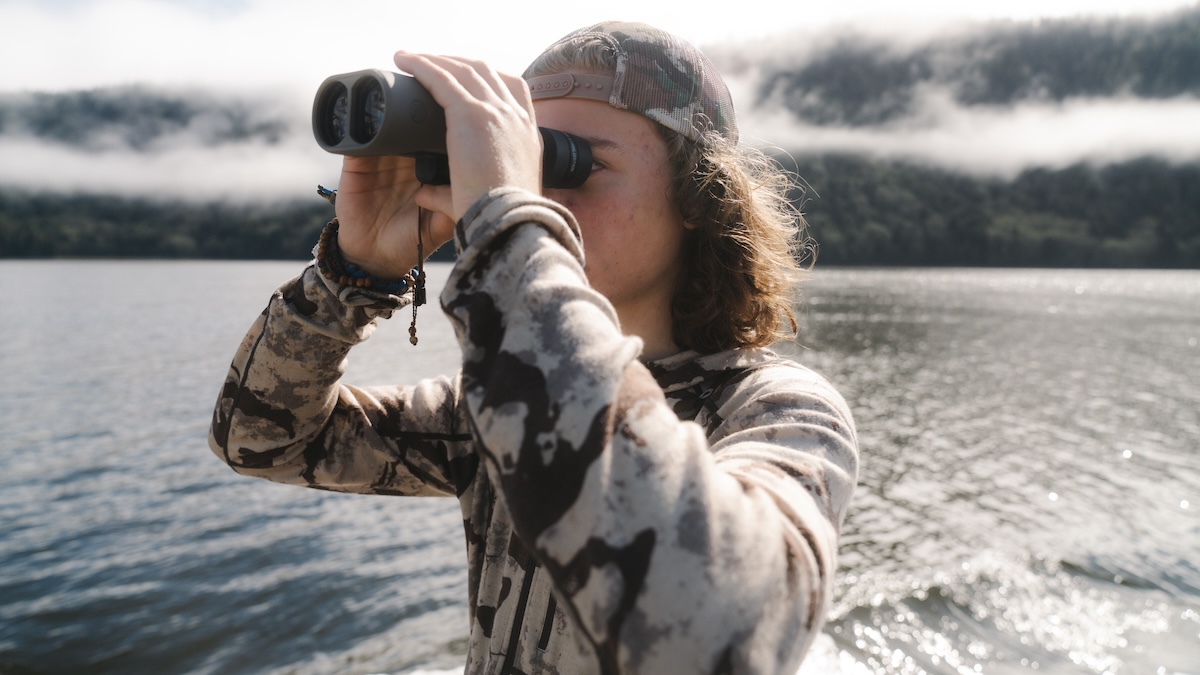
Targeting black bears on the shore makes for a glassing-heavy hunt. About midday, we’d leave on the skiff and glass for eight to ten hours, nonstop. The image-stabilizing tech in Sig Saur’s ZULU6 binos made long glassing sessions tolerable for this trip. The boat is always moving, and those optics are game-changers when you’re glued to the glass for hours on end, swaying on the sea.
The original idea of this hunt was for Bear and me to both hunt with primitive bows that he made with Osage orange. But while we were en route to Alaska, I remembered that you have to complete a bowhunter education course to bowhunt in The Last Frontier. I’d taken the course years ago, but Bear didn’t. Not being able to legally bowhunt was pretty devastating for him—he really wanted to test out his bows in the Land of the Midnight Sun. Luckily, Janis Putelis sent him a Sig Cross rifle in time for the hunt.
While I was able to hunt with one of Bear’s primitive bows, he had to hunt with a firearm, which ended up being a bit of a blessing in disguise. The stalks for getting close to bears were really difficult on this trip—at least for me.
I knew that I didn’t want to shoot a bear beyond 10 yards. One reason being that my personal accuracy with the bow I was shooting was limited, and I didn’t feel comfortable shooting beyond that. Also, the energy of a primitive bow is significantly less than a compound.
Since he was hunting with a rifle, Bear decided to hold out for a big one. Meanwhile, I planned to take the first bear that presented the best opportunity.
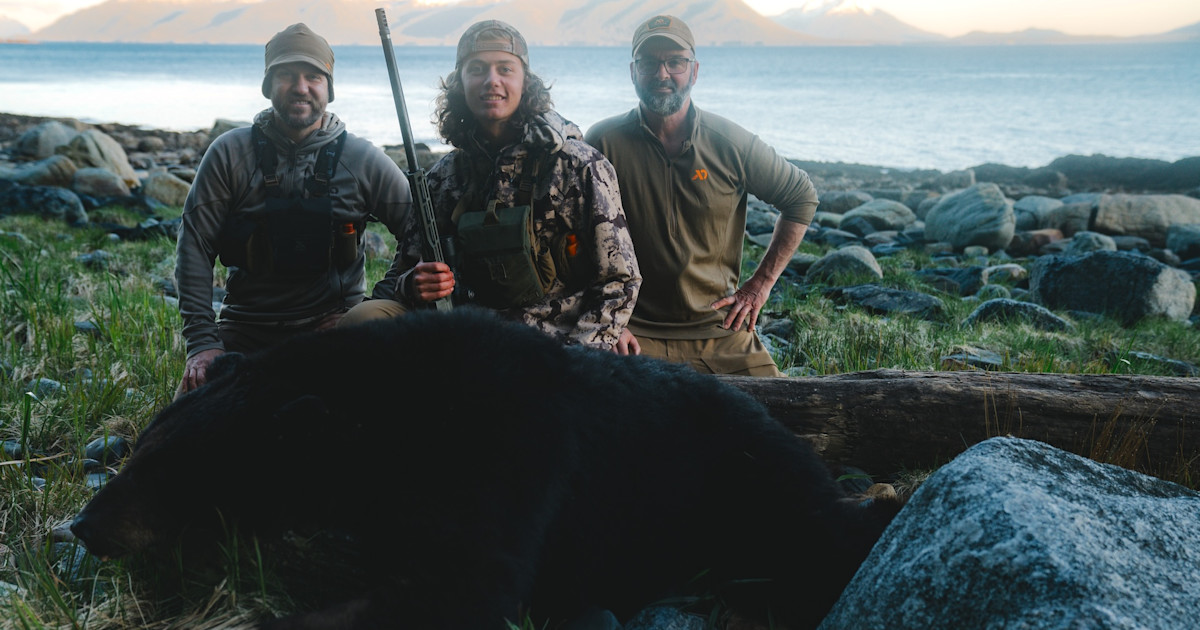
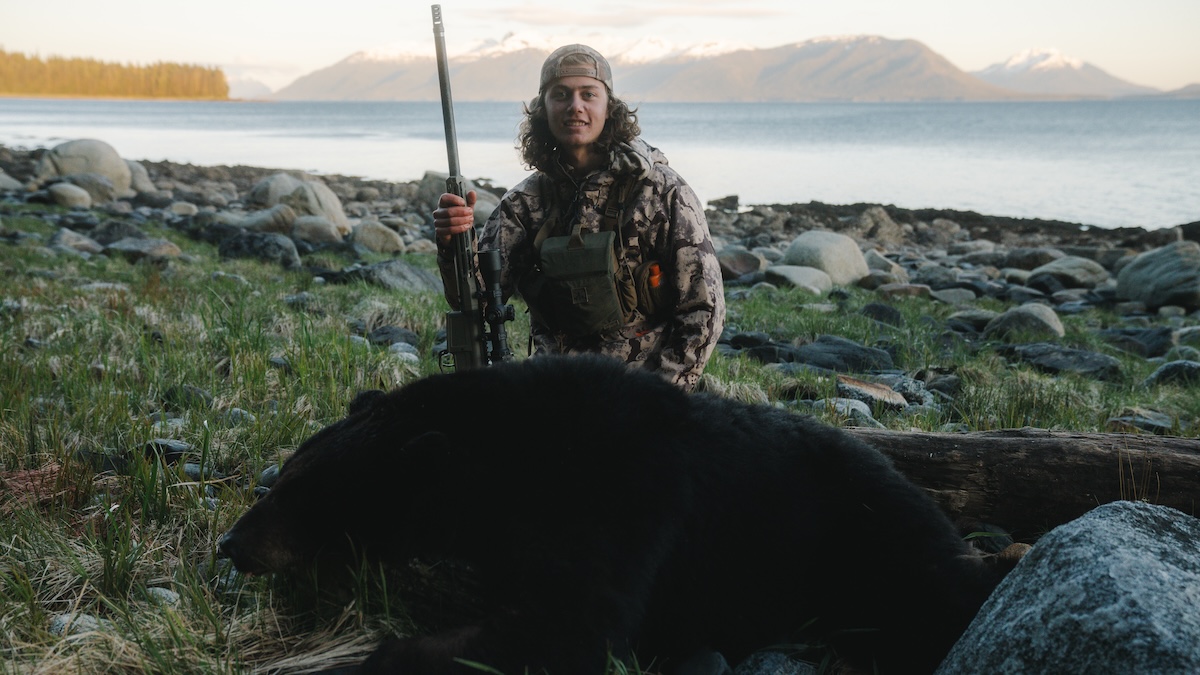
On day two, after one of the wettest springs in southeast Alaska history (it rained for about 18 days straight), we finally got a few good days of weather. Later that day, Bear shot a big boar that was cementum annuli aged (tooth-aged) at 15 years old. He shot this incredible animal at about 50-60 yards on the beach in perfect conditions.
After taking his bear back to the Sandpiper and putting it in the freezer, I was left with six days to punch my tag with the stick bow. That proved to be incredibly difficult.
I went on a total of 21 stalks. Many of those were within 40 yards, and a few occurred inside 30 yards. On one particular hunt, I even stalked as close as six or seven yards from a pretty big bear. At one point he turned broadside at 12 yards, but I was adamant about not shooting past 10, so I stuck to my guns on that. I didn’t want to wound a bear, but ironically, that’s what I ended up doing.
I wounded a bear at 10 yards. It was heartbreaking. I hit its shoulder, and the broadhead barely penetrated to the shaft of the arrow. The arrow broke off, but we looked and looked for the bear. We even came back the next day to continue our search, but we couldn’t find it.
Two weeks later, at the Alaska Game and Fish check station (where we checked Bear’s bear), a guy from Texas brought in the bear with my broadhead in the shoulder, which they shot with a rifle. Luckily, they said the bear appeared totally fine at the time.
Southeast Alaska is an incredible place—it’s exotic, dangerous, beautiful, rainy, and harsh. There’s no place like it on earth, especially for black bear hunting. My son and I had a spectacular experience; it was his first time in Alaska, and I think it really broadened his horizons.
To watch this hunt of MeatEater’s 12 in ‘26 film series, click here.
Read the full article here
6 Comments
Great insights on Hunting. Thanks for sharing!
Solid analysis. Will be watching this space.
Interesting update on Hunting Black Bear On the Shores of Southeast Alaska. Looking forward to seeing how this develops.
This is very helpful information. Appreciate the detailed analysis.
I’ve been following this closely. Good to see the latest updates.
Good point. Watching closely.