

Listen to the article
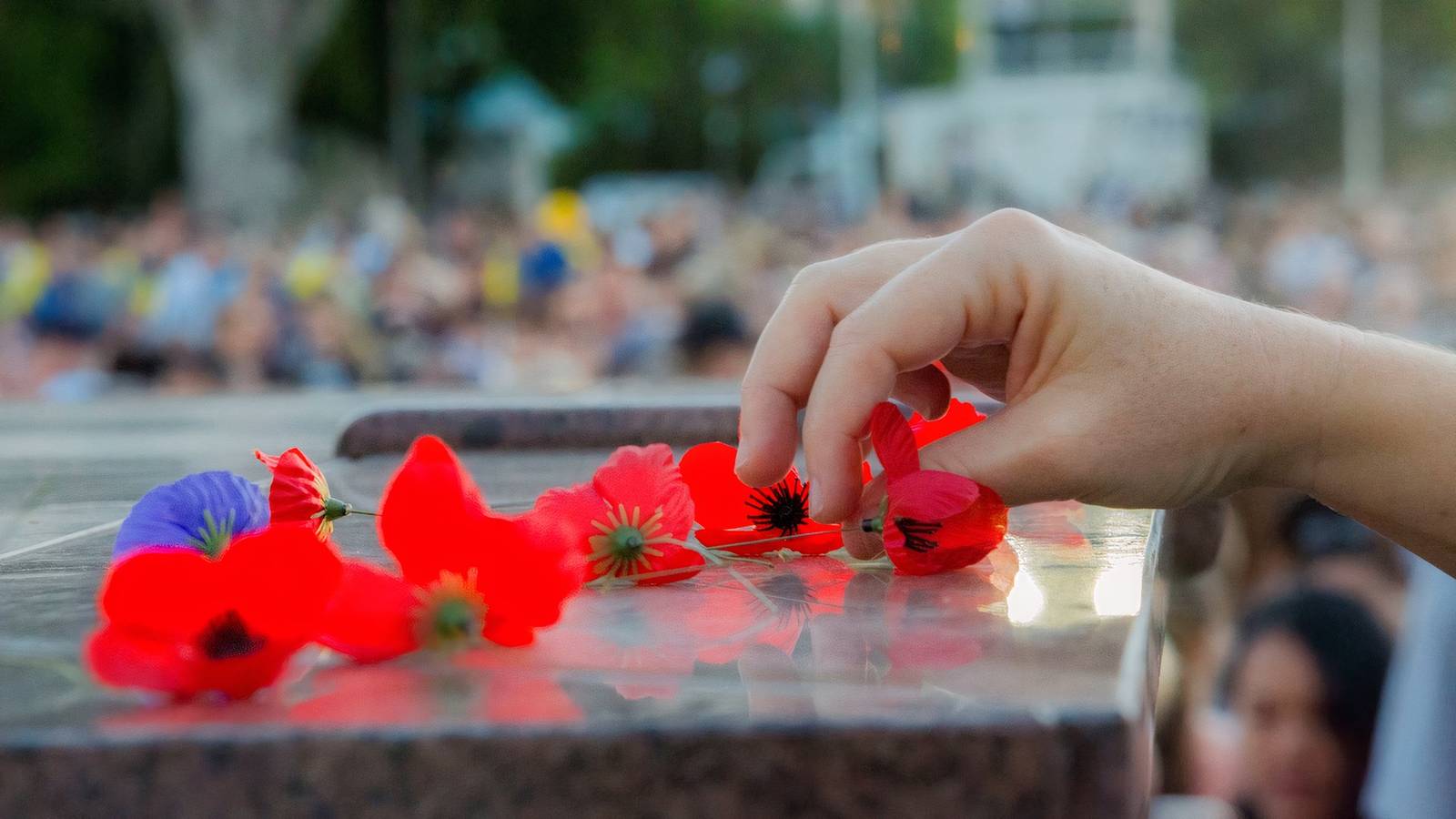
Every Memorial Day, millions of Americans pin small red poppies to their lapels without knowing the name of the woman who started it all.
Moina Belle Michael, a Georgia schoolteacher, read a wartime poem two days before the end of World War I and launched a campaign that turned the red poppy into an enduring symbol of sacrifice. Her effort eventually reached more than 50 countries and raised billions of dollars for disabled veterans and their families.
A Planter’s Daughter Who Became an Educator
Michael was born on Aug. 15, 1869, near Good Hope in Walton County, Georgia. She was the eldest daughter and second of seven children born to John Marion Michael and Alice Sherwood Wise.
Her father was a Confederate veteran who had fought at the Battle of Chickamauga and returned home to run the family’s cotton plantation. The Michael family had been in Georgia for generations, having first settled in Oglethorpe County in 1791 after emigrating from France as part of the Huguenot migration.
She received her early education at Braswell Academy across the Morgan County line and later attended the Martin Institute in Jefferson. She started teaching at age 15 in Good Hope, where her first class included two of her own sisters and a brother.
For the next two decades, she taught and administered schools across the state. In 1909, she became lady principal at Bessie Tift College in Forsyth and later spent a year at Columbia University in New York. By late 1913, she had returned to Athens as house director at the State Normal School, a teaching college tied to the University of Georgia.
In the summer of 1914, Michael traveled to Europe on a university-led tour. She was in Germany when World War I broke out in August. She helped roughly 12,000 stranded American tourists find passage home and sailed back aboard the RMS Carpathia, the same vessel that had rescued Titanic survivors two years earlier.
A Poem, 25 Silk Poppies and a New Symbol
When the United States entered the war in April 1917, Michael took an unpaid leave from the Normal School and volunteered with the YMCA Overseas War Secretaries organization in New York. She helped coordinate the transport of fallen soldiers’ remains back to their hometowns.
On the morning of Nov. 9, 1918, two days before the Armistice, Michael sat alone in her office at Columbia University and opened a copy of Ladies’ Home Journal to a page illustrated with red poppies and the text of a poem by Canadian Lt. Col. John McCrae titled “In Flanders Fields.”
McCrae, a military surgeon, had written it on the Western Front in 1915 after burying a friend. The poem describes red poppies growing between the crosses marking soldiers’ graves in Belgium and France.
“I anguished for some power by which our boys might be saved from gas, bombs and shrapnel,” she later wrote in her autobiography, “The Miracle Flower.”
She grabbed a yellowed envelope and wrote her own response poem, “We Shall Keep the Faith,” on the back. She pledged to wear a red poppy every day in honor of those who served and died, then walked to Wanamaker’s Department Store and purchased 25 red silk poppies to distribute among her YMCA colleagues.

“Since this was the first group ever to ask for poppies to wear in memory of our soldiers dead, and since this group gave me the money with which to buy them, I have always considered that I, then and there, consummated the first sale of the Flanders Fields Memorial Poppy,” she wrote.
Michael began a dedicated campaign to make the poppy a national symbol, enlisting the support of Dean Talcott Williams at Columbia’s School of Journalism and writing to her congressman. She even traveled at her own expense.
In August 1920, she persuaded the Georgia chapter of the American Legion to adopt the memorial poppy. On Sept. 27, 1920, the national organization adopted it as its official flower at its convention in Cleveland. The American Legion Auxiliary followed at its first convention in Kansas City in October 1921.
The Poppy Goes Global and a Legacy Takes Root
A Frenchwoman named Anna Guerin attended the same 1920 Cleveland convention and recognized the potential of Michael’s idea on a global scale. Guerin organized French women, children and veterans to manufacture artificial poppies to fund the reconstruction of war-ravaged France.
Within a year, she had taken the campaign to Canada, Britain, Australia, New Zealand and South Africa. Over the years, the red poppy became a symbol of remembrance in countries around the world.
The Veterans of Foreign Wars organized the first nationwide poppy distribution before Memorial Day in 1922 and adopted the poppy as its official memorial flower at its national encampment in Seattle that August.

At the 1923 encampment in Norfolk, Virginia, delegates voted to have disabled veterans assemble the poppies and receive payment for the work. A factory opened in Pittsburgh, where the first batches were produced.
The veterans who made the flowers began calling them “Buddy Poppies,” a name that came from their memories of friends who never came home. The VFW trademarked the name in February 1924. Disabled veterans in VA hospitals across the country continue to assemble them today.
Michael returned to Athens and resumed her role at the Normal School as social director and professor. She taught summer classes to disabled veterans and planted poppies on the UGA campus.
The Georgia Legislature designated her a “Distinguished Citizen,” and a marble bust by sculptor Steffen Thomas was placed in the rotunda of the Georgia State Capitol in the 1930s.
She published “The Miracle Flower” in 1941 and retired after 54 years in education. The university awarded her emerita status, though she never earned a formal degree.
The Legacy of the “Poppy Lady”
Michael died on May 10, 1944, in Athens at age 74. Veterans covered her coffin with a cross-shaped blanket containing more than 3,000 red poppies they had made by hand.
She was buried at Rest Haven Cemetery in Monroe, Georgia. Her tombstone bears the epitaph she chose for herself, “The Poppy Lady.”
The U.S. Navy launched the SS Moina Michael, a Liberty ship built in Georgia, in her honor later that year. In 1948, the U.S. Postal Service issued a commemorative 3-cent stamp bearing her likeness. The Georgia General Assembly named a stretch of U.S. Highway 78 the Moina Michael Highway in 1969.
Today, American Legion Auxiliary members distribute poppies each year around Memorial Day, while the Friday before the holiday is designated National Poppy Day.

Adjusted for inflation, poppy sales during Michael’s lifetime alone raised roughly $3 billion worldwide, with the vast majority going directly to veterans, according to her great-nephew Tom Michael.
Natural poppies now grow in the median of the Moina Michael Highway, planted by the Georgia Department of Transportation along the stretch of U.S. 78 that bears her name in Walton County. More than a century after she bought 25 silk flowers at a New York department store, the red poppy remains one of the most recognized symbols of military sacrifice around the world.
Read the full article here
5 Comments
Great insights on Defense. Thanks for sharing!
Good point. Watching closely.
I’ve been following this closely. Good to see the latest updates.
Interesting update on Memorial Day Poppy Started With 25 Flowers and Raised $3 Billion for Veterans. Looking forward to seeing how this develops.
Solid analysis. Will be watching this space.