

Listen to the article
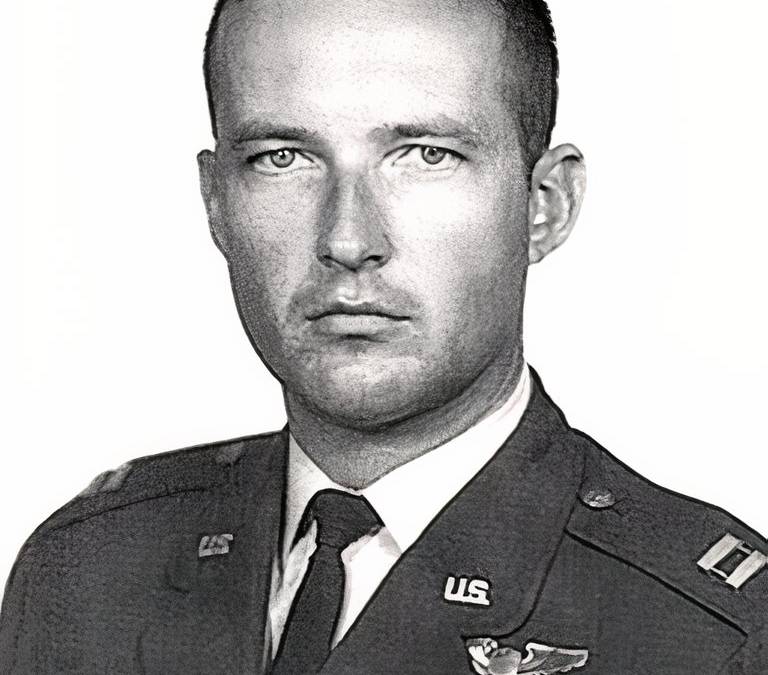
More than 50 years after U.S. Air Force Maj. Robert “Bob” Lodge was killed over North Vietnam, lawmakers are backing an effort that supporters hope will ultimately result in the award of the Medal of Honor.
Rep. August Pfluger (R-Texas), a decorated fighter pilot and retired Air Force colonel, introduced legislation on June 2 tied specifically to Lodge’s case that would authorize an exception to the statutory deadlines that normally govern Medal of Honor awards, allowing officials to consider whether Lodge’s actions on May 10, 1972, merit the nation’s highest military decoration despite the passage of more than five decades. The measure, as first reported by Air & Space Forces Magazine, would not change the rules for other service members.
“As a fighter wing weapons officer with knowledge of highly classified intelligence sources and methods, Maj. Lodge knew he could not fall into enemy hands,” Pfluger said in a statement upon the bill’s introduction. “He made the ultimate sacrifice, deliberately choosing to ride a crippled aircraft to his death to protect that information.
“Valor exists in many forms across our armed forces, and Maj. Lodge stands as an outstanding example of the courage found in our cockpits. I look forward to working with my colleagues in Congress, the president, Secretary [Pete] Hegseth, and [Air Force] Secretary [Troy] Meink to ensure his heroism is properly recognized.”
Supporters of the effort argue Lodge sacrificed his life to protect highly classified information during the Vietnam War and should receive recognition beyond the five Silver Stars he earned during his Air Force career.
Mission Behind Medal of Honor Effort
Lodge served with the 555th Tactical Fighter Squadron, known as the “Triple Nickel”—one of the Air Force’s most successful fighter units during the Vietnam War.
In addition to flying combat missions, Lodge served as chief of the Fighter Tactics Branch for the 432nd Tactical Reconnaissance Wing. He helped develop air-combat tactics used against North Vietnamese MiGs and worked with the highly classified Combat Tree identification system, which helped American pilots identify enemy aircraft beyond visual range.
By the time of his death, Lodge had received five Silver Stars, seven Distinguished Flying Crosses, a Purple Heart and 37 Air Medals. According to military awards historian Doug Sterner, Lodge was one of only two airmen to receive five Silver Stars.
The Mission Behind the Medal of Honor Effort
Pfluger’s legislation centers on a mission flown during Operation Linebacker, the U.S. air campaign against North Vietnam.
On May 10, 1972, Lodge was flying an F-4 Phantom when the aircraft was struck during an engagement with enemy forces. His weapons systems officer, then-1st Lt. Roger Locher, ejected successfully and survived. Lodge remained with the aircraft and was killed when it crashed.

Locher later spent 23 days evading capture before being rescued in what became one of the Vietnam War’s most celebrated combat search-and-rescue missions.
Supporters of the Medal of Honor effort argue Lodge made a conscious decision not to eject because of the sensitive information he possessed. According to Pfluger’s office and advocates backing the proposal, Lodge had extensive knowledge of classified tactics, intelligence capabilities and operational planning.
They contend capture could have exposed information that would have endangered future American operations and aircrews. That claim forms the basis of the current effort to upgrade recognition for Lodge’s actions.
Why Congress Is Considering the Bill
Under 10 U.S.C. § 7274, the Medal of Honor generally must be awarded within five years of the qualifying act.
Since more than 50 years have passed since Lodge’s final mission, supporters are pursuing legislation that would create an exception specific to his case. Due to long expired deadlines, supporters cannot simply submit a new recommendation through the normal process.
Instead, lawmakers are pursuing a case-specific waiver. The Lodge bill would create an exception that applies only to his case, allowing officials to consider whether the Medal of Honor should be awarded despite the expired deadlines. Similar legislation has been used in other historic valor cases involving veterans of World War II, Korea and Vietnam.
If the bill becomes law, it would remove the timing barrier that currently prevents consideration of Lodge’s case. The legislation would not require the president to award the Medal of Honor, and the final decision would remain with the executive branch.
The legislation has been introduced in the House and awaits congressional consideration. To become law, it must pass both chambers of Congress and be signed by the president.
Read the full article here
6 Comments
Solid analysis. Will be watching this space.
Interesting update on New Bill Targets Medal of Honor for Air Force Pilot Killed 50 Years Ago. Looking forward to seeing how this develops.
I’ve been following this closely. Good to see the latest updates.
This is very helpful information. Appreciate the detailed analysis.
Good point. Watching closely.
Great insights on Defense. Thanks for sharing!