

Listen to the article
Texas-based drone manufacturer Hylio is expanding beyond its agricultural roots after one of its flagship aircraft earned a designation that significantly simplifies government procurement.
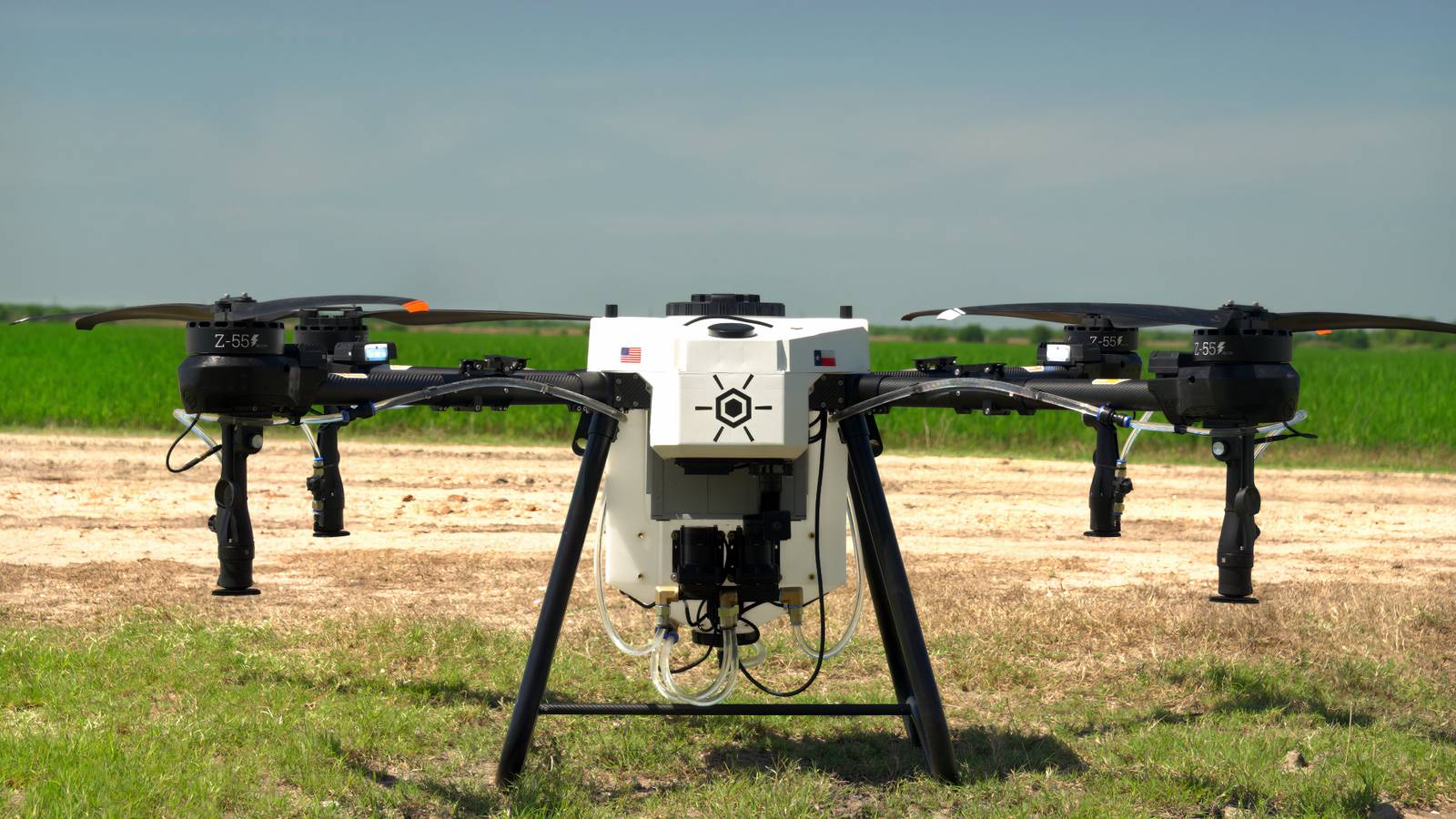
In an interview with Military.com, Hylio CEO Arthur Erickson discussed the company’s ARES HYL-150, a heavy-lift drone recently added to the Defense Innovation Unit’s (DIU) Blue UAS Cleared List. The designation identifies drone systems that have undergone reviews for cybersecurity, supply-chain security and federal compliance requirements, allowing government agencies to purchase approved platforms more easily.
Founded in 2015 and headquartered in Richmond, Texas, Hylio built its reputation developing agricultural drones used for crop spraying, fertilizer application and seeding operations. The company designs and manufactures its systems in Texas and has increasingly expanded into industrial, infrastructure and public-safety applications.
“The Blue List is a pre-vetted list of drones that have been assessed for cybersecurity vulnerabilities and other security concerns,” Erickson said. “This means it’s safe for the government to purchase and utilize and not be a security threat in any sort of way.”
According to the DIU, Blue UAS was created to provide trusted drone options for government users by evaluating cybersecurity risks, supply-chain integrity and compliance with federal acquisition requirements. The program emerged amid growing concerns about foreign-made drone technology and the security of critical government systems.
Erickson said Blue UAS approval eliminates much of the administrative burden that historically accompanied government drone purchases.
“If you’re on the Blue List, you’re good. If you’re not, it is a much more complex process,” he said. “It’s really just unifying and streamlining the process for the government to buy drones.”
A Drone Built for Demanding Conditions
The ARES HYL-150 was originally developed for agricultural operations, a market where aircraft routinely operate in extreme heat, dust and harsh field conditions. Hylio describes the aircraft as a heavy-lift platform capable of carrying substantial payloads while performing autonomous missions.
Erickson said the company’s experience in agriculture helped create a durable system capable of operating in austere environments.
The drones we sell today are a result of basically a decade of all this market feedback, he said.
That operational history may prove valuable as government agencies increasingly seek reliable domestic drone platforms. Federal policymakers have devoted growing attention to reducing dependence on foreign-made drone systems and strengthening domestic manufacturing capacity.
In December, the Federal Communications Commission said it would block imports of new models of foreign-made drones and critical components from companies including DJI and Autel over national security concerns, although the agency has since approved some new drone models.
The move underscored the growing emphasis federal policymakers are placing on secure domestic supply chains and trusted drone manufacturers.
The Swarm Advantage
One of the ARES platform’s most distinctive features is its ability to support coordinated operations involving multiple aircraft controlled by a single operator.
Hylio’s software platform allows users to assign missions to multiple drones simultaneously, creating what the industry commonly refers to as swarm operations. According to the company, a single operator can supervise multiple aircraft performing separate tasks through one control interface.
“It’s all about force multiplication,” Erickson said. “A soldier, police officer or firefighter with three drones at his command could cover a lot more ground.”
The Federal Aviation Administration (FAA) has increasingly explored frameworks for advanced drone operations, including coordinated and beyond-visual-line-of-sight missions, as industry and government users push for larger-scale unmanned operations.
Erickson said Hylio invested in multi-drone operations long before they became a major topic in government and defense circles.
“We were the first company in the U.S. to get approval from the FAA to swarm these group-three drones,” he said.

The Supply-Chain Challenge
Even as domestic drone manufacturing expands, industry leaders acknowledge significant supply-chain challenges remain.
“The most important mission in the drone space right now is the supply chain,” Erickson said.
He pointed specifically to batteries and electric motors as areas where American manufacturers continue working to reduce dependence on foreign supply chains. Concerns about access to critical minerals, battery materials and rare-earth processing have become a recurring focus of federal industrial policy discussions in recent years.
Despite those challenges, Erickson said he believes the United States is making meaningful progress toward a more secure domestic drone ecosystem.
For Hylio, the next challenge is meeting demand. The company recently expanded into a larger facility and is working to increase manufacturing capacity while pursuing new opportunities outside agriculture.
“We need to up our production,” Erickson said. “There’s just demand for drones in general that’s exceeding the entire United States production capability.”
As federal agencies continue searching for domestically produced drone systems that satisfy increasingly stringent security requirements, companies such as Hylio are positioning themselves to compete in a market that extends well beyond the farm fields where many of those technologies first proved themselves.
Read the full article here
5 Comments
Interesting update on Pentagon Clears Texas-Made Drone for Faster Government Purchases. Looking forward to seeing how this develops.
This is very helpful information. Appreciate the detailed analysis.
Good point. Watching closely.
I’ve been following this closely. Good to see the latest updates.
Great insights on Defense. Thanks for sharing!