

Listen to the article
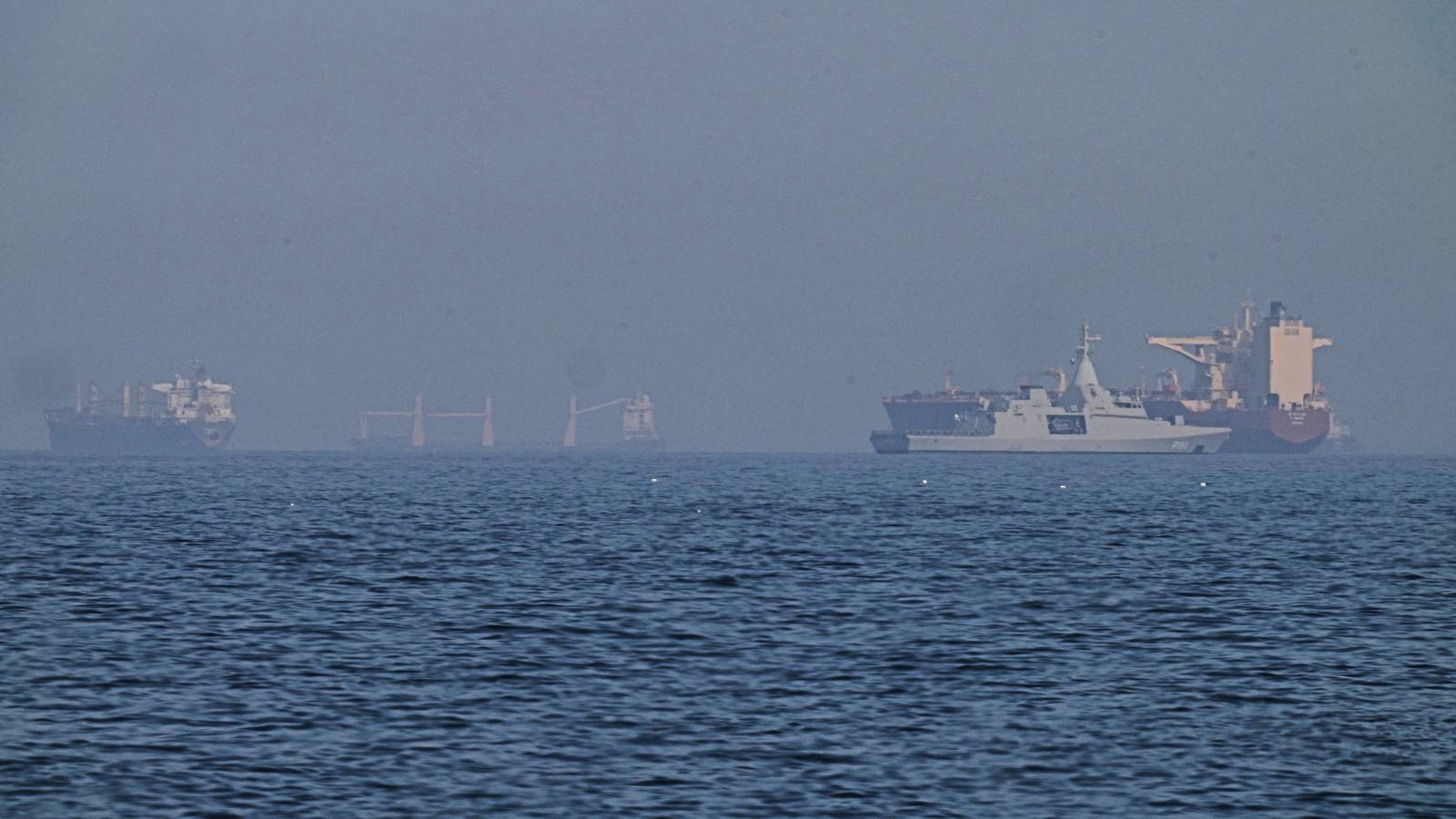
U.S. Central Command announced Sunday that the newest military strategy to reopen the Strait of Hormuz to broader commercial shipping is through what it calls “Project Freedom.”
Project Freedom, according to CENTCOM, began Monday, May 4, in response to the blockade that has resulted in major shipping delays worldwide and had negative repercussions on oil markets. The mission, being given the green light by President Donald Trump, is supporting merchant vessels seeking to freely transit through the essential international trade corridor.
The mission involves guided-missile destroyers, more than 100 land and sea-based aircraft, multi-domain unmanned platforms, and roughly 15,000 service members.
“Our support for this defensive mission is essential to regional security and the global economy as we also maintain the naval blockade,” Adm. Brad Cooper, CENTCOM commander, said in a statement on Sunday.
On Monday, Iran’s Fars news agency claimed that two of the nation’s missiles hit a U.S. warship near Jask Island after it ignored Iranian warnings. That claim was labeled as fiction by CENTCOM, which put out a brief response on X: “No U.S. Navy ships have been struck. U.S. forces are supporting Project Freedom and enforcing the naval blockade on Iranian ports.”
The Strait of Hormuz has become more widely known for being a major oil chokepoint, providing roughly 25% of the world’s oil trade at sea in addition to significant volumes of fuel and fertilizer products. The effect on gas prices has been especially true in the United States, where the national average on Sunday according to AAA was $4.46 for a regular gallon of unleaded—up from an average of $4.43 on Saturday and $4.09 one week earlier.
The regions of the U.S. getting hit hardest per AAA are the West and Midwest. Californians on Sunday were paying an average of $6.10, followed by residents in Nevada, Oregon and Washington all paying at least $5.16 and above. Residents in Illinois, Indiana, Michigan and Ohio were paying between $4.82 and $4.93 per gallon.
Sen. Lindsey Graham (R-SC) is among lawmakers voicing support for Project Freedom, writing on X on Sunday that he “totally agrees” with his longtime ally President Trump.
“It is clear to me that Iran is playing games through negotiations as their last offer to end the conflict was absurd,” Graham wrote. “Again, I hope this conflict can end diplomatically, but it is now time to regain freedom of navigation and forcefully respond to Iran if they insist on terrorizing the world. Enough with this terrorist regime’s behavior.”
Maritime Partnerships Step Up
This mission follows an initiative jointly pushed by the Department of Defense and U.S. State Department last week, to enhance what CENTCOM described as a more coordinated effort to share information with international partners in support of maritime security in the Strait of Hormuz.
Described as the Maritime Freedom Construct (MFC), its objective involves combining diplomatic action with military coordination. Its creation was approved by U.S. Secretary of State Marco Rubio, as first reported April 28 by the Wall Street Journal. A cable stated that MFC participation entails diplomacy, information sharing, sanctions enforcement or naval presence, etc.
“The MFC constitutes a critical first step in the establishment of a post-conflict maritime security architecture for the Middle East. This framework is essential to ensuring long-term energy security, protecting critical maritime infrastructure, and maintaining navigational rights and freedoms in vital sea lanes,” the cable said.
Reports by the Journal and others including Reuters and AFP suggest that the State Department would serve as the MFC’s diplomatic hub between partner countries and the shipping industry. The Pentagon’s role involves operating out of CENTCOM headquarters in Florida, coordinating real-time maritime traffic and communicating directly with vessels transiting the Strait of Hormuz.
It was reported that partner nations would be informed by May 1, with adversaries including Russia, China, Belarus and Cuba not being part of the MFC.
“We welcome all levels of engagement and do not expect your country to shift naval assets and resources away from existing regional maritime constructs and organizations,” the cable added, saying it’s “distinct” from the “Maximum Pressure” campaign signed Feb. 4 by President Trump.
Read the full article here
6 Comments
Great insights on Defense. Thanks for sharing!
This is very helpful information. Appreciate the detailed analysis.
Interesting update on ‘Project Freedom’ to Use Missiles, 15k Personnel to Open Strait of Hormuz. Looking forward to seeing how this develops.
Solid analysis. Will be watching this space.
Good point. Watching closely.
I’ve been following this closely. Good to see the latest updates.