

Listen to the article
At 104 years old, Roberta “Randy” Tidmore has outlived most of the people she served beside, worked beside and volunteered beside.
She has lived through the Great Depression, World War II, the Cold War and the dawn of the digital age. She helped build bomber wings as a Rosie the Riveter, joined the Marine Corps during wartime, worked as a United Airlines stewardess, ran a tomato farm in Mexico and spent decades volunteering in her community.
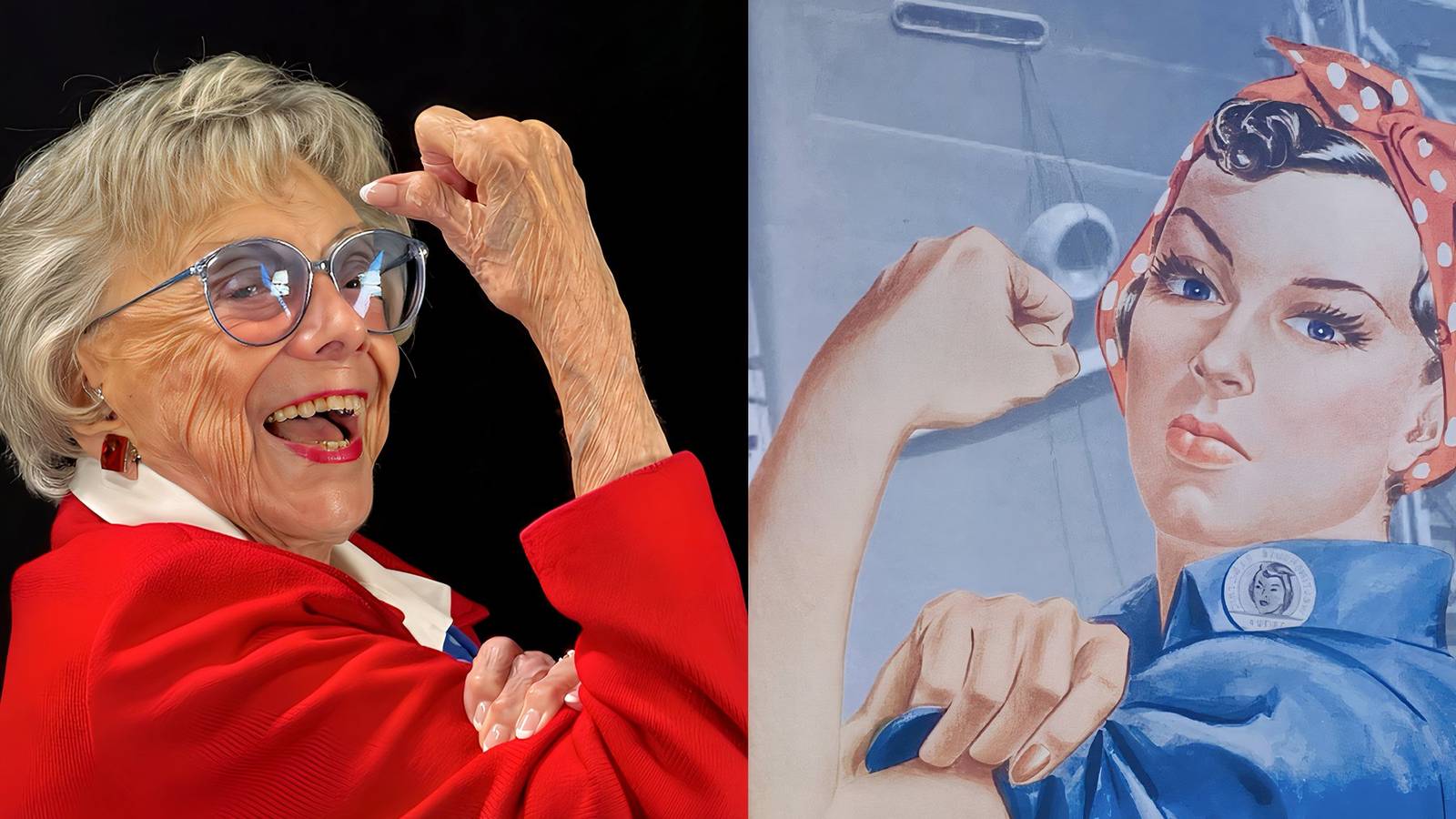
Last week, Tidmore was in New Orleans as one of 31 surviving Rosie the Riveters being honored during the National WWII Museum’s 2026 American Spirit Awards, a gathering that comes as the country prepares to mark its 250th anniversary and the number of living Americans who remember World War II continues to shrink.
For Tidmore, the recognition is appreciated. But she still seems slightly puzzled by it.
I don’t know that we deserve all the recognition we’re getting… The majority of Americans were patriotic.
That humility is a common thread among the women being honored. Many spent decades without public recognition for their contributions to the war effort, viewing their work not as extraordinary but as necessary.
Tidmore and fellow honoree Elizabeth Tate never met during World War II. But together, their lives show how the war pulled American women into jobs, training programs and military service that had long been closed to them.
Tidmore built B-26 Marauder bomber wings before joining the Marines. Tate learned to read blueprints through wartime training programs before becoming a machinist producing parts for military shipbuilding. Eight decades later, both are among the dwindling number of women who can still describe what it was like when an entire country mobilized for war.
From Bomber Wings to the Marine Corps
Before becoming a Marine, Tidmore was one of millions of American women who entered the workforce during World War II to fill jobs left vacant by men deployed overseas.

After leaving nursing school, she followed friends to Rockford, Illinois, where she worked at the J.I. Case Company, a farm equipment manufacturer that had shifted to producing aircraft components for the war effort.
Her job involved fitting metal gap covers over sections of the leading edge of B-26 wings, where electrical equipment was housed, to help maintain smooth airflow over the aircraft. Six months later, she decided she wanted to do more.
While passing through a bus terminal, she watched a group of Marines moving through the station and decided to enlist.
“I thought they looked pretty good,” Tidmore recalled with a laugh.
She joined the Marine Corps in 1944 and trained as a motor transport operator, learning to drive and maintain military vehicles at a time when few women were expected to work around engines, trucks or mechanical equipment.
Looking back, Tidmore says the Marine Corps changed her life.
It taught me respect for other people. It taught me the chain of command.
A Wartime Job That Built More Than Ships
For Tate, wartime work began with government training.
She arrived in Washington through the National Youth Administration and Works Progress Administration programs, where she learned to read blueprints, a skill she quickly excelled at, according to responses shared to Military.com through her guardian.
That skill opened the door to more advanced defense work.

After completing her initial training, Tate was given the chance to test for machinist positions. She remembered a trainer named Julio who helped guide her during that period.
Her daily work involved large tubs of metal pieces that workers machined into bolts and nuts for shipbuilding in the war effort. Tate believes some of the work took place at Puget Sound, though she was not certain whether part of it also occurred at Hunter’s Point.
From the beginning, Tate understood the parts she handled were bound for the war effort.
She was proud, her guardian said, to leave home to contribute to the country while also helping provide financial support for her parents.
The job gave Tate more than a paycheck. It gave her purpose. Eventually, she saved enough money to help build a modest home for her mother and father in New Orleans.
Women entered wartime jobs for different reasons, Tate said through her guardian, but many shared a great pride in helping the country.
For her, that pride remains close to the surface.

Asked how she feels about being honored alongside other Rosies at the museum event, Tate became emotional. She said it brought back the same feelings she experiences while attending Rosie events in Richmond, California: pride in knowing that she and other women had worked hard and had been part of something special.
The Stories Behind the Poster
The public image of Rosie the Riveter has become one of the most recognizable symbols of American wartime labor. But Tidmore believes the poster can sometimes overshadow the actual women behind it.
“I think so, yes,” Tidmore said when asked whether the Rosie image has eclipsed the real women.
“So many women were working during World War II,” she said. “Everybody was working for the war effort.”
The work took many forms. Some women built ships. Others assembled aircraft. Many filled transportation, logistics and administrative jobs that kept the military functioning. Women entered professions and industries that men had traditionally dominated.

Tidmore believes some of those contributions still receive less attention than others.
“The women that took up flying, they never got recognized until more recently,” she said.
The Women Airforce Service Pilots, or WASPs, flew military aircraft stateside during World War II but did not receive full military status until decades later.
Tidmore’s own wartime service continued after Japan surrendered.
When the war ended, many Americans poured into city streets to celebrate. Tidmore remembers receiving a different set of instructions.
Stationed in San Diego, she and other women Marines were advised to stay away from the downtown celebrations because of concerns about large crowds of sailors and service members flooding the city.
So she bought a banana cream pie and returned to the barracks.
“We celebrated in the barracks with a banana cream pie,” she said.
The war ended. Tidmore’s service did not.
She volunteered to remain in uniform after the conflict and later helped process train reservations for returning service members moving through San Francisco.
Had circumstances been different, she says she likely would have stayed in the Marine Corps permanently.
“Oh my, yes,” Tidmore said when asked whether she would have remained in service.
Instead, she joined United Airlines, eventually becoming a stewardess and supervisor before marrying Navy veteran Terry Tidmore. The couple later operated a successful tomato farm in Baja California.
Throughout it all, she remained active in veteran organizations and civic groups, eventually serving as president of the Women’s Marine Association and volunteering with organizations ranging from the Salvation Army to Honor Flight.
At 104, Tidmore is still especially animated when she talks about young Marines.
“They’re absolutely wonderful young people,” she said. “I can’t tell you how proud I am of them.”
That pride gives her hope.
After more than a century of American history, she remains optimistic about the country’s future.
“We’ve been through a lot,” she said. “This country has. All kinds of things. And we bounce back.”
For Tate, the stories of the Rosies matter because they went untold for too long.
She believes they should continue to be shared with every generation.
As America approaches its 250th anniversary, the gathering in New Orleans serves as a reminder that the generation that experienced total war firsthand is rapidly disappearing.
Many of the Rosies attending the event are now in their 90s or older. Tidmore is among the oldest.
Asked what she hopes future generations remember, Tidmore did not point to factories, airplanes or military service first.
She pointed to patriotism.

“Oh yes,” she said. “Patriotism. I wish we could all pull together.”
For someone who watched Americans mobilize during World War II, patriotism is not an abstract idea. It is a memory.
At 104, it remains something Tidmore still hopes the country can recover.
“I think we will again,” she said.
Read the full article here
5 Comments
Interesting update on Rosie the Riveter Veterans Honored in New Orleans WWII Event. Looking forward to seeing how this develops.
This is very helpful information. Appreciate the detailed analysis.
Good point. Watching closely.
I’ve been following this closely. Good to see the latest updates.
Great insights on Defense. Thanks for sharing!