

Listen to the article
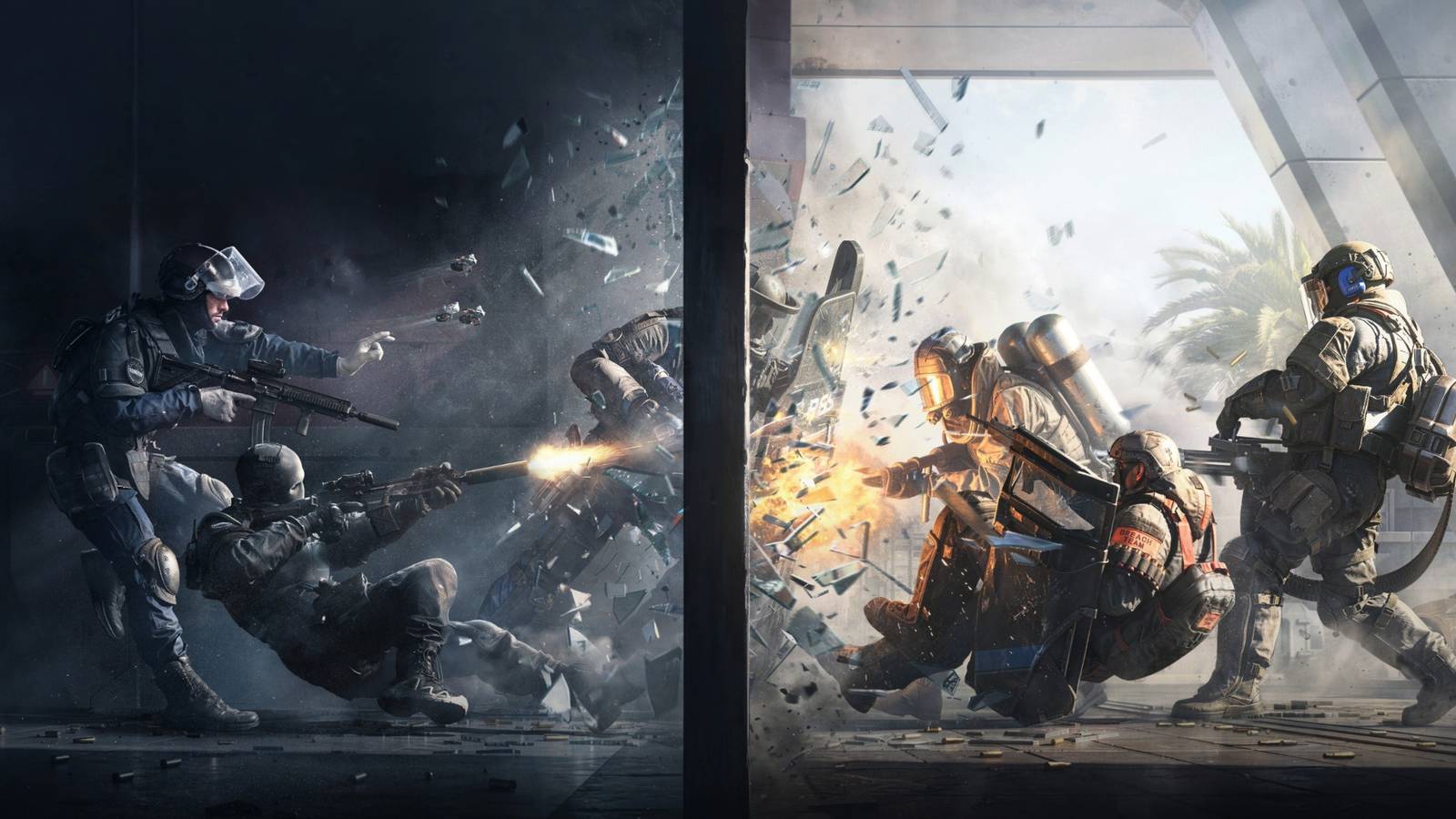
When it comes to the different titles in the ever-evolving FPS space, Delta Force is no stranger to ambitious swings. Launched in early 2025 as a full-throttle revival of a franchise that’s been dormant for over a decade, Team Jade’s multi-platform, free-to-play title has spent the many seasons since building a foothold on the knife’s edge of a market that too often relies on the comforts of the expected. Now, Delta Force is raising the stakes again — announcing a crossover with one of the most culturally significant tactical shooters of the modern era: Tom Clancy’s Rainbow Six Siege.
Set to launch alongside Delta Force‘s soon-to-be revealed upcoming season, the collaboration is arriving as part of what Team Jade is calling the biggest season in Delta Force‘s history; headlined by a new Operations map, a new Warfare map, and a newly teased Operator. But to understand what’s coming and how exactly it came together, GameRant conducted a joint interview with Delta Force Game Director Shadow and Rainbow Six Siege Creative Director Joshua Mills. What emerged was a conversation about shared DNA, the art of translating between two different tactical languages, and why both studios agreed this needed to be built on something more substantial than just cosmetics.
A Collaboration Among Shared Fans and Shared Community
Immediately, what was clearest about this collaboration was just how organic it was from the jump. Shadow says the Delta Force player community had been vocal about a shared love of Rainbow Six Siege since the game’s launch, and those conversations—alongside some very real internal experience with the genre-defining title—made a possible collaborative effort feel incredibly natural. Shadow describes reaching out to Ubisoft proactively, framing the initial discussions as “a heart-to-heart dialogue between a Chinese tactical shooter and an international benchmark for the genre.”
“Since Delta Force launched, we have continued to see strong enthusiasm from the player community for the tactical shooter genre — and Rainbow Six Siege has been one of the names mentioned most often. That is not surprising. If you work on tactical shooters, it is impossible not to be influenced by a game that has defined the language of the genre over the past decade. Many people on our team are longtime Rainbow Six Siege players, myself included.”
What actually surprised them was just how quickly Ubisoft responded, because—as it turned out—people on the Siege side had been following Delta Force closely, too. Mills, who describes himself as a long-term Delta Force fan, was already playing the game at home when he was brought into the collaboration, and the care for Siege‘s identity was apparent even in the earliest pitch materials.
To say I was excited would be an understatement, because even in those earliest conversations the care for Siege and attention to detail was already present.
Three Operator Pairings, One Standard

The centerpiece of the crossover is three Operator pairings, each constructed around a shared “combat philosophy” rather than any pre-existing visual similarity. The way Shadow puts it, that key principle was non-negotiable from the start.
“Operators are among the most representative experiences in both Rainbow Six Siege and Delta Force, so they became the core of this collaboration…The three pairings are: Sineva x Montagne, representing an unshakable form of protection; Nox x Vigil, both taking the art of “disappearing” to an extreme; and Roy Smee x Doc, both carrying the belief that life comes first in every rescue operation.”
Shadow uses the Roy Smee and Doc pairing to illustrate how the challenges of the design process could even be resolved through apparent contradiction: Smee is Delta Force‘s demolitions expert, Doc is one of Seige‘s combat medics. On the surface, that’s an unlikely match, but the answer, as Shadow explains it, was finding that both are fundamentally in the business of preserving life, just from opposite ends of the breach. One prevents the defensive line from breaking, the other brings people back once it already has.
Another challenge exists in bringing some of Siege‘s many operators into a different game’s visual language, especially without dissolving what makes them distinct. And for Mills, the answer begins with what he calls “the identity of individuality.” Though it may be obvious to fans of the title, a critical part of the collaboration was ensuring that Siege operators remained characters defined by specific histories, cultures, traumas, and convictions. That particularity is precisely what the community has bonded with over more than a decade.
“The stoic bravery of Montagne, the powerful and almost intimidating presence that Doc can embody. I mean, he is the guy that said: ‘Sometimes the only way to save a life, is to take one.’ That’s the essence of character that needs to be captured.”
In practice, Shadow explained that reverence like this meant scrutiny even at the material level: “things like insignias, Doc’s white gloves, Vigil’s mask — these are the ‘identity cards’ of Rainbow Six Siege players, and they cannot be touched lightly.” For example, the carbon fiber treatment on the Nox x Vigil skin went through revisions specifically to avoid anything too shiny or reflective, pulling it back toward the grounded aesthetic that Vigil’s identity demands. Additionally, the teams ensured that operators only have their finger on the trigger when actively firing; it’s a minor detail, but one that represents the consistency of the world being built.
Read the full article on GameRant
This article originally appeared on GameRant and is republished here with permission.
Read the full article here
6 Comments
I’ve been following this closely. Good to see the latest updates.
Solid analysis. Will be watching this space.
Good point. Watching closely.
Interesting update on Shadow and Joshua Mills on Community, Operator Pairings, and Why “One Plus One Must Be Greater Than Two”. Looking forward to seeing how this develops.
This is very helpful information. Appreciate the detailed analysis.
Great insights on Defense. Thanks for sharing!