

Listen to the article
Many types of resistance training exist that don’t require lifting weights. While weight training comes to mind first when you say, “resistance training,” you also have other ways to build muscle. Calisthenics, weight vests, rubber bands, isometrics and suspension trainers, such as the TRX, are all classified as resistance training. Here is an email from a veteran seeking training advice about building muscle on the far side of 40 years old:
Stew, Army veteran and 44, wondering what you think I need to do to build muscle and strength: calisthenics or weight training? I am more of an endurance guy and not that experienced going to the gym. Liked doing PT in the Army, but never got into lifting much. Thanks, Sam.
If you have not lifted weights and are not ready to join a gym, but you know you need to do resistance training for all the positive benefits as you age, here are some ideas. But to first answer your question, you can build muscle and some strength with calisthenics, but if you want to really build strength, you need to go heavier.
Now, doing your first pullup or pushup is a strength exercise, but being able to do multiple reps of any calisthenics exercise is more of a muscle stamina/endurance effort. Here is how I would break the options down:
Weight Training
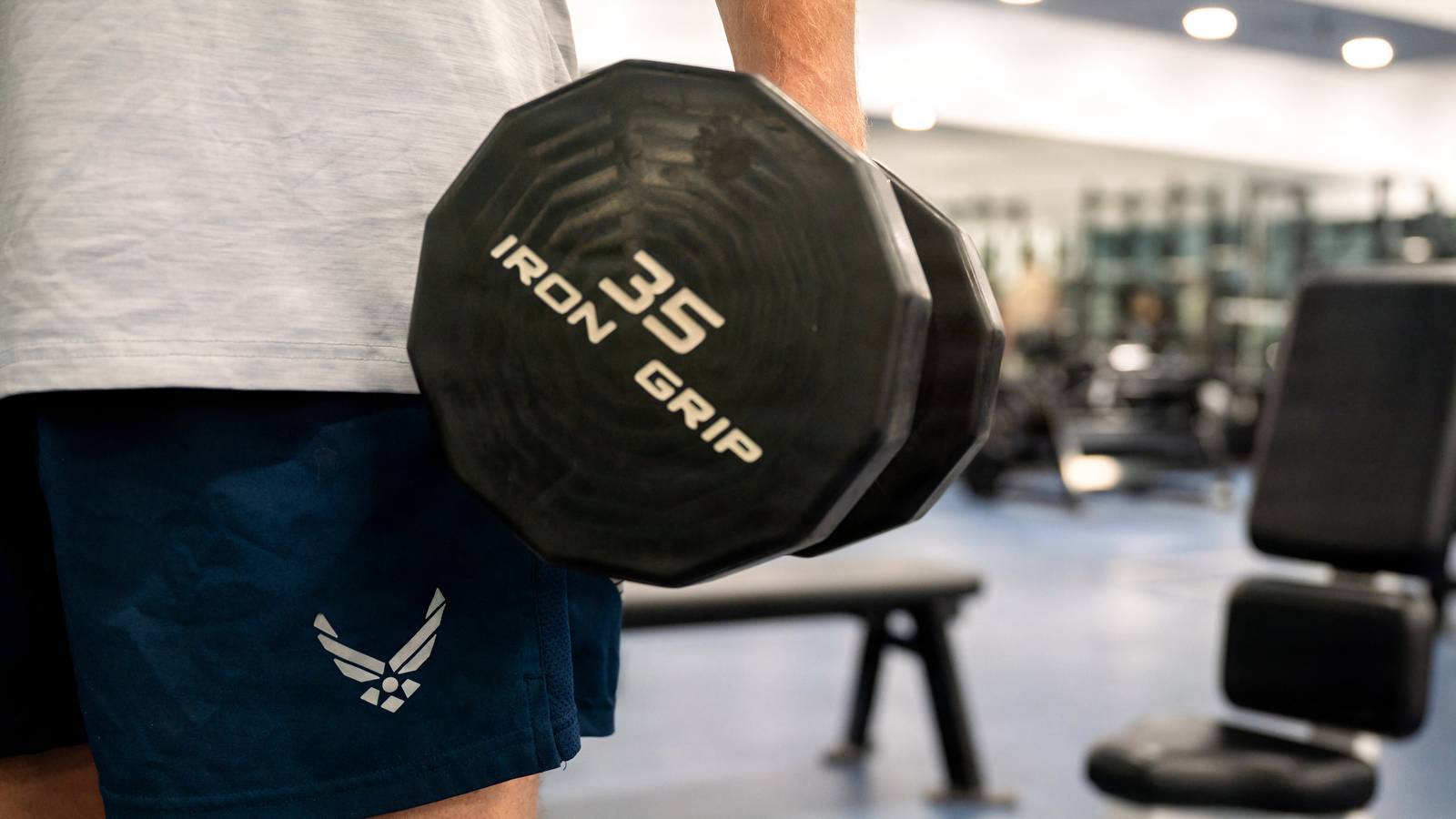
The easy answer is if you want to get strong, lift weights. While weights may be foreign to you and make the gym less comfortable, many ways exist to incorporate heavier lifting into your training that don’t all involve barbells and kettlebells. Weight machines at gyms can help you get started with muscle-group training. Dumbbells are safe and an easy way to start practicing good form, but you may want a coach to help you with technique, as lifting heavy weight with the wrong technique can hurt and keep you out of the gym for a while.
Read More: Beginning Strength Training Workouts
Calisthenics
You can make calisthenics more of a strength-building effort by adding weight and moving slowly with each repetition. Increasing the time under tension (TUT) or taking 4-5 seconds to go down and up in any calisthenics exercise will build strength and mass. The classic military PT exercises do have a place in your fitness and conditioning routine; however, if you want to build true strength, you need to add weight and do fewer reps. Adding a weight vest to pullups and pushups may reduce your ability to do higher reps by 50-75%. That is a more strength-building effort. Endurance athletes tend to progress quickly with calisthenics and see results in both muscle stamina and growth.
Read More: How to Structure Daily Calisthenics and Cardio Workouts
Resistance Band Training
Resistance bands are elastic bands that add tension to any movement and can replace weighted exercises. Use them to make pushups harder and pullups easier, and to replace machine exercises such as push-downs and pull-downs. You are only limited by your imagination, but you can find hundreds of resistance band exercises and stretching workouts on YouTube.
Suspension Training (TRX)
Anchored straps allow you to use your body weight to create unstable movements and can replicate exercises in the gym, make calisthenics harder (atomic pushups), and work the core harder than calisthenics can.
Read More: Ask Stew: How TRX Can Enhance Your Military Fitness Training Program
Isometrics
These strength-training exercises require you to hold a pose or grip for extended periods while contracting the muscles. Exercises such as plank pose, grip hangs and wall sits are isometric exercises. Isometrics can aid in strength, balance and joint stability.
Read More: How to Add Isometric Exercises to Resistance Training
You can select any or all the methods above to develop your fitness and build muscle, strength and stamina. If you add mobility/flexibility training to your day, you will start to see results in your overall fitness and conditioning, and you will feel great. Any of these movement types will be life-changing for you if you are consistent with your training.
Read the full article here
6 Comments
This is very helpful information. Appreciate the detailed analysis.
Interesting update on Starting Resistance Training Over 40: Here’s What to Know. Looking forward to seeing how this develops.
Solid analysis. Will be watching this space.
Great insights on Defense. Thanks for sharing!
Good point. Watching closely.
I’ve been following this closely. Good to see the latest updates.