

Listen to the article
Many people have told us they don’t buy used cars because of the slim difference in price between new and used vehicles. Fair enough, but we think the times are changing fast. The average new car costs $50,900, countered only by the average price of used cars, which is just over $30,000.
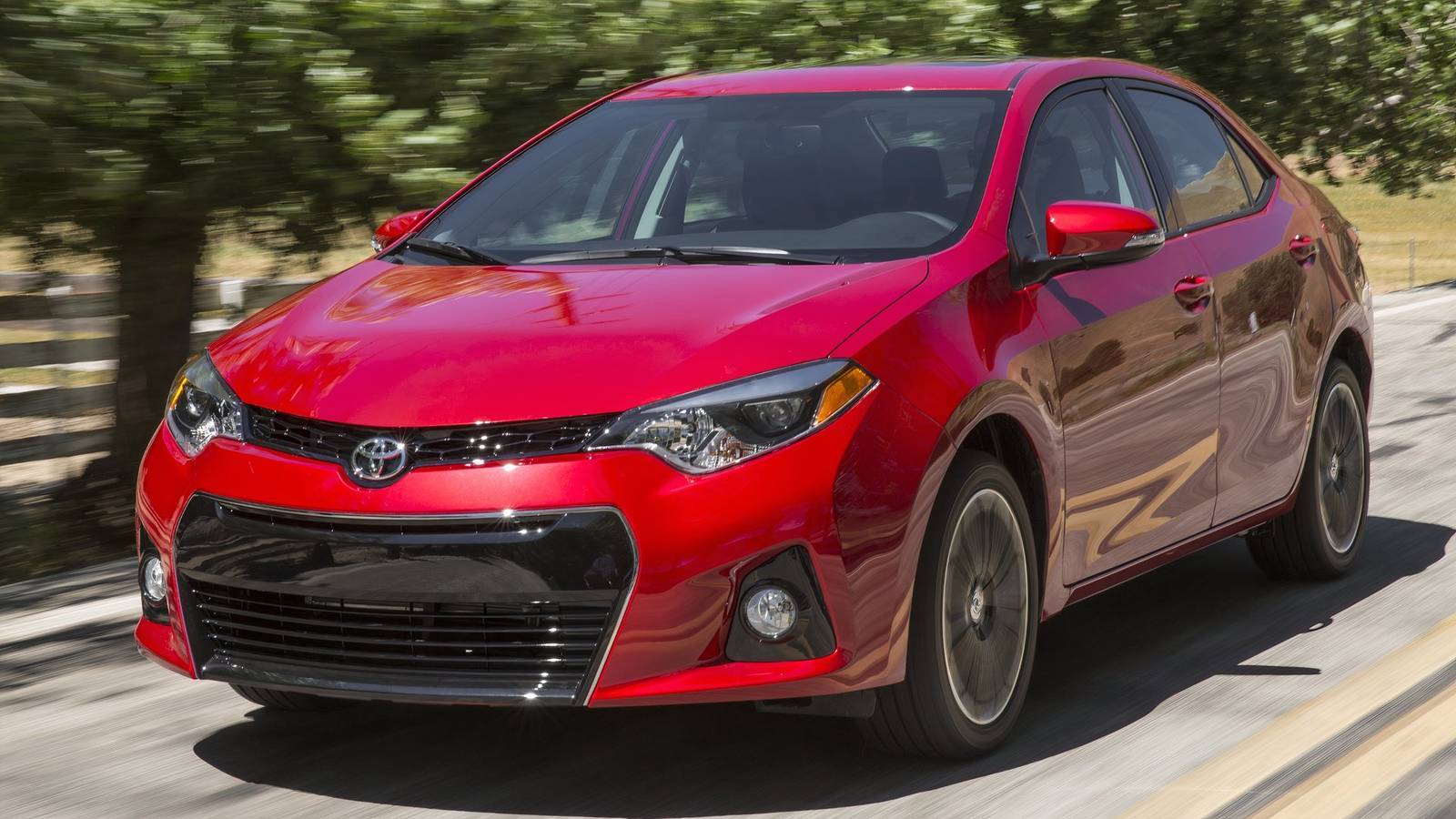
If the new cars south of the posted average don’t work for you, there’s surely something available at the near-$21,000 discount on the used market to choose from. Tight on a budget? Don’t want to pay more than a car is worth? An older Toyota just might be the answer.
New Cars Now Cost More Than $50,000 On Average – And Tariffs Are Making It Worse
CarGurus’ Mid-Year Review for 2026 gives clear details on what sort of pressure is squeezing the car market enough to push the average price of a new car past $50,000. The average cost of a new car has risen 3.3% since December, according to the report, which also notes that the market had been hovering around this number since 2022. Digital Dealer, a dealership media resource, confirms the rising costs and discusses how a third of new cars carry an estimated monthly payment in excess of $1,000.
Before the chip shortage caused by the COVID-19 pandemic, nearly half of all new cars had sticker prices at or below $35,000. In 2026, more new cars cost more than $50,000 than cost less. Driving forces include tariffs, which have raised the import duties on all vehicles with final assembly points outside the US, market preferences, and gradual phasing-out of cheaper models like sedans.

Pushing the average new cost upwards are hybrid and electric vehicles, cars that automakers charge a small premium for compared to their conventional variants. On the used market, those premiums don’t carry over. Used EVs are everywhere, available at a significant discount compared to their original MSRPs.
Sure, there are still plenty of options below the $50,000 mark, but there are two issues that might arise depending on the type of car you need. Cheaper sedans and compact crossovers don’t fill the need as well as other types of vehicles might, like pickups, three-row crossover SUVs, and full-size SUVs (of which none start below $50,000). Either there are no cars cheap enough to justify buying new, or there are none that adequately fulfill your needs.
But rising prices alone don’t explain why used cars have become structurally superior — the real advantage is what you can actually buy for $30,000 today.
Discontinued Models Like The Yaris And Versa Are Your Secret Weapon On The Used Market

Not only will shopping for a used car offer more variety for the same price, but it opens the door to more models that either don’t exist on the new market or have been replaced with more expensive versions. A combination of buyer preference and attrition of models without replacements has caused some of our favorite nameplates to disappear from showrooms, but a plethora is still around for decent value.
Vehicles like the Toyota Yaris and Nissan Versa used to be the go-to options for basic transportation, but once those cars were discontinued in the US, no replacements were offered, forcing buyers into the Corolla or the Sentra. Other marques that have done away with sedans altogether have forced returning customers into crossovers instead, where brands find the most profitability.
Pickups are also a commodity on the used market, something people are more than willing to pay a premium for when new. Trucks that hold their value exceptionally well become cheaper over time depending on overall condition and mileage, which is where things become complicated for shoppers who want reliable transportation on a budget and don’t want to overpay.
So if variety is on the used market’s side, the question becomes which brand is worth betting your reliability concerns on – and one name keeps coming up.
Why Older Toyota Models Are Your Best Bet

Even if we presented you with all the figures from Toyota’s recalls over the last three years, they would paint a strong enough picture to get you to consider used models with proven track records. But recalls happen and aside from any growing pains brand-new models experience, the issue of cost is chief among the rest. A brand we’ve always presented as being one of the most reliable choices out there still holds that place in our hearts, and where it will help you most is on the used car lot.
If you could go back a decade and have your choice of new Toyota models, which would you take? The Avalon with its magic carpet ride? The Prius V and its 34 cubic-feet of cargo space? Maybe you’d like a Sienna with a 3.5-liter V6 and more cabin space than the latest hybrid-only variant? Point is, there was quite literally a Toyota for every conceivable need, and there still is if you’re looking for one at a discount. We even reported on a 2016 Camry with over 500k miles on the odometer and found out how these cars were built to last.
At this point in the lifecycle of each model offered in the mid-2010s, reliability was not in question. The Tacoma and 4Runner relied on proven 3.5-liter and 4.0-liter V6 engines that showed no signs of trouble, the 7th-generation Camry was about to enter its final year of production before being redesigned for 2018, and the Tundra was still soldiering on with a 5.7-liter V8. In case you haven’t picked up on it, Toyota was building cars that didn’t taint its decades-long tradition of building reliable cars.
Sources: Toyota, CarGurus, Digital Dealer, Kelley Blue Book
Read the full article on CarBuzz
This article originally appeared on CarBuzz and is republished here with permission.
Read the full article here
6 Comments
Solid analysis. Will be watching this space.
I’ve been following this closely. Good to see the latest updates.
Good point. Watching closely.
Interesting update on The $21,000 Gap Between New And Used Cars Makes Old Toyotas The Only Rational Buy. Looking forward to seeing how this develops.
This is very helpful information. Appreciate the detailed analysis.
Great insights on Defense. Thanks for sharing!