

Listen to the article
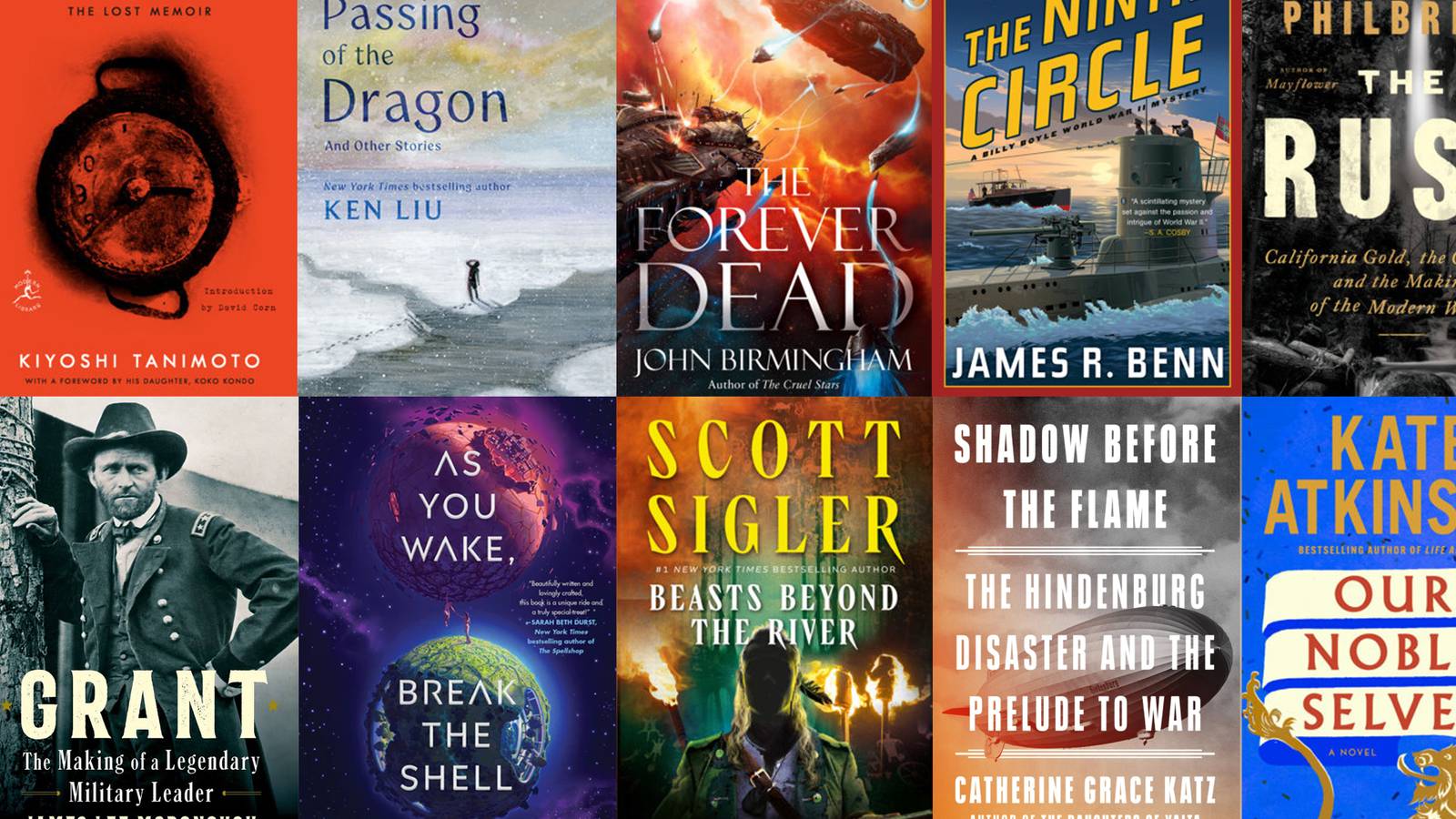
Fall has always been one of the best seasons for readers. Publishers save many of their biggest releases for the months leading into the holidays, filling bookstore shelves with everything from sweeping histories and spy stories to ambitious science fiction and literary fiction.
This year’s lineup of most anticipated releases has plenty to offer Military.com readers. There are books about command and leadership, espionage, naval warfare and World War II alongside novels that explore coming home, rebuilding after conflict and the moral questions war leaves behind. Whether you’re looking for your next professional read, something to toss in a deployment bag or simply a great story for cooler evenings, these are 13 new books worth putting on your radar.
1. Redwood by Ben Macintyre
Genre: Espionage / Cold War History
Few writers make intelligence history as readable as Ben Macintyre. His latest book follows Soviet intelligence officer Vladimir Kuzichkin, whose defection during the Cold War exposed secrets that rippled through Moscow, Tehran and the West during one of the most dangerous periods of the nuclear age.
Macintyre has built a reputation for transforming archival research into page-turning nonfiction, and Redwood appears poised to continue that streak.
Why troops and veterans should read it:
Intelligence rarely wins headlines until it fails. This is a story about information, trust and how a single source can reshape global strategy.

2. Shadow Before the Flame by Catherine Grace Katz
Genre: Aviation History
Most people remember the Hindenburg because of a single photograph or a few seconds of radio audio. Catherine Grace Katz widens the lens, examining the disaster alongside the rise of Nazi Germany, the ambitions of early aviation and the political forces gathering over Europe in the years before World War II.
For aviation enthusiasts, it’s a reminder that technological breakthroughs often unfold alongside geopolitical upheaval.
Why troops and veterans should read it:
It’s equal parts aviation history, political history and cautionary tale about technology, propaganda and national ambition.

3. Grant: The Making of a Legendary Military Leader by James Lee McDonough
Genre: Military Leadership
Books about Ulysses S. Grant often spend as much time in the White House as they do on the battlefield. James Lee McDonough takes a different approach, focusing on the experiences that shaped Grant into one of America’s most effective commanders.
Rather than treating leadership as mythology, the book examines the decisions, failures and persistence that earned Grant his reputation.
Why troops and veterans should read it:
Leadership is learned under pressure, and few American commanders experienced more of it than Grant.

4. The Rush by Nathaniel Philbrick
Genre: American History
Nathaniel Philbrick argues that the California Gold Rush did more than transform the American West. It accelerated political tensions, fueled economic change and helped push the nation toward civil war.
It’s a reminder that wars are often years in the making, shaped by events that seem unrelated until viewed in hindsight.
Why troops and veterans should read it:
Understanding conflict means understanding the forces that create it long before the shooting starts.

5. Hiroshima, 8:15 by Kiyoshi Tanimoto
Genre: Memoir / World War II
One of the year’s most remarkable releases is also one of its oldest.
Kiyoshi Tanimoto, the Methodist minister later profiled in John Hersey’s landmark Hiroshima, wrote his own firsthand account of surviving the atomic bombing. The manuscript remained unpublished for decades before being discovered among Hersey’s papers at Yale University.
Published 81 years after the bombing, Hiroshima, 8:15 offers readers another eyewitness perspective on one of history’s defining moments.
Why troops and veterans should read it:
Military history often focuses on campaigns and commanders. This book reminds readers what those decisions looked like to the people living beneath them.

6. Tom Clancy: Pressure Depth by Jack Stewart
Genre: Military Thriller
The latest entry in the Tom Clancy universe dives beneath the Pacific, where competition over advanced undersea technology threatens to ignite a broader conflict involving China and U.S. special operations forces.
Author Jack Stewart is a retired Navy fighter pilot and TOPGUN graduate, bringing firsthand military experience to the action.
Why troops and veterans should read it:
Modern naval competition is increasingly unfolding underwater, making this one of the more timely military thrillers of the year.

7. The Ninth Circle by James R. Benn
Genre: World War II Mystery
Captain Billy Boyle returns in another mystery that blends historical fiction with authentic military detail. This time, the investigation centers on the murder of a Naval Intelligence officer in Havana, drawing in British intelligence and even future James Bond creator Ian Fleming.
Longtime fans know Benn’s series succeeds because the military setting feels authentically lived in.
Why troops and veterans should read it:
It’s a World War II detective story built on real history, military culture and intelligence work.

8. The Forever Dead by John Birmingham
Genre: Military Science Fiction
John Birmingham concludes his Cruel Stars trilogy with humanity facing its greatest test yet.
Military science fiction has always been about more than spaceships. At its best, it explores leadership, logistics, morale and command decisions under impossible circumstances. Birmingham understands those traditions well, delivering large-scale battles without losing sight of the people making impossible choices.
Why troops and veterans should read it:
Anyone who enjoys The Forever War or Old Man’s War should feel right at home.

9. Beasts Beyond the River by Scott Sigler
Genre: Historical Military Horror
Scott Sigler combines the French and Indian War with supernatural horror, following Rogers’ Rangers into wilderness that hides threats beyond enemy patrols.
The result blends military history with survival horror while preserving the realities of frontier warfare.
Why troops and veterans should read it:
It scratches the same itch as historical fiction while offering something far stranger.

10. Our Noble Selves by Kate Atkinson
Genre: Historical Fiction
Victory doesn’t end every war.
Kate Atkinson turns her attention to Britain after World War II, exploring a society trying to rebuild while carrying the emotional weight of years spent fighting for survival.
Many veterans will recognize the central truth beneath the novel: coming home can be its own challenge.
Why troops and veterans should read it:
Some of the hardest battles begin after the uniform comes off.

11. The Pirate Queen by Ariel Lawhon
Genre: Naval Historical Fiction
Long before modern navies dominated the seas, Zheng Yi Sao commanded one of history’s largest pirate fleets and forced imperial powers to negotiate with her.
Ariel Lawhon brings that remarkable story to life in a novel filled with maritime strategy, leadership and political intrigue.
Why troops and veterans should read it:
It’s a refreshing look at naval history beyond the familiar battles of the Atlantic and Pacific.

12. The Passing of the Dragon and Other Stories by Ken Liu
Genre: Science Fiction
Ken Liu has become one of science fiction’s most thoughtful voices, consistently exploring technology, war, culture and memory through deeply human stories.
His newest collection spans speculative futures that ask difficult questions about identity, sacrifice and what people choose to preserve during times of upheaval.
Why troops and veterans should read it:
Some of the best military fiction isn’t about soldiers. It’s about the people shaped by conflict.

13. As You Wake, Break the Shell by Becky Chambers
Genre: Science Fiction
Becky Chambers has earned a devoted following by writing hopeful science fiction that values compassion as much as spectacle. Her newest novel explores purpose, belonging and finding a place in an uncertain future, themes likely to resonate with many veterans navigating life after military service.
Why troops and veterans should read it:
Stories about rebuilding a life often matter just as much as stories about fighting battles.
No single list can capture every great book arriving this fall, but these 13 offer an unusually wide range of perspectives on war, leadership, history and the human experience. Some revisit famous moments through fresh research. Others imagine futures shaped by the same questions service members have wrestled with for generations: duty, sacrifice, loyalty and what comes after the mission ends.
Whether your next read comes from the history shelf, the thriller section or the science fiction aisle, this season has no shortage of worthwhile places to start.
Read the full article here
6 Comments
I’ve been following this closely. Good to see the latest updates.
This is very helpful information. Appreciate the detailed analysis.
Interesting update on Top 13 Fall Reads for Troops and Veterans 2023. Looking forward to seeing how this develops.
Good point. Watching closely.
Great insights on Defense. Thanks for sharing!
Solid analysis. Will be watching this space.