

Listen to the article
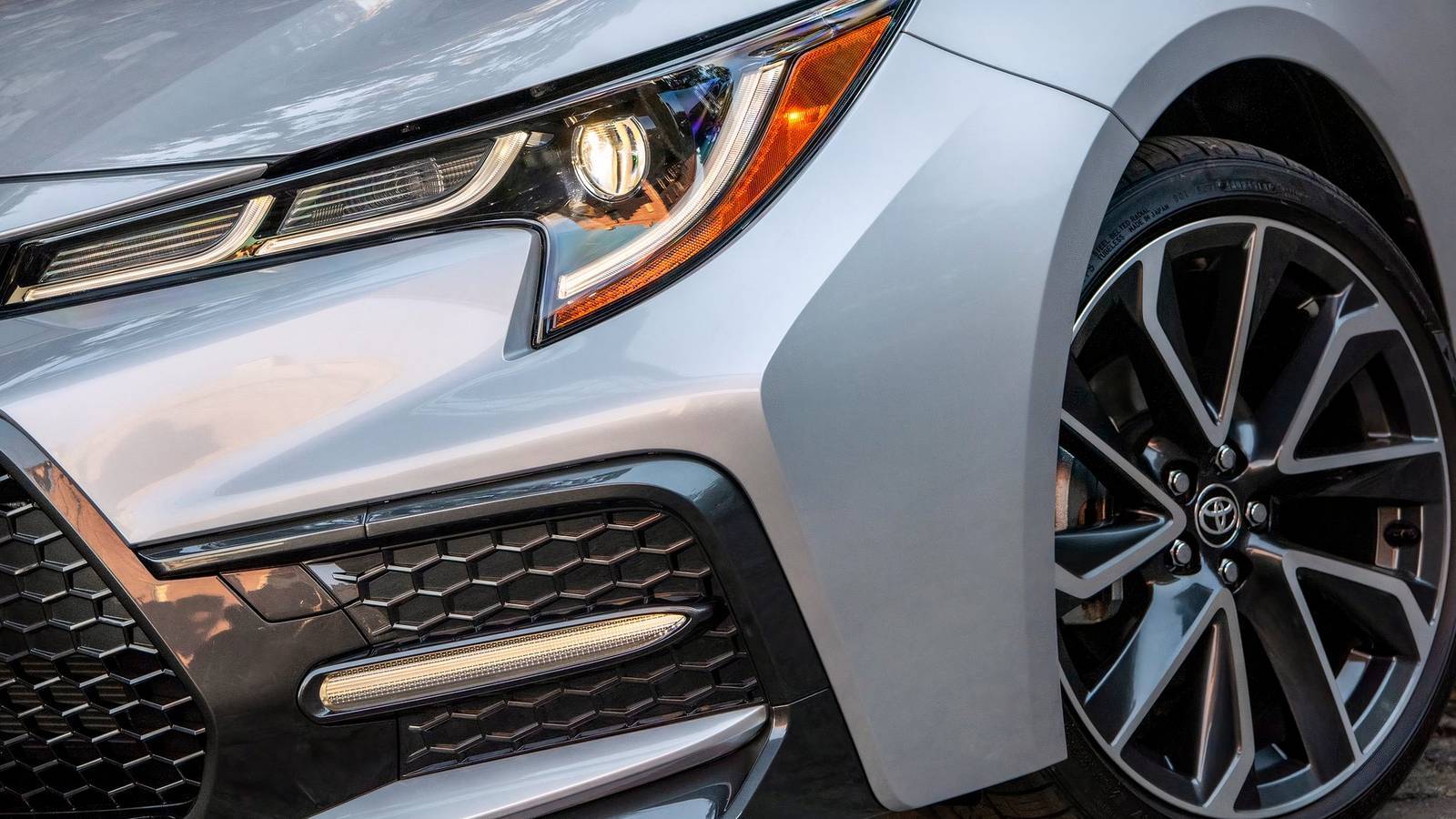
A recent study found that last year, 80.4% of all pre-owned 2025-model vehicles sold were painted black, white, silver, or gray, while that blend from 30-year-old cars was a much more equitable 47.3%. What on earth is driving Americans to choose such dull colors for their vehicles, especially in an era when paint technology is more advanced than ever, turning even affordable cars like the Toyota Corolla Cross into lustrous, eye-catching eye-catchers with a shine that wouldn’t be out of place on a Mercedes-Benz? Apparently, there are a few good reasons for consumers to go for the boring color scheme, but that won’t stop us from recommending you consider something a little bolder.
The Rising Popularity Of Grayscale
The study, published by researchers at iSeeCars, compared last year’s pre-owned sales of 2025-model cars with those of vehicles from 1996. For both eras, the most popular color is white – 25.7% today and 22.1% in 1996 – but that’s about the only commonality between the two. The study revealed that the second-most common shade three decades ago was red, comprising about 20% of all pre-owned sales of 1996 vehicles. At 14%, black rounded out the podium in 1996, while today, it’s the second-most popular color, representing 23.4% of all car sales last year.
Much more telling, however, is the staggering rise in popularity of gray and silver tones. For the 1996 vehicles included in the study, gray cars only represented 3.6% of sales while silver rang up 7.3%, making the two less popular by far than red, green, or blue. In fact, for 1996 cars, blue and purple colors matched the combined total of gray and silver exactly. These days, gray is the third-most common color at 22.9% of sales, while silver rings up a solid fifth at 8.4%. Blue is the only true color to crack into the top five today, where its 9.1% share is good for fourth.
Now Versus Then: Color Trends Over The Years

Opting for a ROYGBIV instead of gray or black isn’t a phenomenon that’s limited to the 1990s, either. American post-war enthusiasm was plainly evident in the explosion of available pastel colors, including soft pinks, yellows, and blues – often combined with two-tone or tone-on-tone contrasts. Anecdotal evidence suggests that white was still more common back then, but automakers weren’t afraid to give cars a chromatic personality. The 1955 Chevrolet Bel Air offered 15 different colors, only three of which were grayscale. European automakers exhibited the same trend; in 1956, Daimler-Benz offered 26 individual paint colors and 23 two-tone options, though predictably, the “Silver Arrow” brand made good on its nickname, making that color the most instantly recognizable choice.
The same was true of later decades as well. During the 1960s, colors got a little more saturated and a little less dainty, and metallic paint became more widely available. Dark blues and greens became more common, projecting an aura of seriousness and sophistication, especially in luxury cars. But youthful, sporty offerings from the late 1960s to the 1970s continued to boast an exuberant color palette – Mopar got especially creative, with names like Go Mango, Top Banana, Plum Crazy, Tor-Red, and Panther Pink. Plymouth even built a famous, one-off “Paint Chip Cuda,” which showcased each of the muscle car’s available colors on a single vehicle.
What Makes Gray, White, And Black So Popular Today?

Contrast those bold hues from previous decades with what’s available from automakers today, and you’ll find that modern cars are quite a bit more monochromatic than their predecessors. In 1996, for example, the humble Toyota Corolla came in nine colors – white, black, beige, two reds, two blues, one green, and one teal. Today, the compact car offers six shades of gray and only three genuine colors.
And in a paradox that rivals the chicken-and-egg dilemma, dealers tend to stock their lots with more neutral colors, presuming that whites and silvers will appeal to a wider cross-section than more polarizing tones. But if those same buyers are only being presented with grayscale choices, how will they select anything but? An extreme example is the now-discontinued Polestar lineup. Of the six paint choices offered on the Polestar 3 SUV, one is a very muted beige, and the other is dark blue – everything else is white, gray, or black. If you’re in the market and want something red or green, you’re SOL for more reasons than the brand’s imminent demise in the US.
Read the full article on CarBuzz
This article originally appeared on CarBuzz and is republished here with permission.
Read the full article here
6 Comments
I’ve been following this closely. Good to see the latest updates.
This is very helpful information. Appreciate the detailed analysis.
Solid analysis. Will be watching this space.
Great insights on Defense. Thanks for sharing!
Good point. Watching closely.
Interesting update on Unpacking America’s Obsession with Bland Car Colors. Looking forward to seeing how this develops.