

Listen to the article
Veterans from two sides of the world are teaming up as part of a unique partnership ushering in adaptive rock climbing to the estimated 100,000 disabled service members in Ukraine.
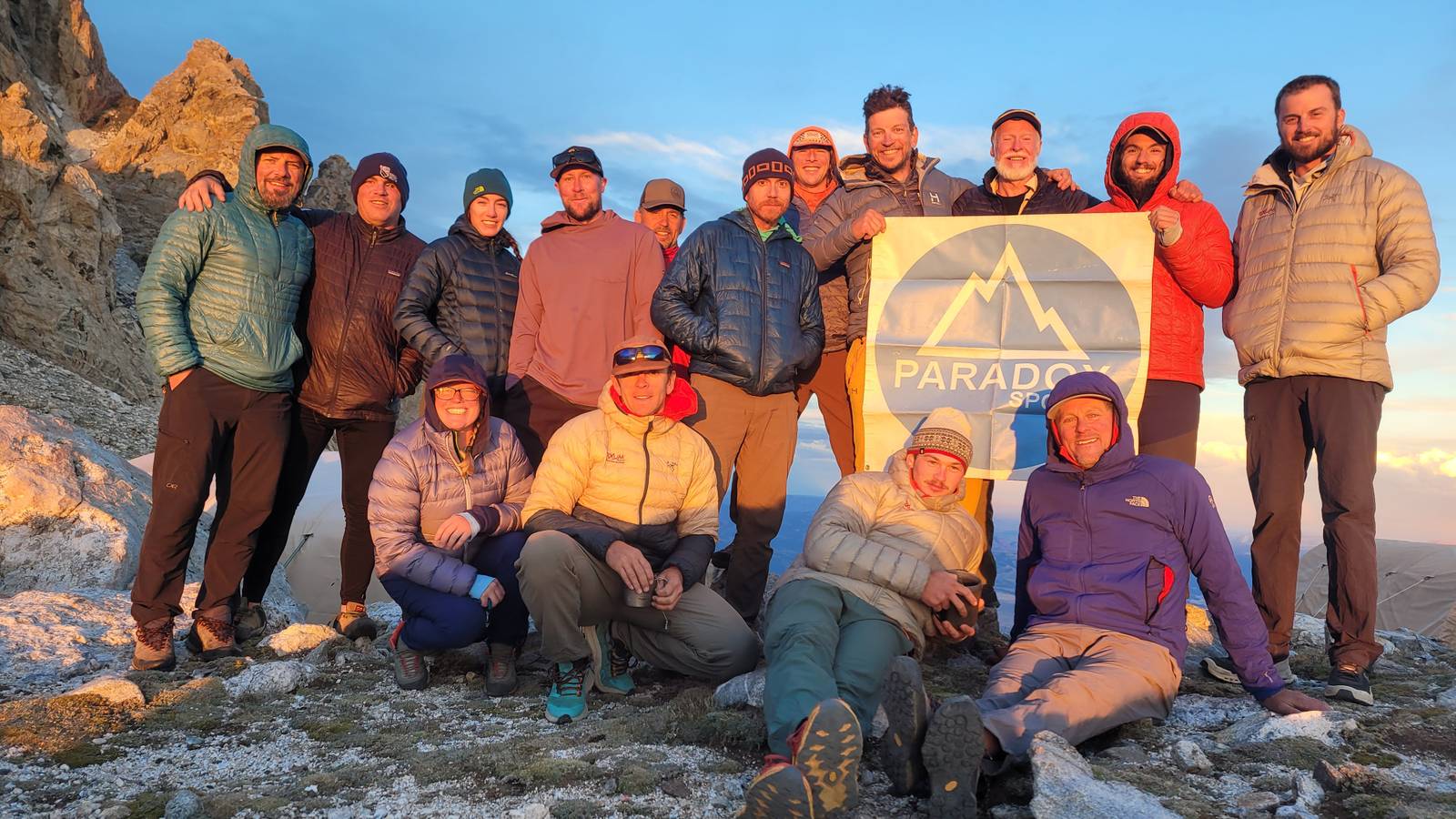
Paradox Sports, a nonprofit organization that makes rock and ice climbing accessible to people with physical disabilities, has partnered with another U.S.-based nonprofit, Razom for Ukraine, to launch a new climbing program for Ukrainian veterans. Members of both organizations begin the training sessions in Ukraine on Aug. 2, with climbing continuing until Aug. 6.
The sessions will involve adaptive climbing systems and equipment strategies, disability awareness best practices, volunteer and instructor training models, and approaches for growing climbing communities that welcome people with disabilities. Climbing community leaders and nonprofits Second Wind and Petros, both located in Ukraine, are supporting the program.
Leading the effort on the U.S. side are DJ Skelton, Paradox Sports co-founder and retired U.S. Army major and advisor to Ukrainian leadership on veterans’ affairs; and Alex Kosseff, executive director of Paradox Sports.
Wounded Veteran Finds Kinship in Ukrainians
Skelton’s life changed in November 2004 while deployed in Fallajuah, Iraq, when two grenades landed near him. At least one of them erupted, ejecting bullets and shrapnel into Skelton’s left arm, right leg and chest. A fragment also went through his right cheek, the roof of his mouth, and exited his left eye—resulting in the glass eye he has had ever since.
He spent 21 years in the Army, retiring in 2018. The partnership with Razom is not by accident.
“I’ve been going to Ukraine individually since shortly after the full-scale [Russian invasion]. … I’ve been going to Ukraine quite a bit on and off since 2023 in that capacity as an advisor,” Skelton told Military.com. “This is the first time that they’ve been looking at reintegration back into society and recovery through the lens of adaptive sports.”
He knew Razom since he had visited their office multiple times in Kyiv, so they were aware of Skelton’s background with climbing. He said some of the wounded veterans there that were stable enough had been looking around at how they could help others find growth and healing.
“It just seemed like a natural fit, but it’s kind of the first time right now that Ukraine kind of has some breathing space that they can take a look at some of these opportunities instead of [being] solely focused on trying to live,” he said.
How the Adaptive Rock Climbing Program Originated
Skelton and Kosseff extolled the benefits of adaptive climbing, including being a proven way to rebuild strength, manage PTSD, and regain confidence after life‑altering injuries and war trauma.
Redefining the possibilities and finding purpose among a like-minded community can be pivotal, notably in Ukraine where a war has waged on for more than four years and no end in sight. The New York Times recently estimated that there are at least 100,000 amputees in Ukraine.
Working at Paradox was a natural fit for Kosseff, who has had a 30-year history working in outdoor recreation and climbing. His prior job involved running the American Mountain Guides Association, working closely with Paradox to support technical systems and bring forward training for the organization’s 5,000 members.
He also knew Skelton whose presence, according to Kosseff, adds “gravitas” to the broader mission.
“It’s rare that one person sort of births an idea so much, but all the credit here goes to DJ,” he told Military.com. “He’s been doing a bunch of work in Ukraine. … He just brought the idea to me, and immediately it seemed like a really valuable application of the the technical and and interpersonal skills and other things that this organization has developed over the last almost 20 years. DJ gets all the credit there.”

Sam Sala, Paradox’s national program manager, is arguably “the most experienced person in adaptive climbing in the country,” according to Kosseff. Roughly 20 people are being trained as program instructors, some veterans and some with climbing experience.
With all the serious, life-altering injuries being sustained by Ukrainian fighters, Kosseff said there is an element of rehabilitation that comes with adaptive movements and physical activity.
“That team-building aspect of climbing can be really powerful in terms of building the brotherhood of the rope, or the sisterhood nowadays, too,” Kosseff said. “The connection, in terms of supporting each other and taking essentially each other’s lives in one’s hands, ties then into what I think we at Paradox see, but also Razom clearly sees is the need for community.
“A lot of people who go through a traumatic experience lose some of their connections and the community that they were part of before that experience. For the veterans who may be suffering from invisible injuries, PTSD and so forth, this community and sense of belonging that can come from these types of activities…cuts across the veteran community.”
Living a Post-Trauma Life
Programs like this are near to Skelton’s heart.
He described growing up able-bodied, just as any other military service member who enlists. When he woke up from his coma at Walter Reed Hospital, he began to comprehend and understand the gravity of his injuries—coming to the realization that he had permanent limitations and things that would never get fixed.
“[I’m] never going to get my eye back, never going to get my hand,” Skelton said. “That’s a pretty scary world to be in, I think, for a lot of us, especially those of us that are in the military. We’re used to being physically active and capable to do physical things, as well as mental.”

The physical emotions also translate into emotional roadblocks, as individuals like Skelton think of the bigger post-service picture. That means trying to find a job in the “real world,” or presenting oneself in public with stark scars and injuries.
The “chores of life,” as he put it, are part of these heavy day-to-day interactions.
“I found that going to the outdoors and learning how to adapt about what my new normal is going to be through these recreational outlets that were once a source of happiness for me, or something that’s new that I haven’t experienced before,” he said. “Nature has an incredible way to to soothe, right and heal.
“I can learn a lot about what my life is going to be like in this new chapter, in this new environment, with these new perceived limitations, to discover what I can do in light of what the medical prognosis is, and to gain the self-confidence, self-strength that can then carry over to those heavier aspects of life.”
Read the full article here
6 Comments
Interesting update on US, Ukrainian Nonprofits Team Up to Offer Adaptive Rock Climbing Lessons to Disabled Veterans. Looking forward to seeing how this develops.
Good point. Watching closely.
This is very helpful information. Appreciate the detailed analysis.
Solid analysis. Will be watching this space.
I’ve been following this closely. Good to see the latest updates.
Great insights on Defense. Thanks for sharing!