

Listen to the article
Dr. Shannon Carpenter is a rare breed among doctors. She wants to see fewer patients.
The shoulder and elbow surgeon at the Kansas City VA Medical Center is finding ways to prevent bone fractures before they happen. She told Military.com that fragility fractures pose a serious, under-discussed threat to aging veterans, especially women, saying that prevention starts with the patient.
As the population of aging women veterans grows and osteoporosis rises, according to the Department of Veterans Affairs (VA), Carpenter believes bone-density screening should begin at age 40, rather than 50.
“Everyone builds bone until about the age 30 to 35, and after that we all start to lose bone density,” she said. “So, a scan at 40 is not about diagnosing disease. It is about discovering whether someone [has] reached their peak bone mass and bringing the conversation about bone health into midlife where it belongs.
“That is the season when diet, exercise and lifestyle changes can make a real difference in protecting someone’s ‘bone span’—our term for how long a person’s skeleton will support independence in their life.”
Curiosity Sparks Change
Growing up, Carpenter was always curious about the shoulder’s inner workings.
She was an athlete in high school and worked as an athletic trainer in college, treating track and field throwers and volleyball players. Carpenter sees the shoulder as one of the most complex joints in the human body.
“Getting it right gives people back the things they love: lifting a grandchild, reaching a shelf, sleeping through the night,” Carpenter said. “I was drawn to the mix of intricate anatomy and the dramatic quality-of-life difference good care makes.
“Over time, I saw how often shoulder problems and bone health intersect—especially in women—and that connection became my focus.”
Carpenter began treating veterans as a Vanderbilt University intern more than 15 years ago. She’s worked as a VA surgeon for the past six years. Her two decades of treating veterans has led her to realize that they must begin bone density tests earlier to avoid injuries as they get older.

Injuries Carpenter sees on a regular basis include rotator cuff tears, shoulder arthritis and fractures. However, the most important factor for her is pinpointing fragility and how often a wrist, shoulder, hip or spine breaks from a low-energy fall.
Carpenter also serves as the founder/chief executive officer of The Bone Health Clinic in Lenexa, Kan. In May, she was honored as the first orthopedic surgeon to receive the Bone Health & Osteoporosis Foundation’s Robert F. Gagel, M.D. Community Leadership Award.
“I do not do this work for recognition, so an award like this means the community sees the same gap I see and wants it closed. The honor really belongs to the patients who trust me and the team that shows up every day,” Carpenter said. “It also tells me the message about bone health is landing and that motivates me to push harder for change.”
Ways to Improve Density
Bone density can be measured in different ways. Sometimes, an injury is the way people find out.
One out of every two women over age 50, and one out of every four men, will have an osteoporotic fracture in their lifetime. But most are never screened, diagnosed or treated, according to Carpenter.

“That fracture is often the first sign of osteoporosis, and it is a warning we cannot ignore,” Carpenter said.
There are several other ways veterans can improve bone density with age, including the following:
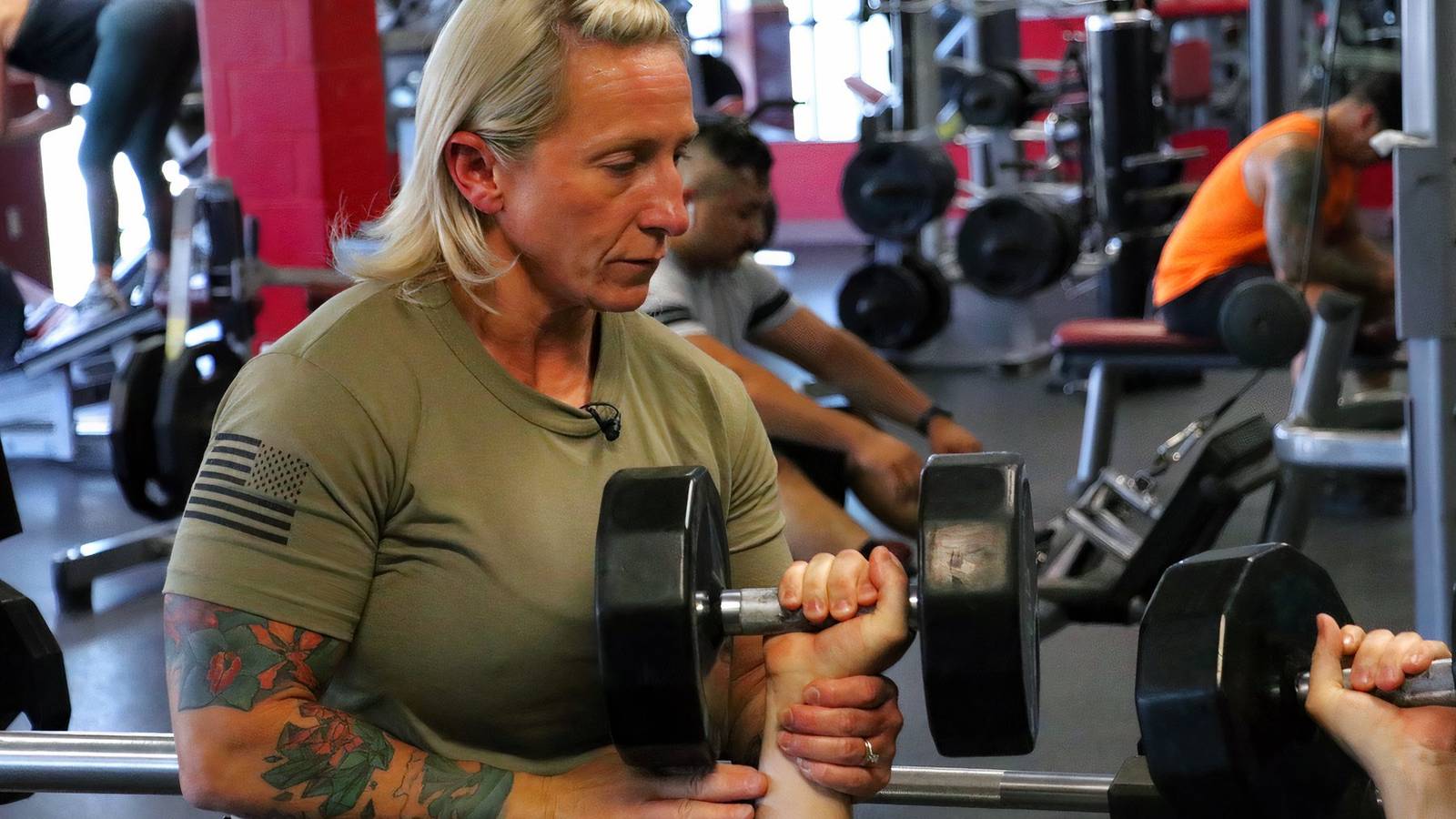
- Resistance and impact training as bone responds to load, so lifting weights and weight-bearing exercise directly builds it.
- Protein and calcium at every meal, plus adequate vitamin D to help maintain muscle mass with aging.
- Address hormones. For women, the menopause transition accelerates bone loss and “hormone therapy is worth discussing with your physician,” according to Carpenter.
- Stopping the silent drains, or avoiding a sedentary lifestyle, smoking, excess alcohol, and untreated deficiencies.
- Getting a scan and knowing one’s numbers can lead to earlier treatment, while medications can rebuild bone.
For middle-aged veterans, Carpenter has a warning: a broken bone after 50 is not just bad luck; it is a signal.
“My mission is to change that, to prevent the fracture before it happens,” Carpenter said. “To encourage people to prevent fractures and age successfully.”
Read the full article here
6 Comments
Interesting update on VA Doctor Warns of Serious, Quiet Threat Plaguing Aging Veterans. Looking forward to seeing how this develops.
Solid analysis. Will be watching this space.
Great insights on Defense. Thanks for sharing!
This is very helpful information. Appreciate the detailed analysis.
I’ve been following this closely. Good to see the latest updates.
Good point. Watching closely.