

Listen to the article
A malfunction involving a backup diesel generator aboard a U.S. ballistic missile submarine sent more than 60 sailors and civilian workers for medical evaluation after they were exposed to exhaust fumes, highlighting how systems can pose serious risks inside the confined environment of a submarine.
The incident occurred June 22 aboard the USS Nebraska while the submarine was moored at Naval Base Kitsap-Bangor in Washington state during a routine pier shift. Personnel near an operating diesel generator began reporting symptoms consistent with inhalation of exhaust fumes, including headaches, dizziness, nausea and respiratory irritation.
A total of 64 sailors and civilian workers sought medical evaluation following the exposure. Six individuals were transported to local hospitals for observation and later released, while the remaining personnel received treatment and monitoring without requiring admission.
The Navy said the submarine’s crew cleared the vessel’s atmosphere and restored normal conditions after the incident.
Navy officials have not yet identified the exact cause of the malfunction. Investigators are examining whether the issue originated in the generator itself, the exhaust system or associated ventilation equipment.
Role of Diesel Systems on Nuclear Submarines
Although ballistic missile submarines rely on nuclear reactors for propulsion and primary electrical power, they are also equipped with diesel generators that serve as backup or emergency power sources. These systems are often used while submarines are in port.
And though nuclear-powered submarines do not rely on atmospheric oxygen for propulsion, their emergency diesel generators still require a continuous supply of air to operate and produce exhaust gases as a byproduct. Those gases are routed through dedicated exhaust piping and discharged outside the vessel, while onboard ventilation and atmosphere-control systems are designed to keep contaminated air isolated from crew spaces.
Since a diesel engine cannot operate in a sealed environment, it is only used when the submarine is configured to take in outside air and vent exhaust. If exhaust routing or ventilation systems malfunction, those gases can enter the ship’s atmosphere and accumulate quickly in confined compartments.
Diesel exhaust contains carbon monoxide, nitrogen oxides and fine particulate matter—all of which can cause acute respiratory and neurological effects when inhaled. Exposure commonly produces headaches, dizziness, nausea and irritation of the eyes and respiratory tract, while higher concentrations of carbon monoxide can impair oxygen delivery in the bloodstream and lead to more serious medical consequences, including death.
Navy officials said the submarine’s nuclear propulsion system was not involved in the incident and continued operating normally, indicating the exposure was confined to the backup diesel generator and its associated exhaust or ventilation systems.
Strategic Vessel, Routine Risks
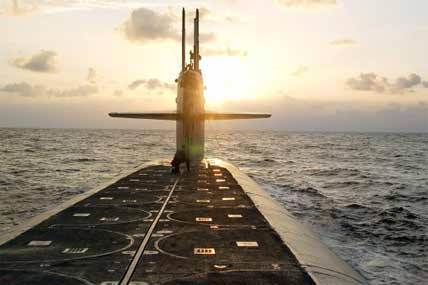
USS Nebraska is one of 14 Ohio-class ballistic missile submarines that form the sea-based leg of the United States’ nuclear deterrent. These submarines carry Trident II ballistic missiles and are designed to remain undetected while on patrol for extended periods.
Naval Base Kitsap-Bangor, where the incident occurred, serves as the home port for a majority of the Navy’s ballistic missile submarine fleet. The base will also play a central role in hosting the newer Columbia-class submarines, which are currently under construction to replace the aging Ohio-class fleet over the coming decades.
While these submarines are primarily associated with nuclear deterrence missions, much of their operational life involves maintenance, inspections and testing while in port. These activities require the use of backup systems, including diesel generators.

Officials have said that corrective measures will be implemented once investigators determine the root cause.
Incidents involving nuclear-powered submarines often draw attention to reactor safety, yet the Nebraska case demonstrates that conventional onboard systems can also present immediate dangers when they malfunction. The confined and controlled atmosphere of a submarine leaves little margin for error when ventilation or exhaust systems fail.
The Navy reported that USS Nebraska has returned to normal operations. Investigators are expected to focus on whether procedural changes, equipment repairs or broader fleet-wide inspections are necessary to prevent similar incidents in the future.
Read the full article here
6 Comments
I’ve been following this closely. Good to see the latest updates.
Good point. Watching closely.
This is very helpful information. Appreciate the detailed analysis.
Great insights on Defense. Thanks for sharing!
Interesting update on 60-Plus Navy Sailors on Submarine Sickened by Diesel Generator Malfunction. Looking forward to seeing how this develops.
Solid analysis. Will be watching this space.