

Listen to the article
The American Revolution is often remembered as a clean story of liberty, courage and founding ideals. Former U.S. Navy officer Ray Deptula sees something rougher, more violent and more useful for Americans today.
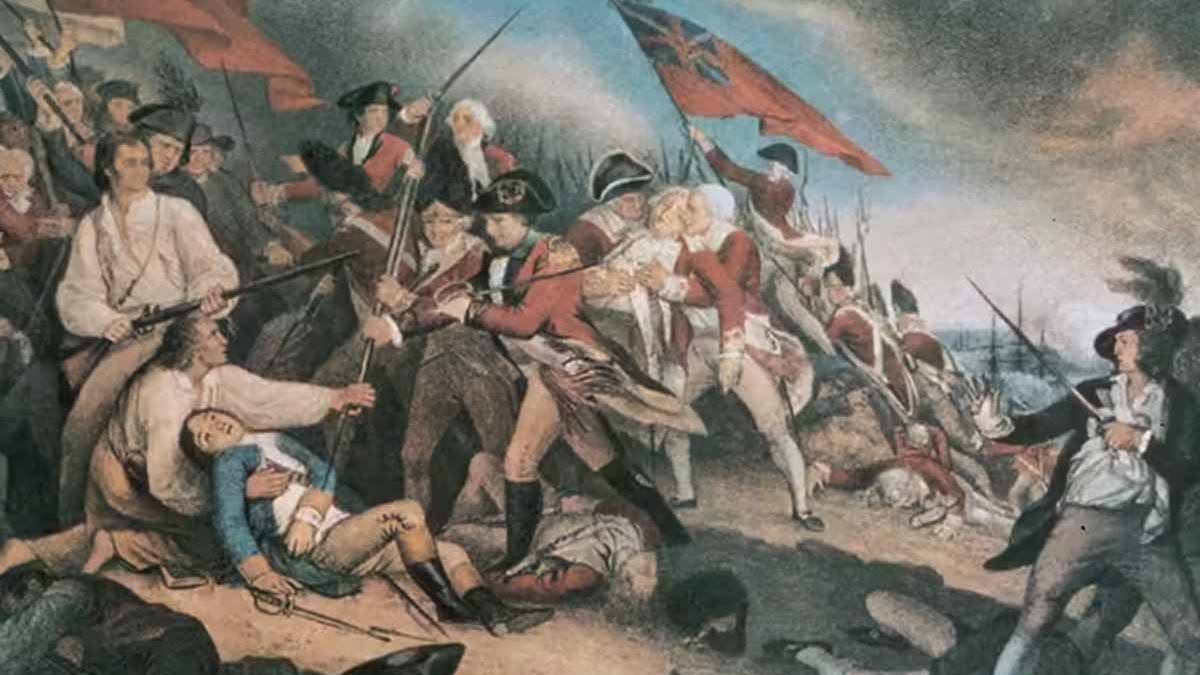
Deptula, author of Can’t Find My Way Home, the second book in his two-book Those Damned Yankees series, said the Revolution was not simply a patriotic uprising told through famous names and polished speeches. It was also a brutal war fought in towns, farms and backcountry communities where political division could turn deadly. “The history does not ever focus on how horrible it was, how messy it was, how violent it was,” Deptula said in an interview.
The Revolution Was Not as Unified as Memory Suggests
The Revolution began in Massachusetts, but it did not stay there. Fighting spread through the middle colonies and into the South, where the war increasingly became local, personal and vicious. The Southern Campaign became the principal theater of the war after the British captured Charleston in May 1780, and fighting in the Southern colonies continued throughout the conflict, not merely in a handful of famous battles.
Deptula said Americans often forget that many colonists did not agree on independence. He described a population split among Patriots, Loyalists and people trying to stay out of the fight. The common “thirds” formulation comes from John Adams and still appears in educational materials, though historians often treat it as a rough simplification rather than a precise census. Some historical summaries estimate Loyalists closer to 20% of the population, with a substantial neutral or cautious middle.
Deptula’s larger point does not depend on exact percentages. The Revolution was politically fractured enough that neighbors could become enemies. In parts of the South, Patriot and Loyalist forces fought each other directly, and the backcountry saw some of the war’s worst brutality.
The Battle of Waxhaws, also known as Buford’s Massacre, has been described as one of the most infamous episodes of wartime violence in the backcountry.
A Superpower Can Still Misread a Smaller Enemy
Deptula also sees military parallels between Britain’s experience in the Revolution and America’s later wars in Vietnam and Afghanistan. His point is not that the conflicts were identical. It is that a powerful military can still lose political control of a war when its assumptions, strategy and public support collapse.
Britain had the stronger navy, the professional army and the imperial reach. The Americans lacked a comparable military structure and often relied on militias and a fragile Continental Army.
Yet the war became harder for Britain as it expanded, especially after the French entered the conflict. Britain was forced into a grinding fight across difficult political and geographic terrain.
Deptula said the British faced a problem familiar to modern military planners: “They were a superpower, who decided to take on a militarily inferior foe,” but that enemy did not always fight on the stronger power’s terms.
Vietnam, Afghanistan and the American Revolution differed in ideology, geography, international law and historical context. Yet Deptula’s warning is sound as a general principle: military superiority does not guarantee strategic success.
Wars depend on legitimacy, endurance, political will and the ability to understand the society in which the fighting occurs.

Washington’s Army Came Close to Losing
Deptula also rejected the idea that American victory was inevitable. The war could have failed more than once, he said, particularly after the Battle of Long Island in 1776.
That claim has strong historical support. The Battle of Brooklyn, also known as the Battle of Long Island, was a major American defeat shortly after independence was declared. Washington’s army escaped across the East River to Manhattan, preserving the Continental Army even though New York remained under British control for the rest of the war.
The escape illustrated Washington’s strategy, which often depended less on winning decisive battles than on keeping the army alive. Deptula said Washington’s genius was survival: avoiding fights that could destroy his force, preserving enough capacity to continue the war and keeping the revolutionary cause from collapsing before foreign support could change the balance.
The Founding Was Argument, Not Consensus
For Deptula, the Revolution also speaks to the present because American political conflict is not new. The country’s founding generation argued intensely over rights, power, representation and the structure of government.
The Declaration of Independence itself was not just a statement of ideals; it included 27 grievances against King George III meant to justify separation.
Deptula said Americans too often invoke the Founding Fathers without understanding what they actually argued about or why the Constitution was structured as it was.
The Constitution, the Bill of Rights and the Declaration are frequently used in modern political arguments, but their history is more complicated than slogans allow.
The Declaration asserted natural rights and government by consent, while the founding era also tolerated slavery and excluded many people from political equality.
Deptula argues that understanding the debates, compromises and competing interests behind those ideas provides a more complete picture of the nation’s founding than the simplified version many Americans remember.

What Has Not Changed
Deptula’s argument is that technology changes faster than human nature. Weapons, institutions and media environments evolve, but ambition, fear, loyalty, greed, courage and self-interest remain recognizable across centuries.
His military background shapes that view. Deptula spent 24 years in the Navy, including service as a naval aviator and later as a political-military officer. He said military service taught him that people enter the armed forces for different reasons, but hardship strips away abstractions. What remains is loyalty to the person next to you.
“That’s what motivates you,” Deptula said. “Everything else gets stripped away when you come into the military.”
As the country approaches the 250th anniversary of independence, the Revolution may be most useful when remembered honestly.
It was not a simple national origin story. It was a war of ideals and interests, courage and cruelty, unity and division. Deptula’s warning is that Americans should not mistake distance for difference. The past is not the present, but it can still expose the habits a country carries forward.
Read the full article here
6 Comments
I’ve been following this closely. Good to see the latest updates.
This is very helpful information. Appreciate the detailed analysis.
Interesting update on Former Navy Officer Says the American Revolution Was More Divided Than Most Americans Realize. Looking forward to seeing how this develops.
Good point. Watching closely.
Great insights on Defense. Thanks for sharing!
Solid analysis. Will be watching this space.