

Listen to the article
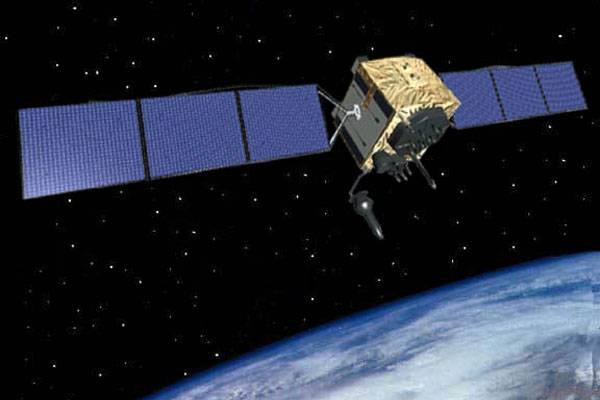
GPS has become a foundational technology for modern navigation. Commercial aircraft use it, ships rely on it at sea, drivers depend on it for direction, and military forces use it across nearly every domain. Autonomous systems have only increased that dependence, using GPS not just to determine position but to navigate, coordinate, and complete missions.
The challenge is that GPS is not invulnerable.
Electronic warfare systems can jam GPS signals, preventing receivers from obtaining a usable position. More sophisticated systems can spoof GPS, transmitting false signals that cause a receiver to calculate an incorrect location. In other environments, GPS may simply be unavailable because signals cannot penetrate underground mines, dense foliage, tunnels, or water.
As military planners increasingly assume future conflicts will involve contested electromagnetic environments, interest is growing in technologies that can continue navigating when GPS becomes unavailable or unreliable.
Among the companies working on that challenge is Silicon Valley-based ANELLO Photonics. In a recent interview with Military.com, CEO and co-founder Dr. Mario Paniccia argued that GPS-denied navigation is rapidly becoming a requirement for modern systems rather than a specialized capability.
“I think anything going forward that’s autonomous must have the ability to operate not only in GPS-denied, but in GPS-spoofed environments,” Paniccia said. “I think there’s nothing we should be selling or making that—as an autonomous system—cannot operate in a GPS-denied environment.”
From Theoretical Risk to Operational Reality
The military has long understood that GPS could be disrupted. Recent conflicts have demonstrated just how common those disruptions have become.
In Ukraine, both sides routinely employ electronic warfare systems to interfere with drones and other platforms. GPS interference has also become increasingly visible in the Middle East, where navigation disruptions have affected both military and civilian systems.
According to Paniccia, those developments have changed conversations within the defense community.
“The first things that are going to go are comms and GPS,” he said. “Jamming and spoofing are already happening today.”
The problem extends beyond unmanned aircraft. Modern militaries are investing heavily in autonomous surface vessels, robotic ground vehicles, underwater systems and other platforms that depend on accurate positioning information. Even human-operated systems increasingly rely on GPS for navigation and situational awareness.
The result is a growing focus on enabling navigation systems that can continue functioning when GPS signals are jammed, spoofed, or unavailable.
Why Existing Alternatives Are Not Enough
One approach to GPS-denied navigation relies on cameras and computer vision. By comparing what a vehicle sees against maps or known terrain features, a system can estimate its position.
That approach can work well under the right conditions. It becomes more difficult over open water, in fog, under cloud cover, over snow, or in other environments with few identifiable features.
The military has another option: inertial navigation systems built around high-performance fiber optical gyroscopes (FOGs). These systems measure movement and rotation directly rather than relying on external signals.
Paniccia emphasized that the underlying concept for their Silicon Photonics Optical Gyro (SiPhOG™) is not new. High-end fiber optical gyroscopes have existed for decades, and some are already used in some of the military’s most demanding navigation applications.

The technology works exceptionally well, however, which is one reason submarines can remain submerged for months and still know their location with remarkable precision.
The challenge, he said, has been making that level of performance available in systems that are small, affordable and scalable enough for the rapidly growing autonomous market.
“It’s not that we created the fiber gyro. It’s been around a long time,” Paniccia said. “The reason fiber gyros work, and why you can launch an ICBM [Intercontinental Ballistic Missile] and put it through a window, is because they have a $100,000-$200,000 gyro in that thing.”
ANELLO’s goal was to take the same fundamental principles behind those high-end navigation systems and shrink them into a form factor suitable for drones, autonomous vessels, robotic ground vehicles, and other platforms that cannot accommodate the size, weight, power requirements, or cost of traditional FOG systems, Paniccia added.
Shrinking Optical Navigation
Before founding ANELLO, Paniccia spent more than 20 years at Intel helping develop silicon photonics—a technology that uses semiconductor manufacturing techniques to place optical components onto silicon chips and allowing them to communicate using fiber.
That technology is now widely used across all the major data centers around the world. At ANELLO, the company applied that same concept of integrated silicon photonics to navigation.
Its core technology, known as a Silicon Photonics Optical Gyroscope, or SiPhOGTM, miniaturizes many of the optical components traditionally found in larger navigation systems. Rather than relying solely on GPS, the system uses inertial measurements to track movement and orientation.
Paniccia described the effort as taking a laboratory table-top full of optical equipment and shrinking it into a device that fits in the palm of a hand. The company combines those SiPhOGs with additional sensors and software that can compare inertial measurements against GPS data.
If GPS appears unreliable, navigation can continue using the ANELLO inertial system until trusted signals become available again.
How Accurate Is It?
The basic concept behind inertial navigation is straightforward.
Instead of determining position by listening to satellites, the system starts from a known location and continuously tracks movement. By measuring how fast a vehicle is moving, how far it has traveled, and every change in direction, it can estimate where it should be even when GPS becomes unavailable.
The challenge for any GPS-independent navigation system is not simply continuing to operate after losing satellite signals; it is the accumulation of small errors over time and distance. The system must remain accurate enough to be useful. A slight error in measuring a turn or a small miscalculation in movement can gradually push a vehicle farther from its actual position.
According to Paniccia, that is why high-end inertial navigation systems have historically relied on extremely precise fiber optical gyroscopes. He pointed to a series of tests involving ground vehicles, drones, surface vessels and underwater systems that demonstrate ANELLO’s performance.
In one ground-vehicle demonstration, ANELLO disconnected GPS midway and continued without GPS for the roughly 100-kilometer drive. He said the vehicle completed the route and finished about 100 meters off its GPS-derived position when the signal was restored.
Paniccia said that amounted to a roughly 0.1% error over the distance traveled, or 99.9% accuracy with just ANELLO. It included no cameras, no visual aiding, no LIDAR.

He described similar results during maritime testing. During evaluations involving Unmanned Surface Vessels (USVs), the company reported navigation errors of approximately 1% to 1.5%of distance traveled—translating to a 98.5% accuracy rate—after GPS was removed from the navigation solution.
For unmanned aircraft, Paniccia said tests on fixed-wing platforms produced navigation errors generally below 2% of distance traveled and, in many cases, are now approaching 1% error of distance traveled. Those tests were designed to determine whether a drone could continue navigating through GPS-denied environments long enough to get close to and reach its target area.
For underwater vehicles, where GPS signals cannot penetrate water at all, Paniccia cited testing that produced errors as low as 0.1% when paired with highly accurate Doppler velocity logs to measure velocity relative to the ocean floor bottom.
One Problem, Many Applications
A notable aspect of the interview was how many different environments share the same navigation challenge.
Paniccia discussed commercial applications involving autonomous agricultural sprayers operating beneath dense orchard canopies, mining vehicles working underground, and construction equipment operating where satellite signals may be degraded.
The same challenge appears in defense applications.

He described work involving ground vehicles, unmanned aircraft, autonomous surface vessels, mine-clearing systems and underwater vehicles. Although the platforms differ dramatically, each requires reliable navigation even when GPS cannot provide it.
That need has become particularly important as militaries invest in autonomous systems. A drone that loses its position, a robotic vehicle that cannot determine its route, or an autonomous vessel operating with incorrect navigation data can quickly become ineffective and not complete the mission—these all post safety concerns.
Preparing for a GPS-Denied Future
The broader significance of GPS-denied navigation extends beyond any single company.
Modern military planning increasingly assumes that future operations will involve contested electromagnetic environments. This is now a well-accepted fact. Communications may be disrupted. GPS may be degraded, spoofed, or unavailable altogether. Systems that can continue operating under those conditions offer a degree of resilience that many defense officials now view as essential.
For ANELLO, that shift has translated into growing demand. Paniccia said the company recently raised $25 million to expand production and has received Department of Defense support to increase manufacturing capacity via an APFIT award for production.
The larger story, however, is not about one product. It is about a changing assumption.
For decades, GPS became so reliable and widespread that many systems were designed around the expectation that it would always be available. Recent conflicts suggest that assumption may no longer hold. The question facing militaries is no longer whether GPS can be disrupted.
The question is what happens next.
Read the full article here
5 Comments
I’ve been following this closely. Good to see the latest updates.
Good point. Watching closely.
This is very helpful information. Appreciate the detailed analysis.
Solid analysis. Will be watching this space.
Interesting update on What Happens When GPS Can No Longer Be Trusted? Military Defense Tech in 2026. Looking forward to seeing how this develops.