

Listen to the article
A NATO counter-drone exercise in the Netherlands this past spring offered a glimpse of what military leaders increasingly view as one of the most pressing challenges in modern warfare: how to manage crowded, contested airspace filled with drones, sensors and counter-drone systems operated by multiple organizations and nations.
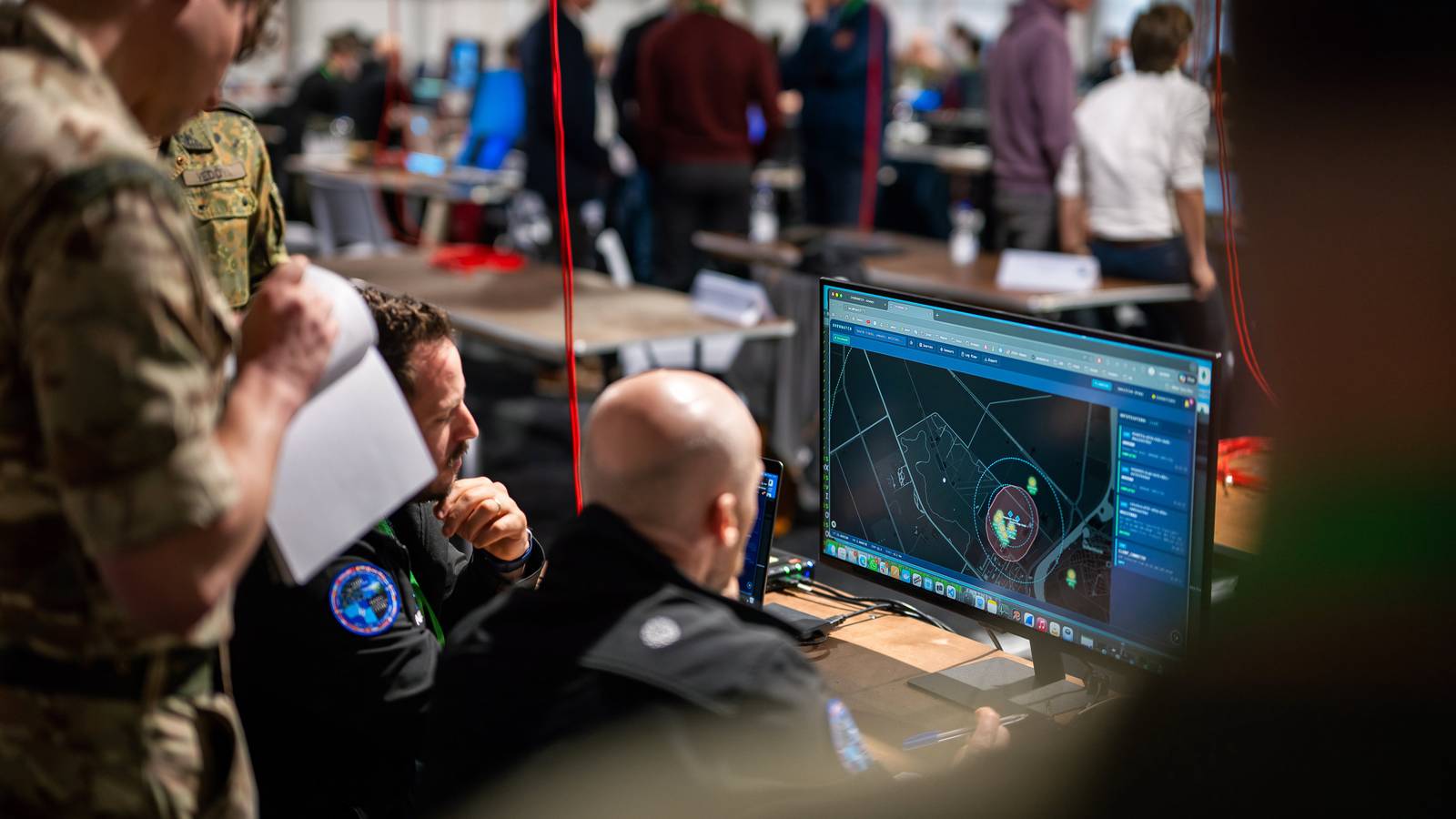
The exercise, known as Technical Interoperability Exercise 2026 (TIE26), brought together roughly 300 participants, more than 60 systems, and dozens of command-and-control applications to test whether counter-drone technologies from different countries and companies could work together in a common operational environment.
Among the participants was Airwayz, a defense technology company focused on low-altitude airspace governance. During the exercise, the company’s OVERWATCH command-and-control platform served as the lead command-and-control system for Team BRAVO and received NATO certification under the alliance’s SAPIENT interoperability framework, according to information released following the exercise.
For Airwayz Executive Chair Yaron Rosen, a retired Israeli Air Force brigadier general and former chief of the IDF cyber staff, the significance of the exercise extends far beyond technical testing.
“We are entering a world where autonomous systems are becoming part of everyday operations,” Rosen told Military.com. “The next decade or two will be about synchronizing human and autonomous activity in the physical world.”
Why Drones Are Changing the Battlefield
Rosen argues that the rapid growth of drones is forcing militaries to rethink traditional assumptions about air power and airspace control.
For decades, government-built systems designed to manage conventional aircraft operating in relatively predictable environments. The explosion of inexpensive commercial drones has created a different challenge.
Small unmanned systems now perform missions ranging from surveillance and logistics to precision strikes, while adversaries can acquire capabilities once available only to advanced militaries.
“What began as a handful of drones evolved into a huge shift toward autonomous systems,” Rosen told Military.com. “Managing this increasingly crowded and contested airspace using disconnected systems is just impossible.”
Recent conflicts have accelerated that shift. NATO has identified lessons from the war in Ukraine as a major driver behind its counter-drone experimentation efforts, particularly the growing use of interceptor drones and low-cost unmanned systems on the battlefield.
Rosen compared today’s low-altitude airspace environment to cyberspace roughly two decades ago, when governments and companies were still learning how to secure rapidly expanding digital networks.
What happened in the last decade in cyberspace was the development of governance, visibility, orchestration and command layers. Now, we’re seeing the same thing in airspace.
He argues that airspace is only the first manifestation of a much broader trend. As autonomous systems expand across air, land, maritime and critical infrastructure environments, the same need for governance, visibility and orchestration will emerge across every domain where humans and autonomous systems operate together.
The NATO Interoperability Challenge
The central purpose of TIE26 was interoperability, or NATO’s ability to ensure systems from different countries can exchange information and operate together effectively.
Participants tested commercial and military counter-drone technologies under realistic operational conditions to determine which systems could integrate into NATO’s broader defense architecture.
That challenge becomes particularly important because NATO operations routinely involve multiple nations, agencies and military services.
“Interoperability is a prerequisite to coping with drones,” Rosen said. “If you say you’re building a drone wall—as Europe is building a drone wall on their east side—how do you do that when you have that many countries?”

Operationally, Rosen said the goal is to create a common operating picture that allows organizations to track threats as they move across jurisdictions and organizational boundaries.
“If you don’t have the command and control talking to all these nodes, there’s no way you’re going to intercept it,” he said.
Technology Is Only Part of the Problem
Despite the technological focus surrounding drones and counter-drone systems, Rosen believes the larger challenge is organizational.
Asked whether the primary obstacle is technological, organizational or doctrinal, he pointed squarely at the latter two. Organizational shortcomings can have real battlefield consequences.
Rosen argued that forces often struggle to distinguish friendly drones from hostile ones when multiple units operate unmanned systems in the same area. He cited cases in which troops have mistakenly engaged their own drones because they lacked a common operating picture.
“Forces shoot their own drones because they see a drone, and they think it’s a bad one. But it’s just a battalion next to you,” he said.

At one time, the IDF destroyed roughly 40% of its own unmanned aerial systems, underscoring the difficulty of identifying friendly drones in crowded airspace.
Rosen described conversations with military, law enforcement and emergency management officials who often struggle with overlapping authorities and fragmented information. Different organizations maintain separate systems and procedures, making coordinated responses difficult during fast-moving incidents.
He also argued that common operating pictures and shared command systems can help address those challenges, while changing organizational culture may take longer than developing the technology itself.
“The technology will be faster, but the organizational change will take at least a decade,” he said.
Preparing for the Next Phase of Drone Warfare
Looking ahead, Rosen expects both offensive and defensive drone capabilities to continue evolving rapidly.
One concern is the growing threat posed by drone swarms and mass attacks involving large numbers of inexpensive systems.
“We need to think about how to intercept swarms,” Rosen said.

NATO has similarly emphasized the need to connect sensors, command-and-control systems and effectors into integrated defensive networks rather than relying on individual technologies alone. For Rosen, that broader challenge is ultimately what TIE26 was designed to address.
The future of drone warfare, he argued, will not be determined solely by who builds the best drone or the best counter-drone system. It will depend on whether militaries can create the infrastructure needed to manage an increasingly complex battlespace environment before adversaries exploit the gaps.
“The only thing that’s going to change the reality,” Rosen said, “is the development of the infrastructure layer and the governance layer that creates visibility, orchestration, and command.”
“Today the sense of urgency is in the low-altitude battlespace, and very quickly, it will expand into all other domains,” he added.
Read the full article here
6 Comments
Great insights on Defense. Thanks for sharing!
Solid analysis. Will be watching this space.
This is very helpful information. Appreciate the detailed analysis.
Good point. Watching closely.
Interesting update on NATO Drone Exercise Amplifies International Battle for Military Airspace Control. Looking forward to seeing how this develops.
I’ve been following this closely. Good to see the latest updates.