

Listen to the article
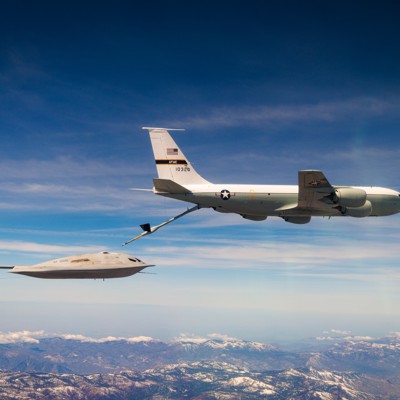
Plans to field a next-generation replacement Air Force tanker are being pushed aside in the latest budget request as the service looks to invest in upgrades and new technologies for existing refueling systems instead.
Funding for the Next-Generation Air Refueling System, or NGAS, was zeroed out in the 2027 budget request. The prior year, the initiative to develop a future refueling aircraft received nearly $12 million.
Instead, the service requested $13 million under a new budget line titled “Advanced Tanker Systems,” service officials told reporters Tuesday during a Pentagon budget briefing. That money, if approved, will go to “mission systems as opposed to platform,” while analysis on a future replacement aircraft continues. The funds would come directly through the baseline budget, not additional supplemental funding from Congress.
“We are shifting to what’s called advanced tanker systems,” Maj. Gen. Verdugo, the Air Force’s deputy assistant budget secretary said. “It’s looking to offer more options than just NGAS, and to make sure that our future advanced tanker systems are more resilient and can operate in contested environments.”
Some defense experts fear the service’s delayed push for a tanker replacement will create a future imbalance between crucial support aircraft and the service’s growing combat fleets. The Air Force’s latest budget request includes asks for 24 F-15EX and 38 F-35 jets as well as a multi-billion investment for development and production of the next-generation F-47 fighter and B-21 bomber. Though the service is also requesting funds to purchase 15 KC-46s, it plans to retire around 20 of its aging KC-135 tankers—which are already taking heavy battle damage in the Iran war.
Recent calls for a new tanker began in early 2023, but little progress has been made to make the next-generation replacement a reality. One former military official said having a fleet of lethal combat aircraft is important, but not having a modern tanker to support them could be detrimental to a future fight.
“When you don’t make it a priority, this is as fast as you can go,” the former military official said. “When, when bombers and fighters are the priority, and I’m not saying that they shouldn’t be, and that you don’t understand how the mobility can fit into the programming strategy, this is what happens. You just get eked along.”
Current and former air mobility leaders have raised concern in recent weeks over the aging refueling fleet and have also called for much-needed upgrades to the service’s legacy KC-135s after six airmen died last month in a tanker crash during Operation Epic Fury.
“I cannot have a 90-year-old tanker refueling a B-21, and if you do the math, as we reach the end of programs for things, that’s the reality,” Lt. Gen. Reba Sonkiss, the interim head of Air Mobility Command, told reporters in February.
Air Mobility Command leaders have warned that the service’s mobility fleet lacks the key communications and connectivity upgrades needed for full awareness of enemy and friendly aircraft in chaotic combat zones. Those upgrades are one of the initiatives being looked at under the Advanced Tanker Systems budget line, a service spokesperson told Defense One.
“Overall, the Air Force continues to explore options based on NGAS Analysis of Alternatives that will enable resilience and persistence of aerial refueling in a future, highly contested conflict,” an Air Force spokesperson said. “This includes pursuit of platform-agnostic capabilities focusing on connectivity, battlespace awareness, and survivability.”
Read the full article here
5 Comments
Great insights on Defense. Thanks for sharing!
I’ve been following this closely. Good to see the latest updates.
Solid analysis. Will be watching this space.
Good point. Watching closely.
Interesting update on Air Force pushes to fund upgraded refueling systems instead of new tanker development. Looking forward to seeing how this develops.