

Listen to the article
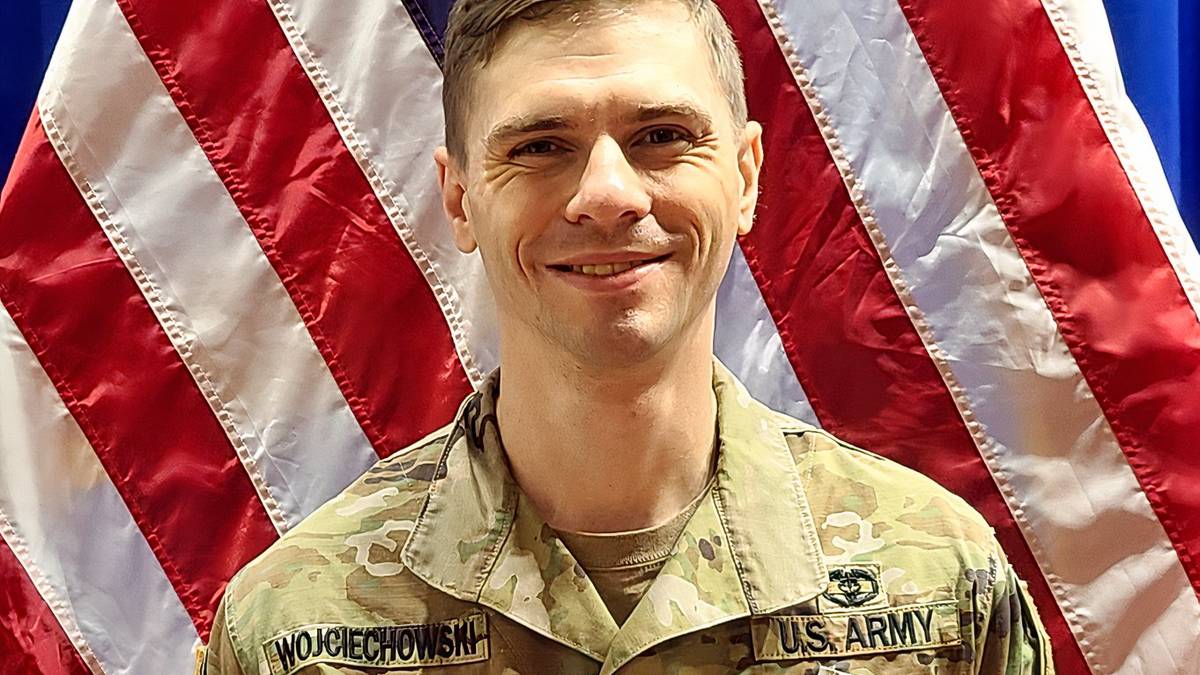
Serving as a combat medic, which included two deployments to Afghanistan, Sean Wojciechowski served among some of the best soldiers the U.S. Army had to offer.
When he left the Army after 11 years, however, Wojciechowski realized that many of the comrades he went to battle with struggled to navigate the legalities of a complex benefits system.
Bottom line – Special Operations veterans weren’t getting a fair shake despite all they’ve sacrificed serving in a combat zone.
That’s when Wojciechowski decided to become an advocate for fellow veterans. He pursued law school and is currently serving as an Equal Justice Works fellow, focusing on healthcare and veterans’ rights in Arlington, Virginia.
Wojciechowski believes it’s a call to action. He’s working to make the system fairer and more equitable.
Help in a Combat Zone
Wojciechowski comes from a long line of veterans.
His grandfather served in the Korean War, followed by his dad serving in Vietnam. His brother completed two tours in Iraq. Military life just felt natural.
“I felt a desire to serve as well. I have always enjoyed helping others and wanted to serve in a combat role,” Wojciechowski told Military.com. “When I arrived at the military entrance processing station, there was an opening for a combat medic and I knew it was the perfect job for me, as it allowed me to help others in a combat role.”
The Army veteran served from 2011 to 2022, first as a combat medic before transitioning to an occupational therapy assistant. He left the military as a staff sergeant.
Wojciechowski’s first deployment, to the Zhari district of Kandahar province, lasted nearly a year, from December 2011 to November 2012. In February 2016, he was sent back to Afghanistan, serving for several months in the Helmand province.
Through two deployments, the Army veteran had his share of ups and downs.
“The most rewarding aspect was the people. You meet so many great people from all walks of life, and the shared experiences and struggles in the military bring you together for a greater common purpose,” Wojciechowski said. “The most challenging part was leaving my unit. Most soldiers pour years of blood, sweat, and tears into a unit to make it a better organization than when they arrived. I was lucky to be in a great unit like this, and it was hard to leave my unit after so many years of service and sacrifice.”
Second Career: Veteran Legal Advocate
After the service, Wojciechowski began law school at Penn State University with plans to assist the military community from a legal standpoint.
Spending a summer as an intern for the National Veterans Legal Service Program (NVLSP) opened Wojciechowski’s eyes to the frustration many veterans face in accessing benefits.
“Often, veterans had received a less-than-favorable characterization of service because of mitigating mental health conditions contributing to misconduct, such as post-traumatic stress disorder (PTSD) after one or more deployments,” he said. “I found the work incredibly rewarding and, again, appreciated the opportunity to focus my efforts on helping others.”
After earning his law degree, Wojciechowski became an Equal Justice Works fellow, sponsored by the law firm Latham & Watkins, diving into research about the challenges active-duty members and Special Operations veterans deal with trying to access Department of Defense (DoD) side benefits, specifically Combat Related Special Compensation (CRSC).

Success Helping Veterans
Wojciechowski enjoys the ability to connect with veterans who aren’t aware they are eligible for certain benefits.
While most veterans are well-versed in Veterans Affairs disability and compensation claims and receive help from veterans service organizations, some tend to have difficulty navigating the DoD system.
“And NVLSP is the only non-profit organization focusing on some of these benefits. CRSC is a tax-free benefit in addition to either VA disability or retirement pay,” Wojciechowski said. “To qualify for CRSC benefits, a veteran must be in a retired status, have retired pay reduced by VA disability compensation benefits, and have at least one VA disability rated at 10% that falls within a combat-related category.”
According to Wojciechowski, combat-related categories include the “armed conflict,” referring to injuries suffered from direct or indirect fire. But he said some categories don’t require service in a combat zone, like “instrumentalities of war,” encompassing injuries from vehicles, vessels, and other military service objects. Also included in this category are injuries from airborne hazards such as burn pits, making VA presumptive toxic exposures also eligible for combat-related compensation. Wojciechowski said that injuries from training exercises simulating war could also qualify.
“Most veterans I speak with have never heard of CRSC,” he said. “My platoonmate from Afghanistan was seriously wounded by an improvised explosive device (IED) in 2012 and medically retired in 2014. He had been eligible for CRSC since his medical retirement, yet he had not heard of it or received help applying for it. Through NVLSP, he obtained representation, and his CRSC application was submitted earlier this year.”
The veteran said his friend’s story exposes the necessity for outreach and education when applying for DoD benefits. Military members take an oath to defend the country, and in return, should be entitled to their rights or at least be aware of them, Wojciechowski said.
“This lack of clarity can turn valid claims into lost opportunities and deepen inequality in systems that are meant to provide support,” he said.

Special Ops Veterans Vulnerable
In the Army, where the Warrior Ethos and the Soldier’s Creed are paramount, elite, highly trained Special Operations fighters, running on adrenaline and a “no fear” attitude, might not always report their injuries while trying to successfully complete the mission.
“When they do report their injuries, they often need to rely on lay witness statements, commonly called ‘buddy statements.’ This becomes problematic when special operations service members apply for DoD benefits such as CRSC,” Wojciechowski said. “Unlike the VA, which is required to accept these buddy statements for evidence of service connecting disabilities, the CRSC boards routinely reject these statements unless they are signed by a unit commander or senior enlisted leader.”
But that can cause problems when, oftentimes, a unit leader is not present when their soldier is injured.
“CRSC boards are required to make their decisions based on the preponderance of the available documentary evidence, yet they routinely reject buddy statements that provide the best available documentary evidence,” according to Wojciechowski.
And the push to open more access to benefits shouldn’t just be a fight that lawyers and veterans take on. Wojciechowski said Congress could make lasting changes at the federal level, such as requiring CRSC boards to consider buddy statements in applications, similar to the VA’s process.
“Congress has recognized the unique role remote warfare operators play in a dynamic battlefield, yet has stopped short of extending CRSC benefits for combat-related injuries from remote service. A remote warfare operator may be forced to make difficult life-and-death decisions to safeguard U.S. service members who may face imminent danger,” Wojciechowski said. “The gravity of that decision can result in the onset of mental health conditions such as PTSD. Congress should enact legislation to require CRSC boards to grant benefits to remote operators who developed conditions such as PTSD from their involvement in remote combat operations.”
Read the full article here
6 Comments
Interesting update on Army Combat Medic Turned Lawyer Helps Veterans Fight for Benefits. Looking forward to seeing how this develops.
Good point. Watching closely.
Solid analysis. Will be watching this space.
Great insights on Defense. Thanks for sharing!
This is very helpful information. Appreciate the detailed analysis.
I’ve been following this closely. Good to see the latest updates.