

Listen to the article
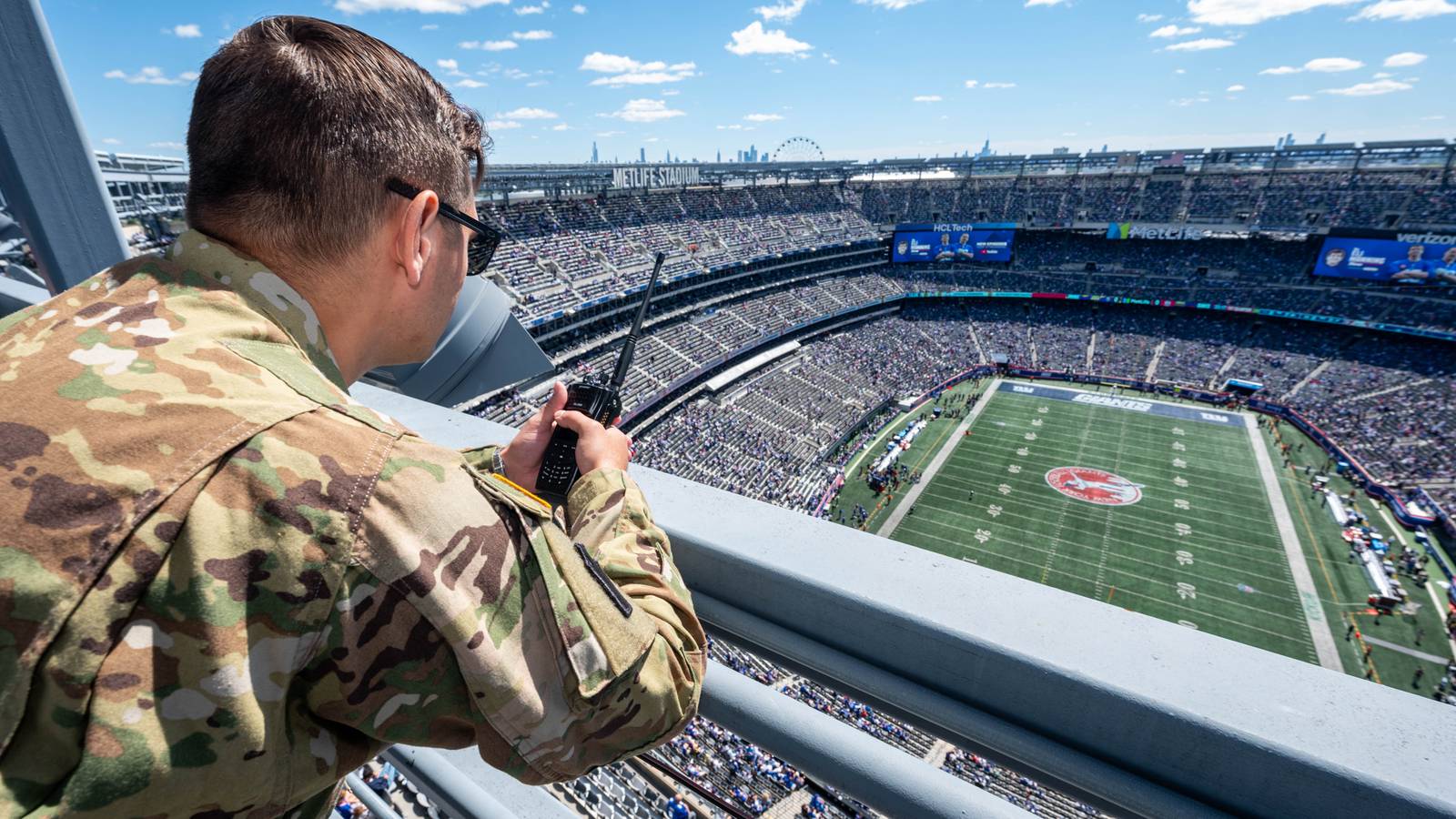
With the 2026 FIFA World Cup set to draw massive crowds to stadiums across North America in just weeks, security planners are confronting a rapidly evolving aerial threat. Commercial heavy-lift drones, once viewed primarily as agricultural or industrial tools, have demonstrated in global conflicts how quickly they can be repurposed as weapons.
In an interview with Military.com, Hylio CEO Arthur Erickson laid out the specific vulnerabilities created by loosely controlled imported systems and the concrete advantages of secure, American-made platforms built with end-to-end control.
The Scale of Destruction Possible
Erickson did not mince words about the payload reality.
If you’ve ever seen just 10 lbs of C4 go off, you understand how much destruction can be caused by these heavy-lift UAS if they fall into the wrong hands.
He added: “Many of these [Unmanned Aircraft Systems (UAS)] can carry payloads in excess of 200 lbs. In a crowded stadium setting, with the UAS either kamikaze’ing or dropping a 200+ lb explosive payload with shrapnel, we’re talking hundreds if not thousands of possible casualties in that hypothetical scenario.”
Emergency management modeling has long shown that even far smaller explosive loads can produce dozens of immediate fatalities in packed seating, followed by additional casualties from panic and trampling. The 2026 tournament’s open-air venues, fan zones, and transit hubs amplify the stakes.
Why Supply Chain and Design Create Real Differences
Hylio designs, manufactures, and develops its entire technology stack in Texas, giving the company total control that many imported systems lack.
“We don’t allow unauthorized login/access to our ground station devices (Hylio GroundLink); you would have to hack or know the legitimate user’s login credentials to be able to access the controls of a Hylio UAS in the first place,” Erickson explained. “If you somehow managed to do this, Hylio would be able to remotely track and disable a UAS in question, assuming it is turned on and within cell service range via the encrypted LTE connection we have built into each of our units.”
Many foreign platforms, by contrast, operate like simple RC controllers with no secure login requirement and no LTE capability on U.S. networks. “This means those drones are virtually untrackable” with no ability to remotely intervene or shut down if needed, he said.
The security advantage begins even earlier. “The security story starts at the supply chain level already,” Erickson noted. The lack of oversight on components and software in many imported systems leaves them open to third-party tampering or exploitation.
Getting Left of the Bang
Responsible manufacturers make unauthorized access extremely difficult from the start and retain the ability to monitor and unilaterally disable any unaccounted-for aircraft.
“In the vast world of possibilities, you have to imagine that given enough time, resources, motive, etc., then a very sophisticated attacker can hack anything; but the point is to make it as difficult as possible to deter and dissuade such actions, and to delay the process enough to give law enforcement enough time to catch and squash the threat,” Erickson said. “Security often comes down to deterrence; it’s not about achieving an unrealistically impenetrable system, it’s about putting enough roadblocks and contingencies in place to make the possibilities of foul play nearly impossible to pull off.”
Practical Lessons for FIFA 2026 Venues
Erickson, who supports broad commercial drone use, still advocates strict controls around major events.
“An ounce of prevention is worth a pound of cure,” he said. “Any drones and their respective pilots that are flying anywhere near large-scale, open air events such as the upcoming FIFA World Cup should be registered and accounted for. … Law enforcement can and should issue temporary no-fly zones around events such as FIFA and should be immediately suspicious of any unaccounted-for UAS that breaks these rules. … The first step is taking a conservative approach and starting from no drones are allowed here versus all drones are allowed here.”
He acknowledged the stance may surprise some in the industry, but stressed that powerful technology requires regulation to prevent serious security concerns.
Jamming or kinetic options carry their own risks in crowded civilian spaces. Erickson argued that waiting until a threat is close enough to require those measures is already too late.
“Jamming and then dropping a 200+ lb. drone full of explosives over a crowd or nearby to one is still not a great outcome, perhaps the lesser of two evils,” he said. “Disabling the drone from the get-go, the second it is reported stolen or otherwise unaccounted for, would nip the problem in the bud, and tracking would allow law enforcement to immediately begin tracking down suspects, possibly thwarting them at the planning phase and preventing more widespread destruction.”
Good Drones to Beat Bad Drones
Secure American platforms also serve as active tools in a layered defense. “I truly believe that you need good drones to beat bad drones,” Erickson said. “Good ISR drones performing AI-assisted surveillance patrols in and around public events can spot and prevent attacks before they begin in earnest.
Good interceptor drones are often the least collateral-damage-inducing option for directly intervening in a UAS attack. … In the aftermath of an attack or other disaster scenario, good UAS can absolutely assist in recovery efforts; they can do rapid, stand-off deliveries of vital supplies such as AEDs, tourniquets, and medicine.”
Erickson’s recommendation is direct: prioritize NDAA-compliant systems that have undergone rigorous third-party review.
“Where your drones come from matters, and firstly, you should strongly consider grounding any UAS you’re utilizing that are not NDAA-compliant/Blue List,” he advised. “NDAA Compliant is a good first step, but it is self-certified in many cases, so it’s not foolproof; look to the Blue List for options that have been thoroughly reviewed by government-approved assessors for cybersecurity, supply chain vulnerabilities, etc.
Yes, in many cases, you will have to pay more money for these UAS options versus unregulated/uncertified, foreign-made options, but it’s a tiny price difference when considering the possible security and human life implications.”
This push for vetted domestic systems aligns with recent federal actions that have effectively banned the import and sale of new drone models from major Chinese manufacturers, including DJI, after they were added to the FCC Covered List under the FY2025 NDAA process.
Military.com has reported extensively on the national security concerns driving these restrictions and the growing limitations on foreign platforms for government and critical infrastructure applications. A previous statement from DJI to military.com expressed that

Staying Ahead of Evolving Threats
Hylio is investing in edge computing and AI-assisted real-time analysis to improve both commercial performance and counter-drone capabilities.
“In the CUAS realm, this means more onboard compute and ability to identify and address scenarios such as swarms and advanced evasion tactics,” Erickson said. “CUAS is and always will be a cat and mouse game; the more computing and intelligence you have onboard, the greater chance you have to understand and counteract the enemy effects.”
The company’s agricultural drones already operate daily in some of the harshest conditions imaginable (dust, chemicals, extreme heat, and 12-plus-hour days with minimal maintenance), providing a proven foundation for reliability in high-stakes environments.
As FIFA 2026 host cities finalize security plans, Erickson’s message is clear: the technology exists to raise the bar significantly. The question is whether decision-makers will choose systems built with accountability, tracking, and remote intervention from the ground up before the first match kicks off.
Read the full article here
5 Comments
I’ve been following this closely. Good to see the latest updates.
Good point. Watching closely.
Solid analysis. Will be watching this space.
Interesting update on FIFA World Cup Drone Threat Prompts Call for American-Made Security Systems. Looking forward to seeing how this develops.
Great insights on Defense. Thanks for sharing!