

Listen to the article
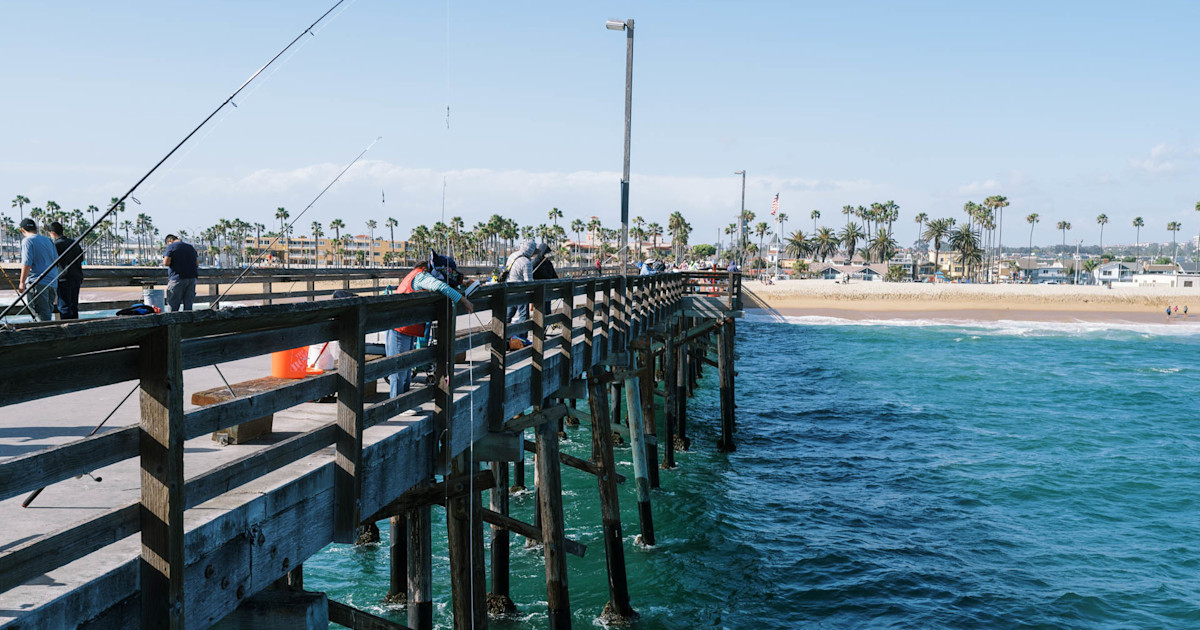
The California Fish and Game Commission issued an emergency action that is causing controversy in the Golden State angling community. On June 25, the commission essentially banned shore- and pier-based shark fishing throughout a large swath of its coast to “prevent white shark take and reduce potential interactions between hooked sharks and swimmers.”
According to the California Department of Fish and Wildlife (DFW), this year’s El Niño will create warmer-than-usual ocean conditions in the state, shifting the range of juvenile great white sharks north from Mexico into California’s nearshore areas.
In California, and elsewhere in the U.S., targeting great white sharks by recreational anglers is illegal because the species is protected. But according to the NOAA, “they are occasionally caught by accident in a variety of fisheries for other species…[though] regulations are currently in place to minimize such bycatch.”
That doesn’t seem to be sufficient for Golden State officials, however. The agency is restricting the use of hooks bigger than 1.5 inches and the use of wire or metallic lines and leaders when fishing from or within 1,000 yards of shore from Pigeon Point on the Central Coast south to the border.
The agency claims it has implemented the action not just to reduce the incidental catch of white sharks, but in the interest of public safety. “We’re really worried that if someone catches a large shark and is fighting it with this heavy metal leader, that the shark could wrap itself around a person,” CDFW spokesperson John Ugoretz told KEYT.
While this kind of thing is exceedingly rare, Ogoretz reportedly referred to a 2014 incident in which a long-distance swimmer was bit by a great white shark that had been hooked by and was fighting a shore-based angler. This incident occurred on a popular beach in Southern California. That said, the vast majority of shark bites involve sharks that are swimming freely have not been hooked by fishermen.
Many local anglers are up in arms about the emergency regulation, which they say will make it impossible to legally and effectively target open species such as mako, leopard, thresher sharks, and more.
“This measure moved forward with little opportunity for the thousands of anglers it affects to weigh in before the vote,” wrote Nick Heid in an op-ed published by Western Outdoor News. “The unintended consequence will be a dramatic increase in the number of sharks swimming around with hooks and fishing line left in their mouths after breaking off weaker monofilament leaders. Many of these sharks would have otherwise been successfully landed and safely released if anglers had continued using wire. This will do real, measurable harm to a sustainable fishery that has nothing to do with the problem.”
The recent news comes four years following the implementation of legislation that made it “unlawful to place any shark bait, shark lure, or shark chum into the water within one nautical mile of any shoreline, pier, or jetty when a white shark is either visible or known to be present.”
This year’s emergency action is valid for 180 days, with the option for the California Fish and Game Commission to pursue two 90-day extensions.
Feature image via Adobe Stock.
Read the full article here
6 Comments
Solid analysis. Will be watching this space.
I’ve been following this closely. Good to see the latest updates.
This is very helpful information. Appreciate the detailed analysis.
Good point. Watching closely.
Great insights on Hunting. Thanks for sharing!
Interesting update on California Temporarily Closes Shark Fishing to Protect Swimmers. Looking forward to seeing how this develops.