

Listen to the article
Today, that confidence has weakened.
Only 37% of military families now say they would recommend military service to their children or another young person, according to Blue Star Families CEO Kathy Roth-Douquet. The figure had fallen to 32% the previous year before rebounding slightly after recent quality-of-life improvements approved by Congress.
For Roth-Douquet, the number is about more than recruiting. It is about whether military families believe military life remains sustainable.
Military family strength is a national security issue, Roth-Douquet told Military.com in an exclusive interview. The strength of the nation is the soldier. The strength of the soldier is his/her family. Who’s the strength of the family? It’s got to be the community.
Blue Star Families, founded 17 years ago, has grown from a small grassroots effort into one of the nation’s largest military family organizations. Roth-Douquet said the organization now has 450,000 members and reaches “over a million and a half people” each year through programs, resources, chapters and referrals.
But Roth-Douquet says the growth points to something larger: Military families are looking for support that the military itself cannot fully provide. They are looking for community.
The Military Can’t Solve Every Military Family Problem
Roth-Douquet founded Blue Star Families after living the strain of military life herself.
During the wars after Sept. 11, her family moved nine times in 16 years. She lost jobs repeatedly. One of her children attended 10 different schools. She also recalled recovering from a C-section alone with a newborn and a 4-year-old while her husband was deployed.
The problem, she said, was not that military families were failing. It was that the system often left them to solve predictable problems alone.
“It does not help our country to have military families left to their own devices and struggling so much,” Roth-Douquet said. “It doesn’t make us more lethal, doesn’t make us safer or freer. No one is benefiting. It just makes it hard for people to keep doing the work, because as much as you love your country, you love your family more.”
Military families move on orders. Spouses restart careers. Children change schools. Families leave behind extended family, neighbors and local support systems every few years. Roth-Douquet said those are not simply personal problems.
It’s a systemic problem, she said. It’s not a personal problem. We were treating them like personal problems.
The Pentagon can provide pay, health care, housing allowances and other benefits. But Roth-Douquet said many of the hardest parts of military life happen in civilian communities, where families need neighbors, schools, employers and local institutions to understand what military life requires.
 The Families Doing Best Have One Thing in Common
Blue Star Families has spent years surveying military families about the issues affecting their lives, including housing, food, employment, education and well-being.
The challenges remain familiar: rising housing costs, food affordability, spouse employment, frequent moves and school disruption.
“So we’re really seeing affordability get more and more challenging for military families,” Roth-Douquet said.
She also pointed to homeschooling as a growing indicator of stress for military families, saying they are homeschooling at about six times the national average because many families struggle to access consistent educational options through repeated moves.
But one finding has shaped the organization’s work more than almost any other: Military families who feel connected to their local communities are doing better.
The families who feel connected to their communities, who feel a sense of belonging there, and who feel their community understands them. They are not having the problems that other families are having, Roth-Douquet said. They are more likely to recommend service, and they’re more likely to be able to solve their problems.
That connection matters because only 30% of military families feel a sense of belonging in the communities where they live, Roth-Douquet said. Only 15% feel their community understands military life.
Those numbers improve dramatically when communities intentionally welcome military families.
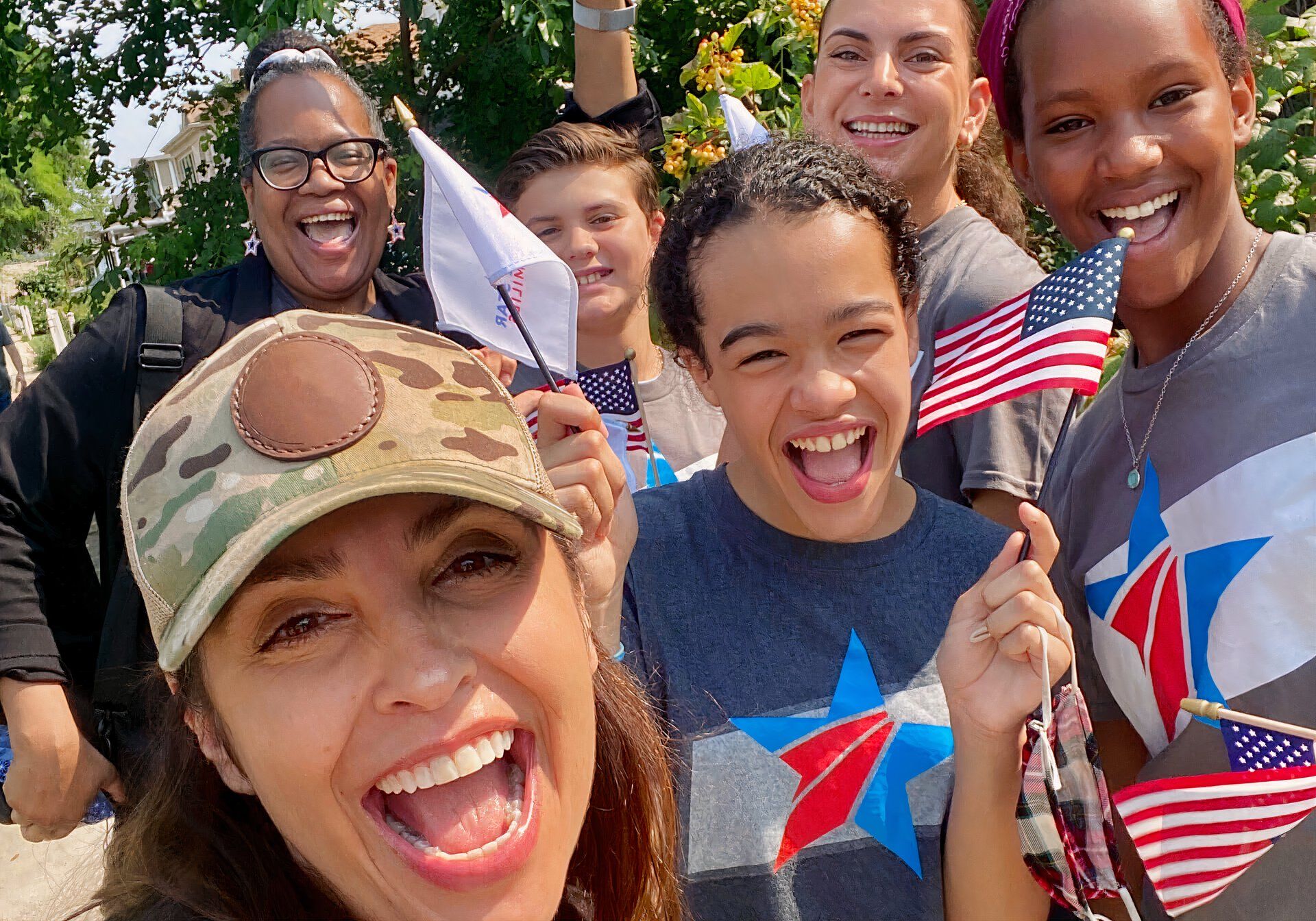
Through Blue Star Welcome Week, schools, local governments, businesses and community groups recognize newly arrived military families after the summer PCS season. Roth-Douquet said families who participate see belonging and understanding scores rise into the 70%s and 80%s.
Blue Star Families’ programs are built around that idea of belonging.
Some are intentionally simple. Roth-Douquet pointed to monthly coffee meetups hosted through a relationship with Starbucks. The gatherings are designed to be low-pressure and easy to enter, especially for military spouses or families who have just arrived in a new place.
“People come in, and they say, you know what, I just need one friend,” Roth-Douquet said.
That one connection can matter. Roth-Douquet said families have told Blue Star Families they found the emergency contact for a child’s school form simply by attending one coffee meetup.Blue Star Museums
“It’s low cost, very high impact, and it really becomes the doorway out of isolation for so many people,” she said.
Other programs include Blue Star Outdoors, Blue Star Museums, career support, caregiver programs and Blue Star Neighborhood, a secure digital platform Roth-Douquet said has grown to 250,000 users.
The organization also tries not to duplicate services that already exist. Instead, it connects military families to trusted local organizations, employers, schools and nonprofits.
“We don’t only talk about our programs,” Roth-Douquet said. “We are a hub and spoke. We find out who the greatest nonprofits are in this area, and we can pipeline the military people to those programs.”
That role matters because military families may not automatically walk into a free museum, a community program or a local service provider, even if those resources are available.
“They feel invited, and they feel safe going,” Roth-Douquet said. “We are that bridge.”
Why It Matters for the Future Force
The 37% figure is a warning because military families have long played an informal but powerful role in sustaining the all-volunteer force.
They influence whether service members stay. They shape whether children grow up viewing military life as something worth pursuing. They also help civilian communities understand the military at a time when fewer Americans have direct ties to the armed forces.
Roth-Douquet said the country cannot wait until the next crisis to build that support.
“We have tough times coming,” she said. “We need to be prepared to take care of these folks and their families, because it is a volunteer force, and people don’t have to do it. We can’t wait until the war starts to build that capacity.”
Blue Star Families regularly briefs Congress and the military services on its research. Roth-Douquet said she is encouraged that military leaders and lawmakers increasingly understand family support as a readiness and retention issue.
The reason we do so much research and data is that it convinces people, she said. We’ve been providing our annual survey to Congress every year. We brief the military services on it and we put it in terms of readiness and retention.
She also pointed to recent quality-of-life legislation, including money for junior enlisted pay and health care access, as a possible reason the recommendation number ticked up from 32% to 37%.
Still, Roth-Douquet said policy is only part of the solution. Communities also have to see military families as their own.
“When we talk about military families, we’re talking about the whole unit,” she said. “We’re just not talking about spouse and children, but the service member as well.”
“The family is this unit of strength, and if we can treat it that way, then we can strengthen the war fighter,” she added.
 The Search for Belonging
Blue Star Families has continued expanding its work beyond traditional family support. Roth-Douquet said a major program, Nourish the Service, focuses on helping military families access healthy food, after the organization’s survey found that a third of military families have a hard time accessing it.
She also said military families often do not want help delivered in ways that feel institutional.
“They do not want it from social service providers, and they’re not really interested in getting it from the military services or the government,” Roth-Douquet said. “They want it from their friends and neighbors, and from popular culture.”
That is why Blue Star Families partners with companies and cultural institutions, including Starbucks, Disney, Ford, Chobani and NASCAR. Roth-Douquet said those partnerships help military families feel recognized by the broader country.
“We want military life to be awesome; we don’t want it just to not suck,” she said.
For veterans and their families that need for connection does not end at separation or retirement. Roth-Douquet said 30% of Blue Star Families members are veterans because many still want to remain connected to military life and identity.
The same is true for military children, she said, especially those who spent most of their childhood in the military community before a parent leaves service.
“It’s not at all unusual for a kid that has been a military kid for 13-14 years, and then they’re not a military kid anymore, but they still feel like one,” Roth-Douquet said.
That sense of identity, belonging and connection is what Blue Star Families are trying to preserve.
For Roth-Douquet, the issue comes back to a simple reality facing every service member with a family.
The person in uniform, they want to do two things: they want to protect their country, and they want to provide for their family, she said.
The latest data suggests fewer military families are convinced military life allows them to do both.
Blue Star Families is betting that stronger communities can help change that.
Read the full article here
6 Comments
Great insights on Defense. Thanks for sharing!
This is very helpful information. Appreciate the detailed analysis.
Good point. Watching closely.
Solid analysis. Will be watching this space.
I’ve been following this closely. Good to see the latest updates.
Interesting update on Only 37% of Military Families Would Recommend Service Today. Here’s Why.. Looking forward to seeing how this develops.